Motorcycle Footrests and Folding Foot Pegs: What to Check Before You Buy
The short answer
The right motorcycle footrest is the one that mounts directly to your bike's existing peg bracket or a frame point meant for it, keeps the folding and spring-return function the original part had, and puts your feet where you can reach the controls comfortably. Fitment comes first. A peg built for a different mounting style, model year or market version of your motorcycle may not fit even if it looks similar. Grip, material and appearance matter only after fitment is settled. If you plan to carry a passenger, the passenger pegs need the same attention as the rider's, and many US states require a motorcycle carrying a passenger to have footrests for that passenger.
Footrest terms you will see in listings
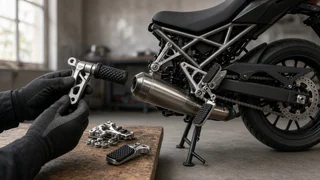
Rider foot pegs: the main pegs near the shift lever and rear brake pedal. Their position affects control reach and riding posture. Passenger foot pegs: pegs mounted farther back, usually on the subframe or on separate hangers, for a pillion rider. Folding foot pegs: pegs that pivot upward or rearward when pushed, then return to the riding position, usually under spring tension. Most modern motorcycles use folding pegs from the factory. Highway pegs: extra pegs mounted forward, often on an engine guard or frame bar, so the rider can stretch their legs on long straight runs. They are not a replacement for the main controls position. Floorboards: wide, flat platforms used mainly on cruisers and touring bikes in place of pegs. They support more of the foot but reduce cornering clearance. Mounting bracket or hanger: the part that holds the peg to the frame. Pegs are often sold separately from brackets.
Why folding matters
A folding peg is designed to give way rather than act as a rigid lever. If the peg touches the road while leaning, it can fold up instead of levering the tire off the ground. In a tip-over or low-speed drop, a folding peg is also less likely to bend the bracket or break a frame mount. Off-road and adventure riders rely on this when a peg catches a rock or rut. Folding passenger pegs can also be tucked away when riding alone, which keeps them from catching your heel or a curb. For these reasons, replacing a folding peg with a fixed one is generally a step backward unless the bike was designed for fixed pegs.
What to check before buying
Mounting style and fitment
Most folding pegs attach with a clevis: a forked mount held together by a pin, often retained with a clip or cotter pin. Common designs include male-mount pegs, where a tongue on the peg fits into a fork on the bracket, and female-mount pegs, where the fork is on the peg itself. Some motorcycles use bolt-on pegs or proprietary shapes. The pin diameter, the width of the clevis, the spring seat and the stop that limits how far the peg folds down all have to match. Confirm fitment against your exact model, model year and market, because manufacturers sometimes change peg brackets between years or between trims, and a part listed for a model name alone may not cover every version. If a listing names a fitment range, check that your bike falls inside it rather than assuming nearby years are the same.
Spring and return action
Check whether the peg includes a return spring or reuses your original one. A peg that does not snap back to the riding position can leave your foot without support when you reach for it. Some passenger pegs use a detent ball instead of a spring, so they stay folded up or down until moved. Know which type your bike uses and which type the replacement provides.
Position and adjustability
Some aftermarket pegs or brackets move the footrest lower, higher, forward or back compared with stock. Lower pegs can ease knee bend for taller riders. Higher or rearward pegs can improve cornering clearance and suit a sportier posture. Any change in position can also change how you reach the shifter and brake pedal, so check whether the controls will need adjustment or whether the kit includes linkage changes. Lowering a peg also reduces the lean angle available before it touches down.
Peg surface and grip
Rubber-topped pegs: damp vibration and are comfortable in street boots. They can feel less secure in wet or muddy conditions, and the rubber wears over time. Serrated or cleated metal pegs: grip strongly, which suits off-road and standing riding. They can wear the soles of street boots and transmit more vibration. Wide platform pegs: spread pressure across more of the boot sole, which helps when standing on adventure or dual-sport bikes, but may reduce clearance or interfere with controls on some bikes. Removable rubber inserts: let you switch between a cushioned surface and bare cleats.
Material and finish
Steel pegs are generally tough and tolerate bending, which is why they appear on many off-road bikes. Aluminum pegs are lighter and can be machined into detailed shapes but may be more prone to wear or snapping under hard impacts depending on design. Finish matters if you ride in rain or on salted roads: look for plating, anodizing or a coating suited to the conditions you ride in. Stainless or coated hardware helps the pivot pin and spring avoid corrosion.
Clearance and interference
Larger or reshaped pegs can contact the exhaust, swingarm, kickstand, shift lever or brake pedal when folded. Passenger pegs can collide with saddlebags or luggage racks. If you run accessories, check whether the new pegs leave room for them in both the down and folded positions.
Choosing passenger footrests
Passenger comfort depends heavily on peg height. Pegs mounted high on a sport bike can leave a passenger with sharply bent knees on longer rides. Lowering kits or relocation brackets exist for some models and can make a meaningful difference for a regular passenger. On cruisers, passenger floorboards are a common upgrade for the same reason. Whatever you choose, the passenger should be able to keep both feet planted without touching the exhaust or the rear wheel area. Rules on passenger equipment vary by state, so check your state's requirements if you are adding, removing or relocating passenger pegs.
Highway pegs: a separate decision
Highway pegs add a second resting position rather than replacing the main pegs. They usually clamp to an engine guard or crash bar, so check that the clamp size matches the bar on your bike. Because your feet are away from the brake and shifter when using them, they are suited to steady cruising, not traffic. Folding versions are worth considering so they can be tucked up when not in use.
OEM versus aftermarket
An original-equipment replacement is the simplest choice when the goal is restoring a damaged peg: it should match the mounting, spring and position exactly. Aftermarket pegs make sense when you want a different grip surface, wider platform, adjustable position or a different look. With aftermarket parts, read the fitment information carefully and check whether brackets, pins, springs and clips are included or must be reused from the original parts.
Installation basics
Swapping a clevis-mounted folding peg is usually a straightforward job with basic hand tools: remove the retaining clip, push out the pin, transfer or fit the spring with correct orientation, and reassemble. Check that the peg folds freely and returns fully before riding. Bracket or relocation kits involve frame bolts and sometimes control linkages, so follow the torque values and instructions that come with the kit or your service manual. If a kit changes shifter or brake pedal position, set the controls so you can operate them without lifting or twisting your foot awkwardly.
Quick buying checklist
Fitment confirmed for your exact model, model year and market. Mounting type matches: male or female clevis, bolt-on or proprietary. Return spring or detent included, or your original can be reused. Peg position works with your shifter and brake pedal reach. Surface suits your boots and riding: rubber for street comfort, cleats for off-road grip. No contact with exhaust, swingarm, luggage or controls when folded or down. Passenger pegs meet your state's requirements if you carry a pillion. Hardware and finish suited to the weather you ride in.