Is Ethanol-Free Gasoline Unleaded?
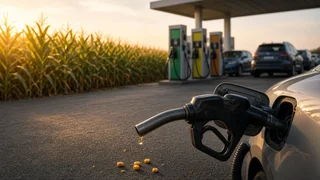
If you have seen a pump labeled ethanol-free, non-ethanol, or E0 and wondered whether it is unleaded, the short answer is yes. In the United States, ethanol-free gasoline sold for cars, trucks, motorcycles, boats, and small engines is unleaded. 'Ethanol-free' and 'unleaded' describe two different things, and a fuel can be both at the same time.
The Direct Answer
Non-ethanol gas at a normal retail station is unleaded gasoline that has no ethanol blended into it. Leaded gasoline was phased out of US on-road use and has been prohibited for motor vehicles since 1996 under the Clean Air Act. Every grade of gasoline you can legally pump into a road vehicle today is unleaded, whether it contains ethanol or not.
The main qualification concerns specialty fuels outside the normal retail pump. Some aviation gasoline and some racing fuels still contain lead. These are not the ethanol-free fuels sold at gas stations or marinas for everyday use, and they are not intended for street-legal vehicles.
What 'Unleaded' Means
'Unleaded' means no lead-based additive has been added to the fuel. In earlier decades, refiners added a lead compound, tetraethyl lead, to raise the octane rating and help prevent engine knock. Lead harms human health and damages catalytic converters, so it was removed from automotive gasoline. Refiners now reach the required octane through refining processes and other blending components, including ethanol.
Because lead is gone from road fuel, the word 'unleaded' on a pump no longer separates one product from another the way it once did. It is effectively the default for all automotive gasoline.
What 'Ethanol-Free' Means
Ethanol-free gasoline, often called E0, is gasoline with no ethanol blended in. Most gasoline sold in the US is an ethanol blend, typically E10, which contains up to 10 percent ethanol. Some stations also sell E15, and flex-fuel vehicles can use higher blends such as E85. Ethanol-free gas is the exception rather than the rule and is usually sold at selected stations, marinas, and outlets that serve boaters or small-engine users.
So the two terms answer different questions. 'Unleaded' tells you whether lead was added. 'Ethanol-free' tells you whether ethanol was blended in. Ethanol-free gas at a retail pump answers 'no' to both.
How They Compare
Fuel type | Contains lead? | Contains ethanol? | Typical use; Regular E10 gasoline | No | Up to 10% | Most cars and light trucks; E15 gasoline | No | Up to 15% | Vehicles approved for E15; Ethanol-free (E0) gasoline | No | No | Classic cars, boats, small engines, owner preference; E85 / flex fuel | No | High ethanol content | Flex-fuel vehicles only; Leaded aviation gasoline | Yes | Typically no | Certain piston aircraft, not road vehicles; Leaded racing fuel | Some products, yes | Varies | Off-road competition only
Where Lead Still Shows Up
Leaded fuel still exists in a few narrow categories. Aviation gasoline used by many piston-engine aircraft has traditionally contained lead. Some high-octane racing fuels also contain lead and are sold for off-road competition. These products are usually sold through airports, race suppliers, or specialty distributors, not through standard road-fuel pumps.
Putting leaded fuel into a modern road vehicle can damage the catalytic converter and oxygen sensors and is not legal for on-road use. If a fuel container or drum does not clearly state its fuel specification, do not assume it is suitable for your car just because it is ethanol-free.
Octane Rating Is a Separate Question
Being ethanol-free does not tell you the octane rating. Octane measures a fuel's resistance to knock, and in the US it appears on the pump as a single number. Ethanol itself has a high octane value, so refiners blend E10 gasoline with that in mind. Ethanol-free gasoline has to reach its octane rating without that boost, and stations may offer it in one or more grades.
Choose the octane grade your owner's manual specifies, whether or not the fuel contains ethanol. Using ethanol-free gas does not remove the need to meet the minimum octane your engine was designed for, and using a higher grade than required does not usually add a benefit in engines not designed for it.
Why Some Owners Choose Ethanol-Free Gas
People look for non-ethanol gas mainly for fuel system compatibility and storage reasons, not because of lead. Common motivations include:
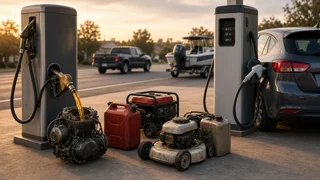
Older vehicles whose fuel hoses, seals, or carburetor parts may not have been designed for ethanol blends; Boats and marine engines, where ethanol's tendency to absorb water can be a concern; Lawn mowers, chainsaws, generators, and other small engines that may sit unused for long periods; Seasonal or stored vehicles, where owners prefer fuel that is less prone to separation during storage; Personal preference for a possible small difference in fuel economy, since ethanol contains less energy per gallon than gasoline
For most modern cars, E10 is fully approved, and ethanol-free fuel is optional rather than necessary. Check manufacturer approval in your owner's manual or on the fuel filler door to confirm which ethanol blends your vehicle accepts, especially before using E15 or higher.
How to Identify It at the Pump
Fuel labeling varies by state, but ethanol-free gasoline is usually marked with terms such as 'Ethanol-Free,' 'Non-Ethanol,' 'E0,' 'Clear Gas,' or 'Recreational Fuel.' Blended fuel is often marked with a sticker stating it may contain up to 10 percent ethanol. The octane rating appears separately on the pump. If a pump is not clearly labeled, ask the station rather than assuming a grade is ethanol-free.
Bottom Line
Ethanol-free gasoline sold at US retail pumps is unleaded. It simply has no ethanol mixed in. Leaded fuel remains only in specialty products such as certain aviation and racing fuels, which are not meant for road vehicles. When choosing fuel, focus on the octane rating and ethanol blend your manufacturer approves; the lead question is already settled for any gasoline sold for road use.