What Is the Octane Rating of Ethanol-Free Gasoline?
Ethanol-free gasoline does not have one fixed octane rating. Like ordinary pump fuel, it is sold in grades, and each grade carries its own number. In the United States, the octane posted on the pump tells you how resistant that particular fuel is to engine knock. Whether ethanol is present is a separate question. So the real answer to "what is the pure gasoline octane rating" is to read the yellow octane label on the specific pump.
What "ethanol-free" and "octane rating" mean
Ethanol-free gasoline, often called pure gasoline, non-oxygenated fuel or E0, is gasoline that contains no blended ethanol. Most gasoline sold in the US is an ethanol blend, usually labeled as containing up to 10 percent ethanol (E10). Ethanol-free fuel is sold alongside it at some stations, often marketed for boats, small engines, classic cars or recreational vehicles.
An octane rating measures a fuel's resistance to knock. Knock, also called detonation or pinging, happens when part of the air-fuel mixture ignites on its own instead of burning smoothly after the spark plug fires. A higher number means the fuel can tolerate more heat and pressure in the cylinder before it ignites prematurely. The rating does not measure energy content, cleanliness or quality.
The phrase "pure gasoline" can also cause confusion. Gasoline is not a single chemical. It is a blend of many hydrocarbons, so there is no natural octane value for gasoline as a substance. The octane scale itself is defined using two reference compounds: isooctane, assigned 100, and normal heptane, assigned 0. A finished fuel's rating describes how it performs compared with mixtures of those two references.
How octane is shown at US pumps
US pumps display the Anti-Knock Index (AKI), shown on the label as (R+M)/2. It is the average of two laboratory measurements: the Research Octane Number (RON) and the Motor Octane Number (MON). Many other countries post RON alone, which produces higher-looking numbers for the same fuel. Comparisons between US and overseas octane figures only make sense if you know which method each one uses.
Common US grades are regular, typically 87; midgrade, typically around 89; and premium, typically in the 91 to 93 range. Some high-altitude areas also sell lower-rated regular. Ethanol-free fuel follows the same labeling. Depending on the station and region, it may be offered at a regular, midgrade or premium-level rating. The pump label is the only reliable indicator for the fuel in front of you.
How ethanol affects octane
Ethanol has a high octane value, so it raises the knock resistance of whatever gasoline it is mixed with. Refiners take advantage of this. Gasoline intended for ethanol blending is commonly produced as a lower-octane base, and adding ethanol at the terminal brings the finished fuel up to its posted grade.
This leads to a common misconception. Removing ethanol does not make gasoline higher octane. To sell ethanol-free fuel at a given grade, the supplier has to reach that octane with the gasoline components alone. A gallon of 87 E0 and a gallon of 87 E10 offer the same knock resistance, as measured on the label, even though they reach it in different ways.
Ethanol-free vs. ethanol-blended gasoline
Criterion | Ethanol-free (E0) | Typical ethanol blend (E10); Octane rating | Set by grade and shown on the pump label | Set by grade and shown on the pump label; Source of octane | Gasoline components only | Gasoline base plus ethanol's octane contribution; Energy content | Slightly higher per gallon, because ethanol carries less energy than gasoline | Slightly lower per gallon; Moisture behavior | Does not absorb water the way ethanol does | Ethanol can absorb water, which matters for long storage; Availability | Limited to certain stations and regions | Widely available; Typical price | Often higher than comparable E10 | Usually the baseline price
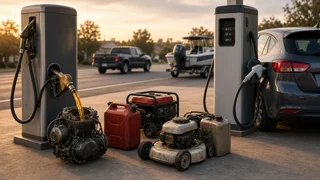
The practical differences come from ethanol content, not octane. Some drivers notice slightly better fuel economy with E0 because of its higher energy content. Owners of boats, lawn equipment, chainsaws and seasonal vehicles often prefer it because it tends to store better and avoids ethanol-related concerns in older fuel system components, such as certain rubber hoses, seals and carburetor parts.
Choosing the right octane for your vehicle
Your owner's manual or the label inside the fuel door states the fuel specification for your vehicle. Two separate requirements matter.
Minimum octane: Use at least the octane the manufacturer requires, whether the fuel contains ethanol or not. Using a lower grade than required can cause knock or reduced performance, because modern engines may retard ignition timing to protect themselves. Octane above the requirement: If your engine is designed for regular, a higher-octane fuel generally provides no meaningful benefit. Premium is only worthwhile when the manufacturer requires it or recommends it for best performance. Ethanol tolerance: Most modern gasoline vehicles sold in the US are designed to run on E10. Ethanol-free fuel is optional for them unless the manufacturer says otherwise. Older vehicles, small engines and marine engines may have different guidance, so check the equipment's documentation. Higher ethanol blends: Fuels such as E15 or E85 have their own fuel system compatibility requirements. Use them only if your vehicle has manufacturer approval for that blend.
Reading fuel labels at the station
US fuel labeling separates the two pieces of information you need. The octane rating appears as a number on the pump, usually on a yellow label. Ethanol content is typically disclosed on a separate sticker or display, such as a notice that the fuel contains up to 10 percent ethanol, or a marking identifying it as ethanol-free. Labeling details can vary by state, so look for both indicators rather than assuming one implies the other.
The short answer
Ethanol-free gasoline can be any octane grade the station chooses to sell. The posted (R+M)/2 number on the pump is its octane rating. Ethanol raises octane in blended fuel, but removing it does not automatically increase or decrease the rating of the finished product. Match the octane to your manufacturer's requirement first. Then decide whether ethanol-free fuel's storage and compatibility advantages are worth the typically higher price for your vehicle or equipment.