Ethanol-Free Gasoline vs Regular Gasoline: Which Should You Use?
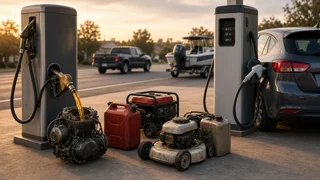
For most modern cars and light trucks sold in the US, regular gasoline containing up to 10 percent ethanol (E10) is the fuel the vehicle was designed to use, and paying extra for non ethanol gas brings little practical benefit. Ethanol-free gasoline earns its price mainly in specific situations: small engines, boats, seasonal equipment, fuel that will sit in storage for months, and some older or classic vehicles whose fuel systems were not built with ethanol in mind. The deciding factors are your vehicle's fuel specification, the octane rating it requires, and how long the fuel will sit before it is used.
What Is the Difference Between Non Ethanol and Ethanol Gas?
Ethanol is an alcohol, usually made from corn in the US, that is blended into gasoline. Most gasoline sold at US stations as regular, mid-grade or premium is an ethanol blend, typically E10. Ethanol-free gasoline, sometimes labeled E0, pure gas, clear gas or recreational fuel, is gasoline with no added ethanol.
Calling E10 "regular" can be confusing, because regular also refers to the lowest octane grade at the pump. When people compare non ethanol gas vs regular, they usually mean ethanol-free fuel versus the standard ethanol-blended fuel found at most stations, not a specific octane grade.
Side-by-Side Comparison
Factor | Ethanol-free gasoline (E0) | Regular ethanol-blended gasoline (E10); Ethanol content | None added | Up to 10 percent; Availability | Limited; often at select stations, marinas or rural locations | Sold at nearly all US stations; Typical price | Usually higher | Usually lower; Energy content | Slightly higher per gallon | Slightly lower per gallon because ethanol carries less energy than gasoline; Octane | Depends on the blend; check the pump label | Ethanol contributes to the posted octane rating; Storage behavior | More stable for long storage; less prone to water-related problems | Absorbs moisture; can phase-separate if water contaminates it during long storage; Compatibility | Suitable for virtually all gasoline engines | Approved for modern cars; may be a concern for some older, marine and small-engine fuel systems
Octane Rating: Ethanol-Free Does Not Automatically Mean Higher Octane
The octane rating on a US pump is the Anti-Knock Index, shown as (R+M)/2. It measures resistance to knock, the uncontrolled ignition that can occur under high compression or heat. It does not measure energy, cleanliness or quality.
Ethanol has a high octane value, so refiners use it to help E10 reach its posted rating. Ethanol-free fuel must reach its octane rating through the gasoline itself. Some ethanol-free fuels are sold at a mid-grade or premium octane level, while others are lower, so read the yellow octane sticker on the pump rather than assuming.
Match the octane rating your owner's manual specifies. If your car requires premium, an ethanol-free fuel with a lower rating is the wrong choice, even though it contains no ethanol. If your car is designed for 87, higher octane offers no meaningful benefit.
Fuel Economy and Performance
Ethanol contains less energy per gallon than gasoline, so ethanol-free fuel can deliver slightly better fuel economy than E10. The difference is small and varies by vehicle, driving conditions and the specific fuel. In most cases, it does not fully offset the higher price of ethanol-free gas, so the cost per mile is often similar or worse.
In a modern, properly running engine, drivers generally won't notice a difference in power or drivability between E0 and E10 at the same octane rating. Engine management systems adjust fueling automatically to the ethanol content within the range the vehicle is designed for.
Storage, Moisture and Phase Separation
Storage is the main practical advantage of ethanol-free gasoline. Ethanol attracts and absorbs water. In a vehicle that is driven regularly, this is not a problem, because fuel is used before moisture can build up.
When ethanol-blended fuel sits for long periods, especially in vented tanks or humid environments such as boats, it can absorb enough water to phase-separate. The ethanol and water then drop out of the gasoline and form a separate layer at the bottom of the tank. That layer can be drawn into the engine and cause rough running or failure to start, while the remaining gasoline loses some of its octane. Ethanol-free fuel still ages and degrades over time, but it avoids this specific failure mode.
Fuel System Compatibility
Vehicles built for the US market in recent decades use fuel lines, seals, pumps and injectors designed to tolerate E10. Ethanol can be harder on some older materials, including certain rubbers, plastics, cork gaskets and fiberglass fuel tanks found in older boats. It also acts as a solvent that can loosen old varnish and deposits, which may clog filters or carburetor passages in equipment that has been running on non-ethanol fuel for a long time.
Compatibility depends on the specific engine, its model year and any component replacements made over its life. The manufacturer's fuel recommendations remain the best guide. For restored classics, a fuel system rebuilt with modern ethanol-resistant parts may tolerate E10 well, while an original system may not.
Which Fuel Should You Choose?
Use regular ethanol-blended gasoline (E10) if:
You drive a modern car, SUV or truck that is used regularly. Your owner's manual approves gasoline containing up to 10 percent ethanol. You want the lowest cost and widest availability. Fuel is used within a normal period and does not sit for months.
Consider ethanol-free gasoline if:
You are fueling small engines such as lawn mowers, chainsaws, trimmers, generators or snow blowers, particularly ones that sit unused between seasons. You run an outboard or inboard boat engine, where moisture exposure and long idle periods are common. You store a motorcycle, ATV, classic car or other vehicle for extended periods. Your equipment manufacturer recommends or requires ethanol-free fuel or restricts ethanol content. You own an older vehicle with original fuel system components not designed for ethanol blends.
Higher Ethanol Blends: E15 and E85
Some stations also sell E15 (up to 15 percent ethanol) and E85 (a high-ethanol blend for flex-fuel vehicles). These are separate products and are not interchangeable with E10 or ethanol-free gas. E15 is approved by the EPA for many newer passenger vehicles but not for motorcycles, boats, small engines or older vehicles. E85 should only be used in vehicles specifically designated as flex-fuel, usually identified in the owner's manual, on the fuel door or by a yellow fuel cap. Check manufacturer approval in the owner's manual before using either blend.
How to Identify Ethanol-Free Gas at the Pump
Fuel labeling rules vary by state. Pumps dispensing ethanol blends are often marked with a notice such as "may contain up to 10% ethanol," while E15 and E85 dispensers carry their own distinct labels. Ethanol-free fuel is usually labeled clearly as ethanol-free, non-ethanol, E0 or recreational fuel, often on a separate dispenser or hose. If the label isn't clear, assume the fuel contains ethanol. Always confirm the octane sticker as well, since ethanol-free fuel is offered at different grades.
The Bottom Line
For an everyday modern vehicle, ethanol-blended regular gasoline at the octane rating your manual specifies is the practical choice. Ethanol-free gasoline costs more and offers only a slight efficiency advantage, but it is worth considering for small engines, boats, stored vehicles and older fuel systems, where its storage stability and material compatibility can prevent real problems. When in doubt, follow your vehicle or equipment manufacturer's fuel specification.