Is Regular Gas E10? What US Drivers Should Know
The short answer
In most of the United States, yes. The gasoline sold as regular at typical retail stations is usually E10, which means it is blended with up to 10 percent ethanol. However, "regular" and "E10" describe two different properties of the fuel, so one does not automatically guarantee the other. Some stations sell ethanol-free regular, and some sell blends with more than 10 percent ethanol.
Why "regular" and "E10" are not the same label
"Regular" refers to the octane grade. Octane is a measure of a fuel's resistance to knock, which is uncontrolled early ignition of the fuel-air mixture in the engine. Regular is the lowest of the common retail grades, below midgrade and premium. In the US, octane is shown on the pump as an Anti-Knock Index, sometimes printed as (R+M)/2.
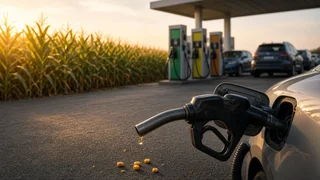
"E10" refers to ethanol content. The E stands for ethanol, and the number gives the maximum percentage of ethanol in the blend. Ethanol is an alcohol fuel, made in the US mostly from corn, that is mixed with gasoline. Because it has a high octane rating of its own, refiners often use it to help the finished blend reach its octane target.
Since the two terms measure different things, midgrade and premium are commonly E10 as well. Choosing a higher octane grade usually does not mean choosing fuel without ethanol.
Exceptions that change the answer
Ethanol-free gasoline: Some stations sell regular or premium with no added ethanol. It is often marketed as "ethanol-free," "pure gas" or "recreational fuel" and is popular for boats, small engines and classic vehicles. E15 and higher blends: Some stations sell gasoline with up to 15 percent ethanol, sometimes branded as "Unleaded 88." Flex-fuel pumps may offer E85, which is intended only for flex-fuel vehicles. Regional and seasonal variation: Fuel availability and labeling can vary by state, region and season, so the blends offered can differ from one area to another.
How to check what you are buying
Look at the pump itself. Many pumps carry a sticker stating that the fuel may contain up to 10 percent ethanol, and blends above E10 are generally labeled separately with their own warnings. If a pump does not state its ethanol content, the station attendant or operator may be able to confirm it. Your owner's manual, and often the label inside the fuel door, lists the minimum octane and the maximum ethanol blend your vehicle is designed to use. Follow those requirements over any general rule.
What this guide cannot confirm
No specific data was available for this article on how common E10 is at stations in particular states, current fuel prices, or the exact octane ratings at individual retailers. This article also does not cover whether E10 or ethanol-free fuel suits a specific vehicle. For that, rely on the manufacturer's guidance for your model year and powertrain.