How to Carry Musical Instruments in a Car
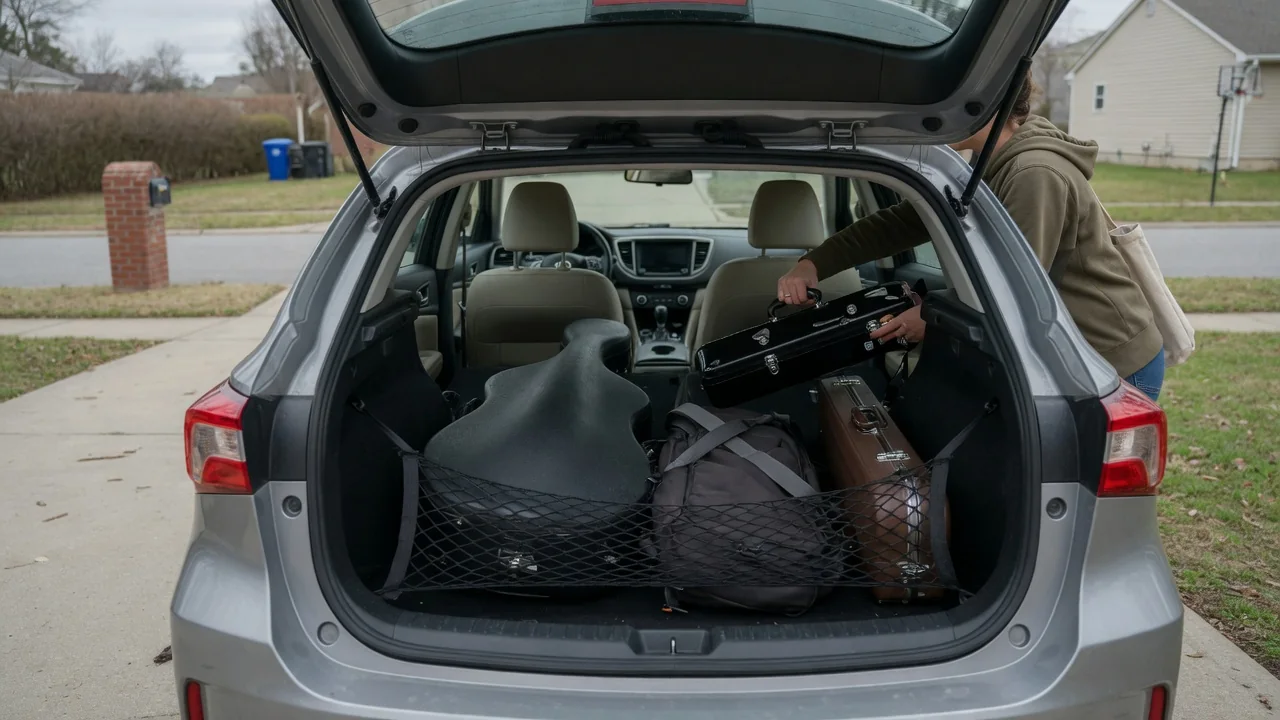
Knowing how to carry musical instruments in a car comes down to three things: whether the case truly fits, how the cabin or trunk temperature behaves, and whether the load stays put under braking. A guitar, cello, keyboard or drum kit each asks something different of the vehicle, and a few minutes of planning before loading protects both the instrument and the people riding alongside it.
Choose location
The passenger cabin is usually the kindest place for a wooden or delicate instrument because it shares the climate-controlled air the occupants enjoy. A violin or trumpet case often sits well on the rear seat or in the rear footwell, where the front seatback limits forward movement. Larger cases, such as a cello or full-size keyboard, may need a folded rear seat, and split-folding layouts differ between sedans, hatchbacks, SUVs and wagons, so measure the opening rather than assuming a fit.
A trunk or cargo area keeps the instrument out of sight and away from passengers, but a sedan trunk is separated from cabin airflow and can run hotter or colder than the seats. Look at the load floor for a raised lip, exposed hinge arms that swing down when the lid closes, and a spare-tire well cover that flexes under weight. In an open cargo area, a heavy case behind the rear seat should sit low and against the seatback, not stacked high near the glass.
Pad and restrain
A hard case does most of the protective work, yet it still needs to be kept from sliding. On a rear seat, the seat belt can be routed across a guitar or cello case so the lap and shoulder portions hold it against the cushion and backrest; check that the belt lies flat and that the buckle isn't pressing against a latch or the neck area. Soft gig bags offer less crush resistance, so nothing heavy should rest on top of them or lean into them in corners.
In a cargo area, many vehicles provide tie-down rings or a cargo net, though their position and rated strength vary, and the owner's manual is the place to confirm what they are meant to hold. Folded blankets, moving pads or foam blocks fill gaps so a case cannot build momentum before hitting a trim panel. Amplifiers, drum hardware and stands deserve the same attention, because dense metal items become the real hazard to both instruments and occupants in a sudden stop. Keep them low and braced separately.
Avoid heat exposure
A parked car with closed windows gains heat quickly in direct sun, and interior surfaces under glass become much hotter than outside air. That matters because many instruments rely on glued joints, thin finishes and wood under string tension, all of which respond poorly to prolonged heat. Rear parcel shelves and the area under a hatchback's glass are the most exposed spots. A cargo cover or tinted glass reduces direct sunlight but does not stop the enclosed space from warming, so shade alone is not a storage plan.
Cold and rapid swings deserve equal caution. An instrument left overnight in a freezing vehicle, then carried into a warm room, may collect condensation, and finishes can react to abrupt change; letting the closed case acclimate gradually is the gentler approach. During the drive, avoid aiming heater or air-conditioning vents straight at a case, and remember that rear vents, where fitted, may blow directly across the back seat. Dry cabin air on long winter trips can also affect wooden instruments, which is why many players keep a humidifier pack inside the case.
Everyday Use and Observations
Regular trips to lessons, rehearsals or gigs reveal how well an arrangement works. Listen for knocks or shifting sounds from behind during braking and cornering; a thump usually means a case has room to travel and needs repositioning or more padding. After arrival, look for scuffs on door sills, seat bolsters and the bumper edge, since hard cases mark trim during loading. A simple protective blanket draped over the loading lip prevents much of that wear on both car and case.
Visibility and access also matter in daily use. A tall case standing upright behind the front seats can block the view through the rear window or mirror, and anything near the driver's footwell or shift area is a distraction and a hazard. Folding seats should latch fully when returned to position, which some vehicles signal with an indicator near the release. Instruments left visible in a parked car invite theft, so carrying them inside at each stop protects against both crime and temperature.
Limits and Next Steps
Some instruments simply exceed what a given car can carry sensibly. An upright bass, harp or full drum kit may require seats removed or folded in ways not every model allows, and a case that only fits by pressing against glass, forcing the hatch or reclining a front seat into an awkward driving position is a poor compromise. Payload limits, listed on the door-jamb placard in many vehicles, also apply when heavy amplifiers and speaker cabinets join several passengers.
When the car is the limit, a roof box, a larger vehicle or a specialist mover may be the better answer, though exterior carriers expose contents to weather and temperature and suit hardware more than delicate instruments. Before a long trip, a short test drive with the full load shows whether anything shifts. Checking the owner's manual for seat-folding steps, tie-down guidance and load ratings, and asking the instrument's maker or a technician about climate tolerance, covers the details that vary by vehicle and instrument.