How to Carry a Bicycle Inside a Car
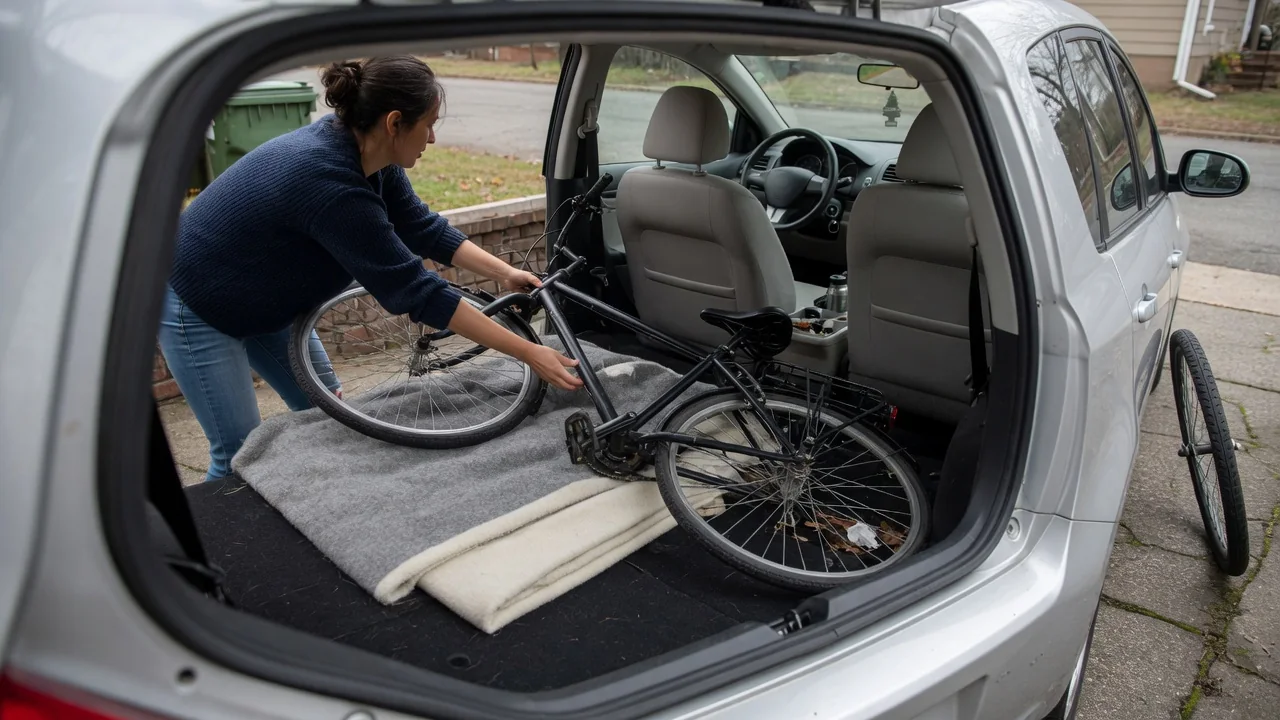
Learning how to carry a bicycle inside a car comes down to three things: knowing whether the bike will physically pass through the opening, keeping the bike and the cabin from damaging each other, and making sure nothing shifts while driving. A few minutes of preparation with a tape measure, some padding and a couple of straps makes interior transport a practical alternative to an exterior rack.
Measure openings
The narrowest point of the load path usually decides whether a bike fits, and that point is rarely the cargo floor itself. Measure the height and width of the hatch or trunk opening, then the length from the closed tailgate to the back of the front seats with the rear seatbacks folded. On sedans, also check the pass-through behind the rear seat, because a folding seatback often reveals an opening that is considerably smaller than the trunk lid aperture suggests.
Compare those figures with the bicycle. Overall length from tire to tire, handlebar width and the height at the saddle are the dimensions that matter most. Removing the front wheel shortens the bike noticeably, and lowering the seatpost or turning the handlebars parallel to the frame reduces height and width. Hatchbacks, wagons and SUVs with flat-folding seats tend to accept a bike with only the front wheel off, while compact sedans may require both wheels removed. Seat-folding mechanisms and floor heights vary, so measure the actual vehicle.
Protect components and trim
The drivetrain is the side of the bike most likely to suffer and to cause damage. Lay the bicycle with the chain, chainrings and rear derailleur facing up, so the weight never rests on the derailleur hanger, which bends easily. Shifting onto the smallest chainring and a middle cog before loading tucks the derailleur inward. With hydraulic disc brakes, a spacer placed between the pads after wheel removal prevents the pistons from closing if the lever is squeezed in transit, and rotors should be kept away from anything that could bend or contaminate them.
The cabin needs equal attention. Chain lubricant stains carpet and upholstery, pedals and axle ends can gouge plastic trim panels, and handlebar ends may press against door cards, headliners or rear glass. An old blanket, moving pad or tarp spread across the cargo floor and folded seatbacks catches grime, while a towel wrapped around the lower pedal and fork tips cushions the hard points. Look at the load lip and bumper top during loading, since painted surfaces there scratch easily when a frame is dragged across them.
Secure movement
A loose bicycle becomes a heavy, awkward projectile under hard braking or in a collision, so restraint matters as much as fit. Many vehicles have tie-down rings in the cargo area, and a soft strap or bungee looped from the frame to those anchors limits forward and sideways travel. Positioning the bike low and tight against the folded seatbacks leaves it less room to build momentum. Where no anchors exist, the owner's manual shows which points are intended for cargo restraint.
Removed wheels need securing as well; slide them alongside the frame with padding between, or place them in wheel bags, rather than leaving them free to roll. Some owners prefer an upright arrangement using a fork mount fixed to a board, which holds the bike by its front dropouts and suits taller vans and SUVs. Whichever method is used, keep everything clear of the driver's seat travel, the gear selector and the parking brake, and confirm the tailgate latches fully without pressing on a tire or the bars.
Everyday Use and Observations
After a few trips, a routine develops. Loading rear wheel first often works best in hatchbacks, since the handlebars then sit in the wider area near the opening, though some cabins favor the opposite. Notice what the bike touches once it settles: a faint rattle over bumps usually means a pedal or brake lever is resting against trim, and a small shift in position or an extra pad cures it. A wet or muddy bike adds moisture, so a waterproof liner and prompt airing keep odors and fogged windows away.
Visibility and seating deserve a check before setting off. A handlebar or saddle rising above the seatbacks can block the interior mirror, leaving the door mirrors to do more work. Folding only the larger or smaller portion of a split rear bench may keep one passenger seat usable, depending on how the vehicle divides its seatback. After the ride, inspect the bike before pedaling away: confirm the wheel is seated squarely, the axle or quick release is tight, the brakes do not rub and the gears shift normally.
Limits and Next Steps
Interior carrying has practical limits. Long-wheelbase mountain bikes, large frames, tandems and heavy e-bikes may simply exceed the available length or be too awkward to lift over a high load lip. E-bike batteries are generally best removed where the design allows, reducing lifting weight, and the manufacturer's guidance on transporting them should be followed. Carrying two bikes inside multiplies the contact points, so thick padding between frames becomes essential, and the vehicle's payload rating still applies when passengers and luggage share the space.
When the measurements show a poor fit, or the bike must travel alongside a full complement of passengers, an exterior solution makes more sense. Hitch, roof and trunk-mounted racks each depend on the vehicle's equipment and stated load limits, so check the owner's manual before choosing one. For those who stay with interior transport, a dedicated kit kept in the cargo area, consisting of a pad, two straps, a brake spacer and a rag, turns loading into a quick, repeatable job and protects the vehicle's resale condition.