How to Carry a Cooler in a Car
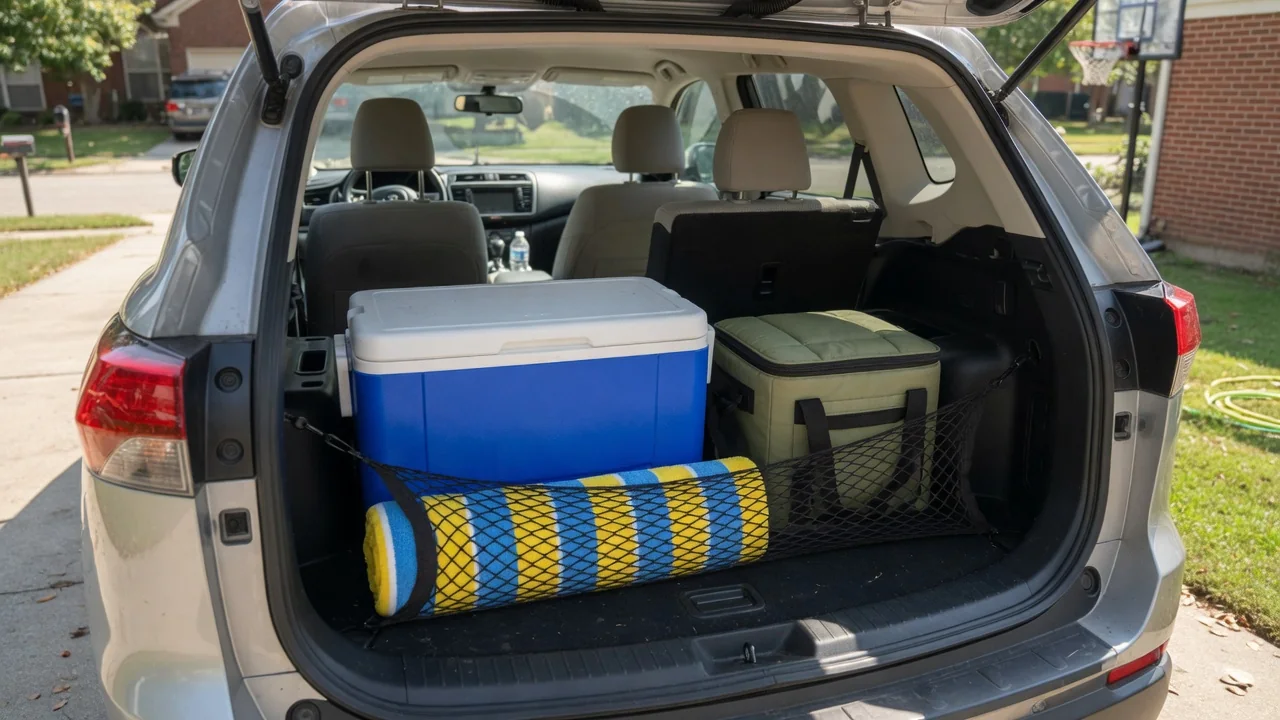
Knowing how to carry a cooler in a car comes down to two goals: keeping a heavy, sloshing box from moving and keeping meltwater off the carpet. A loaded cooler can weigh as much as a passenger, and it behaves differently under braking than soft luggage. The right position, restraint, and cleanup habits make road trips and grocery runs far less messy.
Choose location
The cargo floor of a trunk, hatchback, or SUV is usually the best place because it sits low and flat, which keeps the weight near the vehicle's center of gravity. Pushing the cooler against the back of the rear seat gives it a solid surface to rest on under braking. In a sedan, the trunk also separates the load from passengers, while in a wagon or SUV the cooler shares the cabin space, so restraint matters more.
The rear footwell is a workable alternative for a small cooler, since the seat in front and the seat cushion behind wedge it in place. A rear seat cushion is less ideal: it slopes, so the cooler tilts and water pools toward one corner of the lid seal. Pickup beds expose the cooler to sun and wind, shortening ice life. Wherever it goes, check that it does not block the driver's view, a fold-down seat latch, or the spare tire access you may need later.
Secure it
An unrestrained cooler slides during cornering and can travel forward in a hard stop, so it needs to be tied to the vehicle rather than simply wedged among bags. Many cargo areas have metal tie-down loops in the floor or side panels; a ratchet strap or cam-buckle strap run over the lid and hooked to those loops holds both the box and its lid shut. The number, location, and rated load of these anchors vary by vehicle, so the owner's manual is the place to confirm them.
On a rear seat, the seat belt can be routed through the cooler's handles or across its body and buckled, then pulled snug so the retractor takes up the slack. A non-slip rubber mat underneath reduces sliding on carpet or plastic cargo liners. Bungee cords stretch and allow movement, so they suit light loads only. After a few miles, a quick look shows whether the straps have loosened as ice settles and the contents shift; retighten them if the cooler rocks when pushed by hand.
Clean spills
Most leaks come from the drain plug, a lid gasket that no longer seals, or condensation running down the outside walls. Before loading, confirm the drain plug is fully seated and keep the cooler upright with the drain facing a direction where a drip would land on a liner rather than carpet. Setting the cooler inside a rubber cargo tray or on a folded towel catches the slow seepage. Frozen water bottles or sealed ice packs produce far less free water than loose ice.
When water does reach the carpet, speed matters because the padding underneath acts like a sponge and can stay damp long after the surface feels dry. Blot with absorbent towels, pressing firmly instead of rubbing, then leave doors or windows open in a dry place to let air move through. Spilled soda, juice, or raw meat juices need a cleaner suitable for automotive upholstery, since sugar and protein residues cause odor. Some vehicles house electronics or a battery beneath the cargo floor, so lift the floor panel and check that well too.
Everyday Use and Observations
Daily use reveals patterns worth noticing. A cooler that thumps at each stop sign is moving, even if only an inch, and that repeated shifting works the lid loose and scuffs trim panels. Sloshing sounds mean a large volume of meltwater; draining it at a rest stop, away from the vehicle, lowers the weight and the spill risk. A fogged rear window or musty smell the next morning suggests moisture escaped somewhere, and a hand pressed into the carpet near the cooler's position will usually find it.
Heat management inside the cabin affects how well the arrangement works. A cooler sitting in direct sun under a hatchback's glass loses ice faster than one shaded by a cargo cover or a light-colored blanket. Parking in shade and running the air conditioning with rear vents open helps on long drives. Packing matters too: heavy items low, lids of food containers sealed, and frequently used drinks on top, so the cooler is opened briefly and nobody is tempted to reach back for it while the car is moving.
Limits and Next Steps
Every vehicle has a payload limit covering passengers and cargo together, normally printed on a placard in the driver's door opening. A large cooler full of ice and drinks adds meaningful weight, and combined with luggage and a full cabin it can push a small car toward that figure. Tie-down points also have their own limits, and some plastic hooks in cargo areas are meant only for grocery bags. Hard-sided coolers placed on seats may mark leather or compress bolsters over a long trip.
If a setup keeps shifting or leaking, change one variable at a time: a different location, a better strap, a replacement drain plug or gasket, or a smaller cooler that fits the footwell. Powered coolers that plug into a 12-volt outlet avoid meltwater but draw current, and whether the outlet stays live with the engine off depends on the vehicle, so check before leaving one running. Persistent dampness or odor after a spill is worth a professional interior cleaning before mold settles into the padding.