How to Carry Sports Equipment in a Car Safely
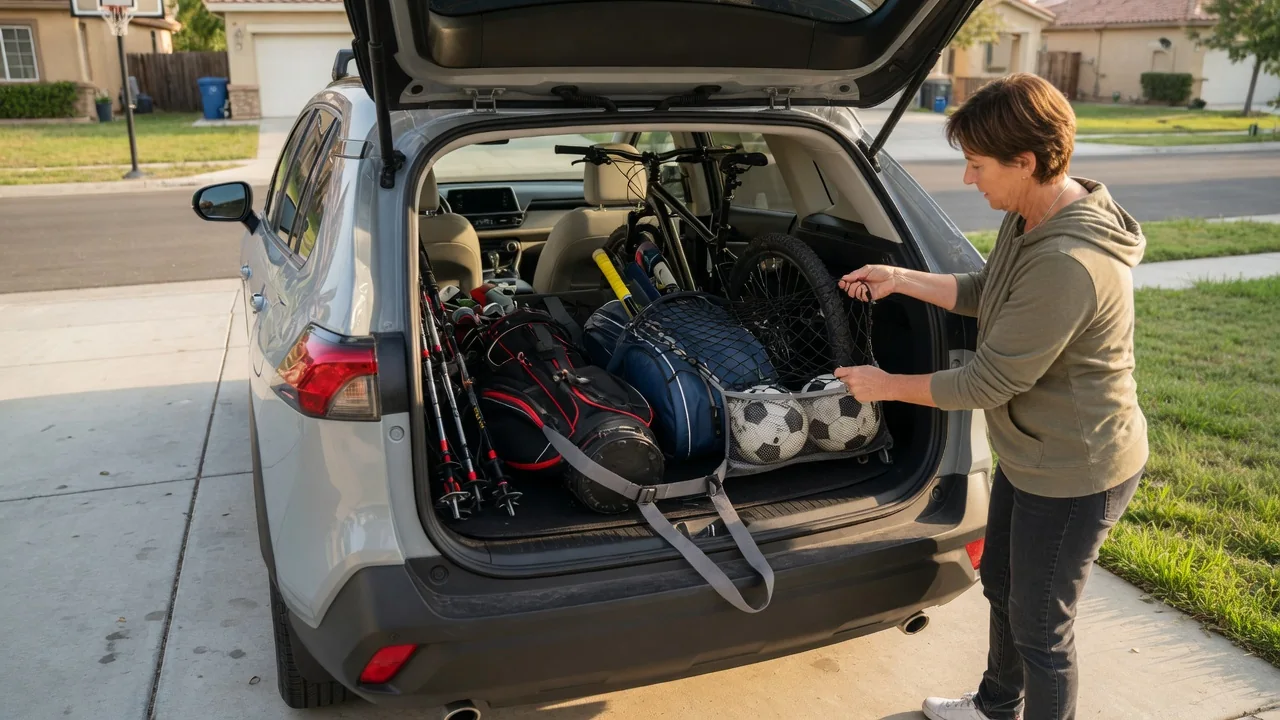
Skis, bikes, golf bags, hockey sticks and weight plates all ride differently than groceries. Learning how to carry sports equipment in a car safely comes down to three habits: knowing how much room you actually have, keeping every item from moving under braking, and making sure nothing blocks what the driver needs to see through the glass and mirrors.
Measure space
Start with a tape measure rather than a guess. Measure the cargo floor from the tailgate to the back of the rear seats, then again with the seats folded, and note the narrowest point between the wheel housings. Compare those numbers with your longest item, whether that is a set of skis, a fishing rod tube, a paddle or a bagged driver. The diagonal across the cargo floor is often the longest usable line, and it can save you from running gear up between the front seats.
Height and opening size matter as much as floor length. A hatchback or wagon may swallow a bicycle with the front wheel removed, while a sedan with a small trunk opening may refuse the same frame even though the trunk volume looks generous. Check whether your rear seats split, whether a center pass-through exists, and whether the folded seatbacks sit flat or at an angle. These details vary widely between vehicles, so the owner's manual and a quick test fit at home are worth more than assumptions.
Secure items
An unrestrained object keeps moving when the car stops. In a hard stop or collision, a dumbbell, a bowling ball or a loose skate can travel forward with far more force than its resting weight suggests, and a seatback alone may not hold it. Place the heaviest items low, on the floor, and as far forward in the cargo area as possible, pressed against the back of the seat. That position limits how much speed they can build before something stops them.
Most cargo areas have tie-down rings or hooks in the floor or side panels, and ratchet or cam straps run through them hold gear far better than elastic cords, which stretch and can snap back. Their rated capacity differs by vehicle, so check the manual before trusting them with heavy loads. Long items such as skis or sticks should be bundled and strapped so they cannot slide forward like a spear. A cargo net, a sturdy lidded bin or a padded bag keeps balls, helmets and small pieces from rolling underfoot.
Preserve driver view
Gear stacked above the top of the rear seatbacks causes two problems at once. It blocks the interior mirror, and it places objects where they can fly forward into the cabin. Keeping the load below the seatback line solves both. If a tall item such as an upright bike or a stand-up paddle has to ride inside, set it to one side so at least part of the rear window stays clear, and make sure both door mirrors are adjusted and unobstructed before leaving.
Long equipment that reaches into the front of the cabin deserves extra care. A ski tip or rod tube resting near the shifter, the parking brake or the driver's elbow can interfere with control, and anything leaning against the passenger-side window hides traffic in the blind spot. Check over-the-shoulder views from the driver's seat with the load in place. Also confirm that nothing covers the rear window defroster vents, a rear camera or interior sensors, since the position and sensitivity of these systems differ from car to car.
Everyday Use and Observations
The car itself tells you whether a load is riding well. Rattles, thumps over bumps or a clunk under braking mean something has worked loose, and it is worth pulling over to retighten rather than waiting until the destination. A heavily loaded rear can make the back of the car sit lower, lighten the steering feel and lengthen stopping distances. Headlights may also aim higher than normal, so watch for oncoming drivers flashing you at night and allow more room ahead.
Routine trips bring their own small hazards. Wet or muddy gear fogs the windows and can leave moisture in carpets, so a waterproof tray or liner and a few minutes of ventilation help keep the glass clear. Sharp edges on skates, cleats, bike chainrings and ski edges can cut upholstery or damage trim, and they are safer wrapped or bagged. Pressurized items, electronics and inflated balls are better not left in a hot closed car, where cabin temperatures climb far beyond the outside air.
Limits and Next Steps
Every vehicle has a payload limit covering passengers and cargo together, usually printed on a placard in the driver's door opening along with recommended tire pressures. A team's worth of gear plus four adults can approach that figure sooner than expected, and some manufacturers specify a different tire pressure for a full load. Roof limits are separate and typically much lower than what the cabin can carry, and they include the weight of the rack itself, so confirm the figures for your specific vehicle.
When gear will not fit inside without blocking the view or crowding passengers, an exterior carrier is the logical next step. Roof bars, a cargo box or a hitch-mounted bike rack keep the cabin clear, though they change handling in crosswinds, add height for garages and may cover lights or the license plate, which local rules often require to stay visible. Items overhanging the rear may need a flag or light, depending on where you drive. Choose equipment approved for your car and recheck the fasteners after the first few miles.