Fix Volvo truck climate control problems
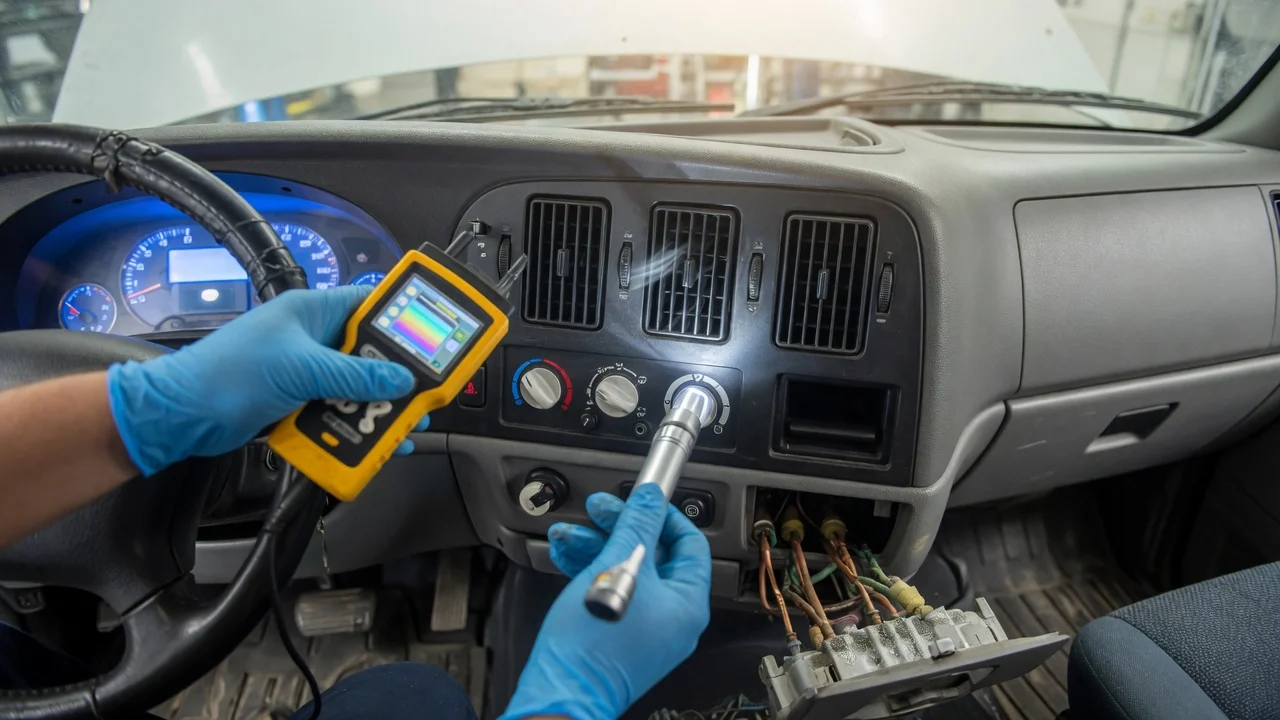
The short answer
Most climate control complaints on a Volvo truck come from one of a few areas: airflow (the blower and its controls), cooling (the air-conditioning refrigerant circuit), heating (engine coolant flow to the heater), air distribution (the doors and actuators that blend and direct air), or the control electronics that tie them together. The fastest route to a fix is to identify which of these is failing before replacing anything. A clear symptom and a few simple observations usually narrow the problem to one area, and that tells you whether it is a quick owner-level fix, such as a clogged cabin filter, or a job that needs dealer-level diagnostic tools or refrigerant equipment.
Scope matters. Volvo builds several truck ranges for different markets, and climate control hardware differs by model, model year, cab type and specification. Some trucks have manual controls, others automatic climate control, and sleeper cabs may carry a separate parked or no-idle heating and cooling unit. Component locations, fuse assignments, refrigerant type and capacity, and test procedures all vary, so the specific values for your truck must come from Volvo service information for its VIN. This guide gives the general diagnostic logic. No model-specific fault codes, pressure specifications or wiring details were available for it, and none are stated here.
Pin down the symptom first
Write down exactly what happens, and under which conditions. These details separate causes that otherwise look alike:
Is there no airflow, weak airflow, or airflow only at certain fan speeds? Is the air the wrong temperature: not cold, not hot, or stuck at one temperature? Is air coming from the wrong vents, or does one side of the cab differ from the other? Is the control panel dead, flickering or ignoring inputs? Does the problem appear only when parked, only at idle, only at highway speed, or only after a cold start? Are there noises (clicking behind the dash, squealing, grinding), smells, fogging, or water on the floor? Did it start after battery work, a jump start, an accident or other repairs?
Checks by symptom and what the results suggest
No airflow or weak airflow
If the blower does not run at any speed, start with power: check the relevant fuse and relay using the truck's fuse chart, then confirm the blower motor receives voltage when switched on. Voltage at the motor with no rotation points to the motor itself. No voltage points upstream, to the fuse, relay, wiring, speed controller or control panel. On systems that use a resistor pack for fan speeds, a blower that works only on the highest setting is a classic sign of a failed resistor. Systems with an electronic speed controller can show different patterns.
If the blower runs but airflow is weak at every speed, look for restrictions. A clogged cabin air filter, a blocked fresh-air intake, or debris in the blower housing are common and inexpensive causes. Weak airflow that improves when you switch between fresh air and recirculation suggests a restriction or a stuck door on one intake path. Rattling or a varying hum from the blower area can mean debris in the fan or a worn motor.
Air conditioning blows warm
First confirm that the blower moves air normally, so the problem is cooling and not airflow. With the engine running and A/C requested, check whether the compressor engages. On compressors with an electromagnetic clutch, the clutch hub at the front should begin turning with the pulley. Then look at the condenser in front of the radiator. Bugs, road debris or a bent core reduce heat rejection and can cause poor cooling, especially at idle or in slow traffic. Look for oily residue at hose fittings, the compressor or the condenser, which often marks a refrigerant leak.
Interpreting the results: if the compressor does not engage, the cause could be low refrigerant (pressure switches commonly prevent engagement to protect the compressor), an electrical fault in the clutch circuit, or the control system not sending a request. If the compressor engages but cooling is poor, likely suspects include incorrect refrigerant charge, a restricted condenser, a cooling fan not running when it should, or a blend door letting heated air mix in. Avoid adding refrigerant without measuring pressures first. Overcharging reduces performance and can damage components, and topping up a leaking system only postpones the repair. In many markets, refrigerant handling is regulated and requires certified equipment and personnel.
Heater blows cold or lukewarm
The heater relies on hot engine coolant, so start there. With the engine cold, check the coolant level at the expansion tank. Never open a hot, pressurized cooling system. Then confirm the engine actually reaches normal operating temperature on the gauge. An engine that runs cold, for example because of a thermostat stuck open, will give weak heat no matter how the controls are set.
If the engine is warm, carefully feel the two heater hoses where they enter the cab area. Both hot suggests coolant reaches the heater core, so the problem is more likely air distribution, such as a blend door not moving to the heat position. One hot and one cool suggests restricted flow: a closed or faulty heater control valve, a plugged heater core, or air trapped in the cooling system, which is common after coolant work. Low coolant combined with weak heat means you need to find where the coolant is going before you treat the heater as the fault.
Wrong temperature, wrong vents or uneven sides
Air that comes from the wrong outlets, will not change temperature, or differs between driver and passenger sides usually points to the doors that direct and blend air, or to the electric actuators that move them. Repetitive clicking or tapping behind the dash while you change settings is a common sign of an actuator with stripped gears or a door that is binding. Some automatic systems relearn actuator positions after power is interrupted, so a problem that began after battery work may involve calibration rather than a failed part. Whether and how your truck performs this relearn depends on its system and should be confirmed in its service information.
Control panel dead or erratic
A completely dead panel points first to its fuse, power feed and ground. A panel that lights up but ignores inputs, resets, or behaves erratically can indicate an internal fault in the panel or a communication problem between control modules. Modern trucks pass climate requests over a vehicle data network, so a fault elsewhere on that network can show up as a climate symptom. Low battery voltage or poor connections can also cause intermittent electronic behavior. Problems like these usually need a scan with diagnostic software capable of reading the truck's modules.
Sleeper or parked climate unit not working
On trucks fitted with a separate parked or no-idle heating and cooling system, that unit may have its own controls, fuses and fault logic, so the main cab system working normally does not rule out a problem with it. Battery-powered parked systems typically shut down to protect starting capacity when battery voltage falls too low. Check the condition and state of charge of the batteries before suspecting the unit itself. Fuel-fired parked heaters have their own fault codes and service requirements, which vary by manufacturer and model.
Fogging, odors or water in the cab
Water on the floor often comes from a blocked evaporator condensate drain, particularly when it appears after running the A/C. A musty smell when the system starts is commonly linked to moisture and growth on the evaporator or a dirty cabin filter. A sweet smell, a greasy film on the inside of the windshield, or steam from the vents can indicate a leaking heater core. That is coolant entering the cab, and it should be dealt with promptly.
Quick reference
Symptom | First check | What it suggests; Blower dead at all speeds | Fuse, relay, voltage at motor | Voltage present: motor fault. No voltage: feed, relay, controller or panel; Blower works only on high | Fan speed resistor or controller | On resistor-based systems, a failed resistor pack is common; Weak airflow at all speeds | Cabin filter, air intake, blower housing | Restriction or debris; A/C warm, compressor not engaging | Clutch engagement, leak residue, electrical feed | Low charge, clutch circuit fault or no control request; A/C warm, compressor engaging | Condenser condition, cooling fan, measured pressures | Incorrect charge, poor heat rejection or blend door issue; Heat weak, one heater hose cool | Coolant level (cold), heater valve | Restricted flow, closed valve or trapped air; Heat weak, both hoses hot | Blend door movement | Air distribution fault; Clicking behind dash, wrong vents | Actuator operation | Failed actuator, binding door or calibration needed; Panel erratic or dead | Fuse, ground, battery voltage, module scan | Power, panel or network communication fault
How to treat fault codes
If the dash or a scan tool shows a climate-related fault code, treat it as a pointer to where to investigate, not as proof that a particular part has failed. A code for an actuator or sensor circuit, for example, can be caused by the component itself, its wiring or connector, its power supply, or the module reading it. Record the exact code, its status (active or inactive) and the conditions when it set, then check the circuit before ordering parts. Clearing codes without fixing the cause usually means they return. Code definitions and test steps are specific to the truck's systems, so use the service information for your model and model year.
When to stop or get professional diagnosis
Some climate faults are comfort issues, but others affect safety or point to a wider problem. Stop driving, or arrange professional diagnosis promptly, in these situations:
The defroster cannot keep the windshield clear. Lost visibility is a safety problem, not just a comfort one. The engine temperature rises above normal or the coolant level keeps dropping. The heater fault may be a symptom of a cooling system problem that can damage the engine. There is smoke, a burning or electrical smell, or melted wiring or connectors near the blower or panel. Coolant appears inside the cab: a sweet smell, steam from the vents or a greasy film on the glass. The system needs refrigerant recovery, charging or opening of the A/C circuit, which requires proper equipment and, in many markets, certification. The fault involves module communication, network codes or calibration that requires dealer-level diagnostic software. For a fleet truck under warranty or a service contract, check those terms before carrying out repairs yourself.
For many trucks the right sequence is simple: confirm the symptom, do the low-cost checks above (filter, fuses, coolant level when cold, condenser condition, battery state), and bring the results to a technician if those checks do not resolve it. A clear record of what works, what does not and under which conditions shortens diagnosis and reduces the chance of replacing parts that were never faulty.