Engine Problems Related to Oil: Causes, Checks and When to Stop Driving
The short answer
Most oil-related engine problems come from one of four conditions: too little oil, too little oil pressure, oil that is contaminated or degraded, or too much oil. Motor oil lubricates moving parts, carries heat away and holds contaminants in suspension, so any of these conditions can speed up wear. Left unchecked, the result can be noise, overheating, damaged bearings or a seized engine.
One qualification changes how you should act. A red oil pressure warning while the engine is running is an urgent condition, not a maintenance reminder. Stop as soon as it is safe and switch the engine off. Correct oil grade, fill capacity, change intervals, acceptable oil consumption and warning-light behaviour all vary by manufacturer, engine and model year. The owner's manual or the manufacturer's service information is the authority for your vehicle. No model-specific data was available for this guide, so it does not give numeric limits.
Warning lights: know which one you are seeing
Many vehicles have more than one oil-related indicator. A red oil can symbol usually means the engine has lost oil pressure. Some vehicles also have a separate low-oil-level warning or an oil-change service reminder, often shown in amber or as a text message. These lower-priority alerts still need attention, but they do not carry the same immediate risk. Colours and symbols differ between brands, so check the manual to see what your car's lights mean.
First check: oil level
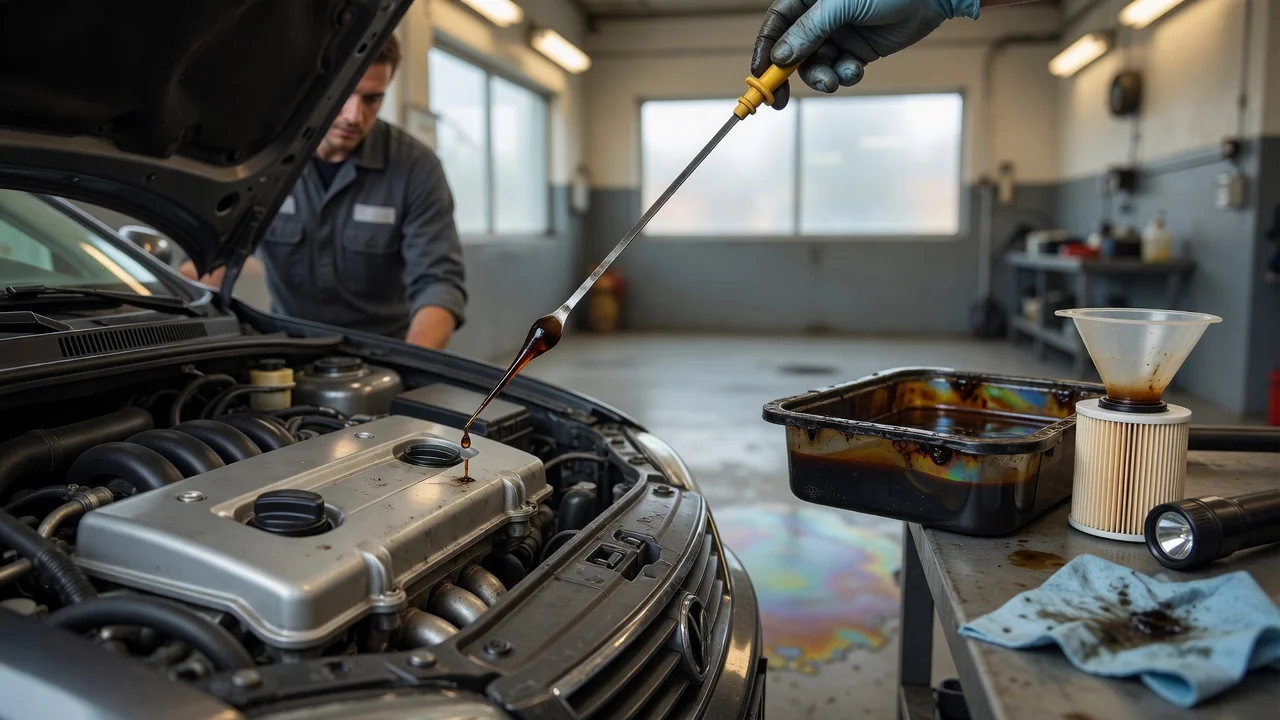
Park on level ground and follow the manual's procedure. Some manufacturers specify checking with the engine warm, others cold, and many say to wait a few minutes after shutdown. Wipe the dipstick, reinsert it fully, then read it. Some newer vehicles have no dipstick and report the level electronically through the instrument cluster or infotainment screen.
Below the minimum mark: top up with the specified oil, then find out where the oil went. The cause is either a leak or internal consumption (see the sections below). Within the normal range: low level is unlikely to be the cause. If a pressure warning or noise persists, move on to the pressure and contamination checks. Above the maximum mark: overfilling can let the crankshaft churn the oil into foam, which lubricates poorly and can raise crankcase pressure on seals. Drain to the correct level. A level that rises between changes can also point to fuel or coolant getting into the oil.
Second check: what the oil looks and smells like
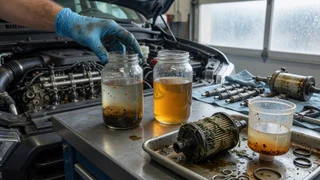
Milky, light-brown or frothy oil on the dipstick: possible coolant contamination, for example from a failed head gasket or oil cooler. A small amount of creamy residue only under the filler cap can come from condensation on vehicles used mostly for short trips. That is less conclusive on its own, but it should be investigated if coolant is also going down. Strong smell of fuel: possible fuel dilution, which thins the oil and reduces its protection. Thick, tar-like deposits or sludge: often linked to overdue oil changes or the wrong oil, and can restrict oil passages. Glittery particles or grit: may indicate internal wear. Have it inspected rather than simply changing the oil and carrying on. Very dark oil with no other symptoms: colour alone is a poor guide, because many oils darken quickly as they hold contaminants in suspension. Go by the service interval rather than appearance.
Finding where oil is going: leaks versus burning
If the level keeps dropping, first look for external leaks. Signs include fresh drips or spots under the parked vehicle, oily residue on the engine or underside, and a burning-oil smell after driving, which often means oil is dripping onto hot exhaust parts. Common leak points include the valve cover gasket, oil pan gasket, drain plug, oil filter seal and crankshaft seals. Which one applies depends on the engine design.
If there is no visible leak, the engine may be burning oil internally. Blue-grey exhaust smoke is the typical sign. Possible causes include worn piston rings, worn valve stem seals, a faulty crankcase ventilation (PCV) system, or, on turbocharged engines, worn turbocharger seals. When the smoke appears can hint at the cause, but a test is needed to confirm it. Some oil consumption is considered normal by many manufacturers. The acceptable amount is defined per engine, so compare against the manufacturer's figure rather than a general rule.
Noises and oil pressure
A light ticking or tapping from the top of the engine can come from low oil level, oil that is too thin or degraded, or valvetrain components such as hydraulic lifters not getting enough oil. A deep, rhythmic knock from the lower engine that rises with engine speed can indicate bearing damage. Treat that as a stop-driving condition.
If the oil pressure light flickers at idle or comes on under hard cornering or braking, the level may be low enough for the pump to briefly draw air. Check the level first. If the level is correct and the warning continues, the cause may be a worn oil pump, a blocked pickup screen, worn bearings, the wrong oil viscosity, or a faulty pressure sensor or switch. The warning circuit can't tell you which, so a technician should measure the actual pressure with a mechanical gauge.
Fault codes: evidence, not a verdict
Diagnostic trouble codes may point to an oil pressure sensor or switch circuit, an oil level sensor, or oil temperature. On many engines, variable valve timing codes are also connected to oil, because those systems use oil pressure to move the camshaft phasers. Low or dirty oil can trigger them. A code shows where to start looking, not which part has failed. A sensor code may be caused by wiring, a connector, or a genuine pressure problem that the sensor is correctly reporting. Check oil level and condition first, then confirm with measurements before replacing parts.
Stop driving and get professional help if
The red oil pressure warning stays on, or comes on while driving, with the oil level correct or unknown. The engine makes a deep knocking sound or new heavy mechanical noise. The oil level is below the minimum and you cannot top it up. Oil appears milky and the engine is also losing coolant or overheating. Heavy smoke comes from the exhaust or engine bay, or oil is visibly dripping onto hot exhaust parts. Oil is pouring out rather than seeping, for example from a loose drain plug or filter after a recent service.
What a professional diagnosis may include
Mechanical oil pressure test, to separate a real pressure problem from a sensor fault. Compression or leak-down test, to check rings and valves when oil is being burned. Cooling system pressure test or combustion gas test, when coolant contamination is suspected. Leak tracing, sometimes with dye, to find the exact source of an external leak. Laboratory oil analysis, which can detect coolant, fuel and wear metals. Crankcase ventilation (PCV) system inspection, for oil consumption, leaks or high crankcase pressure.
Preventing repeat problems
Use the oil grade and specification your manufacturer lists, and change oil and filter at the interval in the manual. If the manual has a separate schedule for severe use, such as frequent short trips, towing, dusty conditions or extreme temperatures, follow it when it applies to you. Check the level regularly between services, especially on older or high-mileage engines and on engines known to use some oil. Catching a falling level early is the simplest way to avoid the more expensive failures above.