Diesel Fuel Contamination: Symptoms and Problems It Can Cause
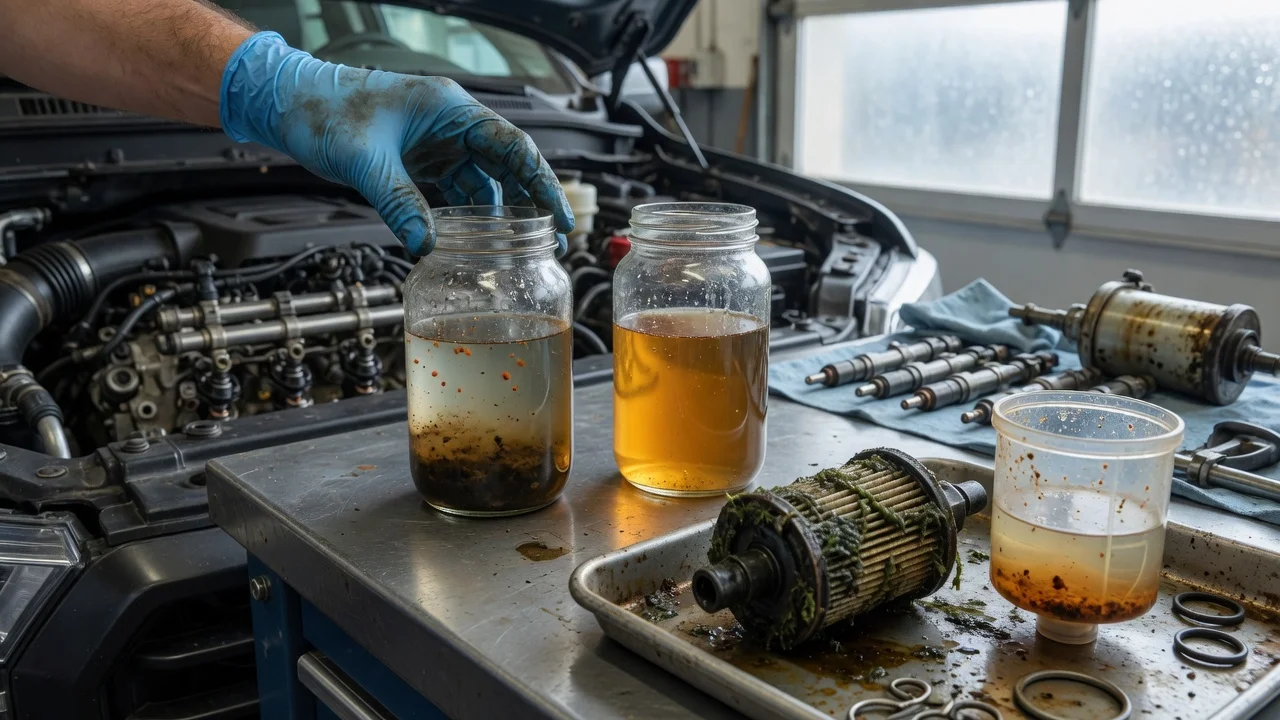
What Diesel Fuel Contamination Means
Diesel fuel contamination is the presence of unwanted material in the fuel supplied to the engine. The most common contaminants are water, solid particles such as dirt or rust, and the microbial growth that can develop where water and diesel meet. Contaminated fuel matters because modern diesel engines rely on tight clearances inside the high-pressure fuel system, and even small amounts of water or debris can interfere with lubrication, metering and injection.
Common Symptoms of Contaminated Diesel Fuel
The symptoms depend on how much contamination is present and how far it has traveled through the fuel system. Early-stage water contamination may produce no obvious drivability issue because water can collect at the bottom of the tank and fuel filter housing before it reaches the injection pump or injectors.
Hard starting or a longer cranking time before the engine fires; Rough or uneven idle that may clear as the engine warms up; Loss of power during acceleration or under load; Engine hesitation, surging or brief stalling; Excessive smoke from the exhaust, which can appear black, white or gray depending on the condition; Water-in-fuel warning light on vehicles equipped with a fuel-water separator sensor; More frequent plugging of the fuel filter
Problems Contaminated Diesel Can Cause
Water is especially damaging because diesel fuel also lubricates injection components. Water can displace the lubricating film, encourage corrosion and promote biological growth. Solid particles can score plungers, block small orifices and cause injector spray patterns to change. Contamination does not necessarily damage every component at once; it can begin with filter restriction and poor running before progressing to injection system failure if the source is not removed.
Corrosion inside steel fuel tanks, lines and injection components; Fuel filter blockage from debris, rust or microbial slime; Injector fouling or incorrect spray pattern; Injection pump wear or seizure in severe cases; Microbial growth that creates sludge and unpleasant odors; Voltage or signal errors from sensors affected by water or debris
How to Separate Symptoms from Possible Causes
A symptom such as poor acceleration can have multiple explanations, and contaminated fuel is only one of them. Air leaks on the suction side of the fuel system, a restricted filter, a weak lift pump, injector wear or an engine management fault can create similar behavior. Draining a sample from the tank or the fuel filter housing is a useful first check because it can show visible water separation, cloudiness, sediment or a confirmed biological smell before parts are replaced.
If a diagnostic trouble code is stored, treat the code as a clue rather than proof that a specific component is faulty. A fuel pressure code may reflect a blocked filter, a pump unable to prime because of air entry, or actual pump damage. The same code can appear for different physical causes, so the fault should be checked against the operating conditions and test criteria for that engine before deciding what to replace.
What to Check When Contamination Is Suspected
Inspect the fuel filter for water, sludge, rust particles or an unusual coating; Drain the fuel-water separator if fitted and note the amount and appearance of what comes out; Take a fuel sample from the tank or filter housing and let it settle in a clear container to check for separation; Confirm the fuel has a normal diesel odor rather than a sour or spoiled smell; Check whether the vehicle has been filled recently from an unfamiliar or low-turnover source
These checks help identify contamination but do not always show exactly which injection component has failed. If water or debris is found, the affected fuel should be removed and the system cleaned and refilled before the injection components are judged. A component should not be condemned solely because contamination was present if its actual performance has not been tested.
Model and Vehicle Considerations
Specific filter locations, fuel-water separator behavior, warning strategies and injection system sensitivity vary by model year, engine family and market configuration. Not all diesels use the same high-pressure system, and not all will display a dedicated water-in-fuel warning. The diagnostic value of a pressure reading or a fault code also depends on the vehicle and the conditions under which the manufacturer specifies that the reading should be taken.
A fuel contamination symptom is a system finding, not an automatic component replacement instruction. Confirm the contaminant, clean the fuel path and then evaluate the suspect part on the applicable test criteria.