Can You Extend an EV Charging Cable with an Extension Cord?
Direct Answer
You can technically use a 3-pin extension cable for EV charging, but it is not recommended as a permanent or primary solution. The practice is generally considered a temporary fallback only when a properly installed charging point or a manufacturer-supplied cable cannot reach the vehicle. The main risks are overheating, voltage drop, and inadequate weather protection, especially with standard household extension leads.
When an Extension Cord Might Be Used
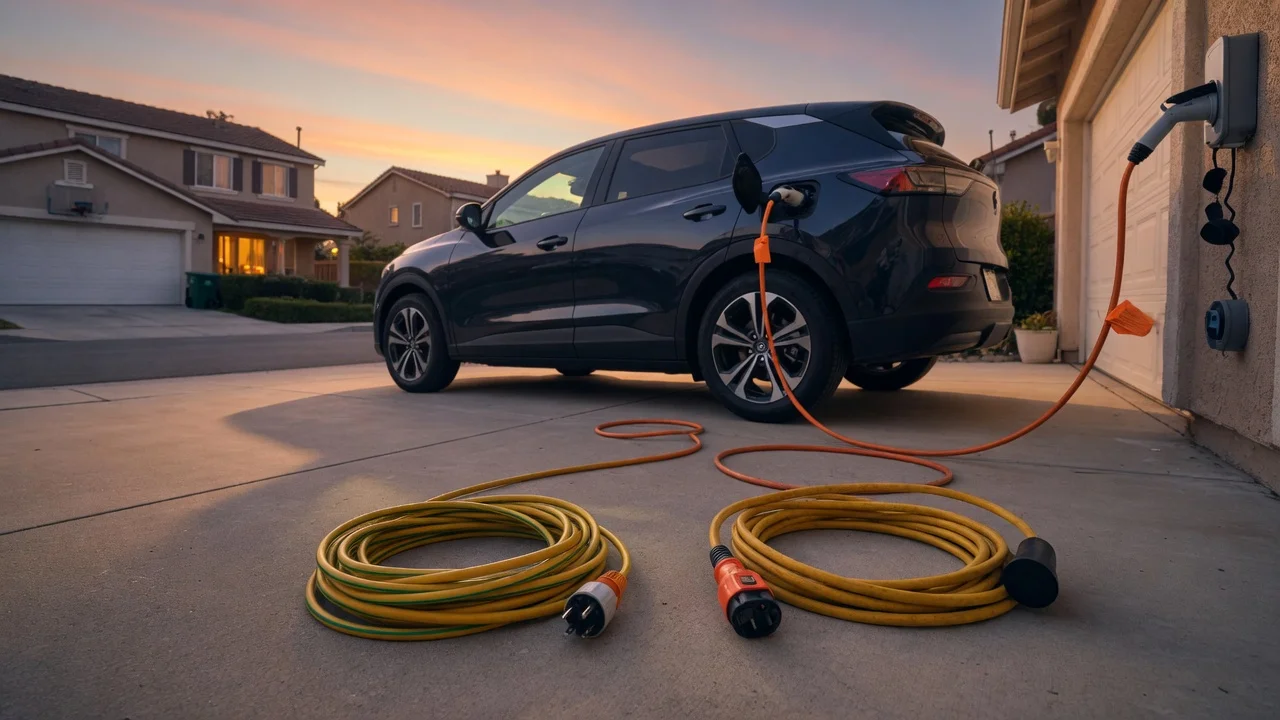
A 3-pin extension lead may be used for occasional or emergency charging where no dedicated EV charging equipment is available. This is typically limited to Mode 2 charging, where the vehicle is supplied with a portable charging cable that plugs into a domestic socket. Even then, the extension cord should be fully unwound, rated for the continuous current draw, and placed where it will not be crushed, coiled, or exposed to standing water.
Key Safety Limits and Cable Requirements
EV charging places a high continuous load on a circuit for many hours. A standard 13 A UK socket can supply up to about 3 kW, but many domestic extension cords are not built for sustained 10 A or 13 A loads. A suitable heavy duty extension cable for EV charging should have a minimum conductor cross-section of 1.5 mm², with 2.5 mm² preferred for longer runs. The plug and socket should be in good condition, and the connection should be checked for warmth during the first hour of use.
Why Standard Household Cords Are Unsuitable
Many household reel-type extension leads are rated for intermittent use only. When a cable is left coiled, heat cannot dissipate effectively and the insulation may soften or melt. A coiled cable also increases inductance, which can cause the plug or socket to overheat. For any EV charging extension, the lead must be fully extended and kept dry. Standard indoor extension cords do not provide the necessary ingress protection for outdoor charging.
Voltage Drop and Charging Reliability
Longer cables increase electrical resistance. At 10 A, a 25-metre 1.5 mm² extension lead can drop enough voltage to slow charging or cause the vehicle or portable charger to interrupt the session. Charging may become unreliable, and the vehicle may report a ground fault or supply voltage error. Shorter, thicker cables reduce this risk.
Safer Alternatives to a DIY Extension
Where a longer reach is needed, the preferred option is a dedicated EV charging extension cable designed for continuous outdoor use. These cables typically have thicker conductors, weatherproof connectors, and an inline residual current device or temperature sensor. Another alternative is to install a fixed charging station closer to the parking position, or to use a longer manufacturer-approved charge cable supplied for the specific vehicle.
Practical Guidance for Temporary Use
Use only a heavy duty extension reel rated for at least 13 A continuous current. Fully unwind the reel before charging. Choose a cable with a minimum cross-section of 1.5 mm²; 2.5 mm² is preferable beyond 10 metres. Keep the connection point off the ground and protected from rain. Do not leave the setup unattended for the entire charge cycle without an initial heat check. Stop use immediately if the plug, socket, or cable feels hot to the touch.
What the Evidence Does Not Cover
The supplied coverage does not include independent test data comparing specific extension cord brands or long-term failure rates. It also does not address whether a particular vehicle's portable charger will reject an extension lead through its internal protection logic. Owners should treat manufacturer instructions and local electrical regulations as the controlling guidance.