EV Charging Extension Cable
Short Answer
An EV charging extension cable can work when it is properly rated for the charger and vehicle, but it is not universally recommended. The main condition that changes the answer is the charging mode. Extension cables are generally more acceptable as a temporary workaround on a standard AC wall outlet or portable charger. They are not recommended for permanent use with high-power hardwired charging stations, and they cannot safely be used on a DC fast-charging connector. If the cable is under-rated for the current, it can overheat, cause a fire, or damage the vehicle or charger.
What an EV Charging Extension Cable Is
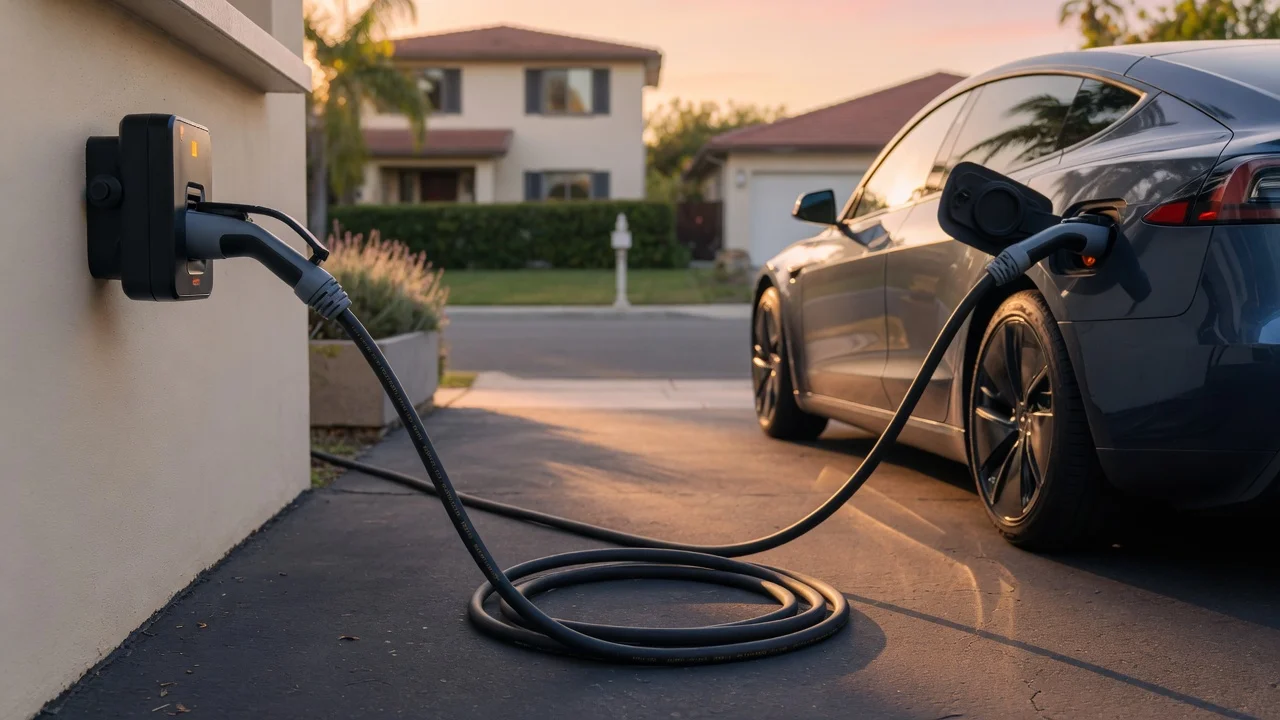
An EV charging extension cable sits between a charging station plug or portable charger plug and the vehicle inlet. It extends the reach of an existing cable. This is different from a longer charge cord that comes with a portable charger. The extension adds an extra connection point, and every extra connection point is a place where resistance, heat and moisture can become problems.
When an Extension Cable Can Be Useful
The most realistic use is with a portable or occasional charging setup. Common situations include a public AC charger where the installed cable is too short, a driveway where the car must be parked slightly farther from a wall outlet, or a destination charger where the fixed cable cannot reach the vehicle inlet. In these cases, a correctly specified extension may solve an immediate parking or access problem without changing the electrical installation.
When an Extension Cable Is Not Suitable
A charging extension cable is not appropriate for every charging situation. High-power hardwired AC charging stations, such as those installed permanently at a home or business, are usually designed with a specific cable length and thermal management. Adding an extension changes the current path and may defeat safety monitoring. Extension cables are also not available or safe for DC fast charging, where cooling, communication and connector locking are integrated into the cable assembly.
Compatibility and Connector Types
Compatibility depends on the connector type and the market. In Europe, a Type 2 extension cable is commonly discussed for AC charging. One end has a Type 2 plug and the other end has a Type 2 socket. In North America, a J1772 extension is the equivalent for AC charging. A Type 2 extension is not compatible with a CCS DC fast-charging inlet, and a J1772 extension is not compatible with a CCS1 or CHAdeMO DC fast-charging inlet.
An extension cable must also match the onboard charger and the charging station. If the cable is rated for 16 amps and the vehicle requests 32 amps, the result can be overheating. The cable should be rated for at least the maximum current of the charger. Using a three-phase cable on a single-phase supply is possible, but the current rating and conductor size still need to be correct.
What to Check Before Buying
Before buying an extension cable, check the maximum charging current of the charger and the vehicle. The cable must have a current rating equal to or higher than that maximum. Look for a cable with a temperature sensor if possible, although many lower-cost extensions do not include one. Check the IP rating for weather resistance if the cable will be used outdoors. Avoid coiled cables during charging, because a coiled cable can trap heat. Fully unroll the cable before use.
Practical Ownership Trade-offs
The trade-off is convenience against added risk and cost. An extension cable adds bulk and weight, which can be inconvenient in a vehicle cargo area. It also adds a plug-and-socket connection that can wear, corrode or loosen over time. For occasional use, the risk is manageable if the cable meets the current rating and is inspected regularly. For daily charging, a better solution is often to reposition the charger, install a longer permanent charge cable, or use a portable charger with a suitably long cord.
Gaps in the Supplied Evidence
No prices, availability, test results, or specific product recommendations were supplied. Vehicle-specific onboard charger limits vary by model year, market, trim and powertrain, and those differences were not provided. This article does not claim personal experience with any particular extension cable. Before purchase, confirm the exact connector type, current rating and weather protection required for your vehicle and charging location.