Dana 44 Locking Hubs: How to Choose the Right Set for Your Axle
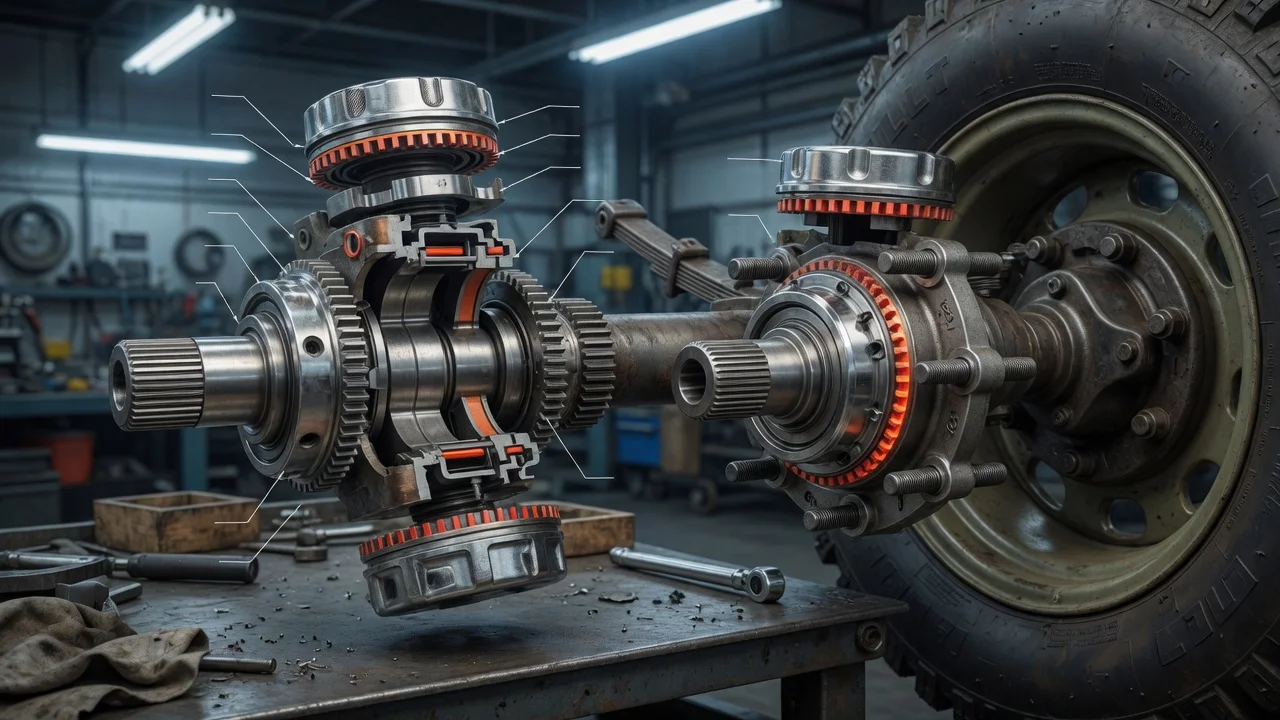
Choosing Dana 44 locking hubs starts with the axle under your truck, not the catalog photo. The front Dana 44 was fitted to four-wheel-drive vehicles from several manufacturers over many years, and hub, spindle and axle shaft details changed between makers and model years. This guide explains how to confirm fit, weigh manual against automatic designs, and plan for the work and upkeep that come with free-wheeling hubs.
Define the job the product must do
Locking hubs let the front wheels spin independently of the front axle shafts when the vehicle is in two-wheel drive. With the hubs unlocked, the shafts, U-joints, front differential gears and driveshaft can stop turning, which reduces wear and drag. When you need four-wheel drive, the hubs connect the shafts to the wheels again. Start by deciding how often that will happen. A truck used mostly on pavement with occasional snow duty has different needs than a trail rig that locks in several times every outing.
Next, note what the truck has now. A vehicle with a part-time transfer case and worn or missing hubs is a straightforward replacement. A truck running fixed drive flanges may have a full-time transfer case, and fitting free-wheeling hubs to that system without addressing the transfer case can leave the vehicle without drive in two-wheel mode. Also consider your operating conditions, such as mud, water crossings or road salt, plus your budget and whether rebuilding the existing hubs is an option.
Check compatibility
Dana 44 describes an axle family, not a single set of dimensions, so the name alone does not guarantee fit. The interfaces that matter are the spline count on the outer axle stub shaft, the number and spacing of studs or bolt holes on the wheel hub face, the hub body diameter, and the way the locking hub is retained, whether by external bolts or an internal snap ring arrangement. Brake and bearing changes across model years can alter the wheel hub itself, which affects what bolts on.
Identify the exact vehicle configuration: year, make, model and any axle tag that is still readable. Then look at the service history. Dana 44 front axles are often swapped between trucks, so the axle under a vehicle may not match its title. The most reliable check is physical inspection: pull the existing hub cap or hub, count the splines on the stub shaft and count the mounting studs. Compare those numbers with the hub maker's fitment data and the vehicle manufacturer specifications. Some later front axles use sealed unit bearings with no provision for manual hubs, so conventional bolt-on locking hubs will not fit them without a conversion.
Features that affect the choice
The main decision is manual versus automatic. Manual hubs are turned by hand at each wheel. Engagement is positive and visible, the design is simple, and the parts are easy to inspect, but you have to stop and get out to lock or unlock them. Automatic hubs engage when four-wheel drive is selected and torque is applied, and they typically release when the vehicle is backed up a short distance. That convenience comes with more internal parts, and engagement behavior varies by design. Read the specific product's operating instructions before relying on automatic hubs in steep or technical terrain.
Beyond the locking method, compare construction details that a seller can actually document: body material, internal gear and clutch ring material, the type of seals and O-rings, and whether the package is a complete hub assembly or only a dial or cap. Labels such as heavy duty or bulletproof are marketing, not evidence. More useful signs include fitment listed by axle and spline count, published installation instructions, available rebuild parts, and stated warranty terms.
Limitations and ownership costs
Installation is more than swapping parts. Removing the old hubs exposes the spindle nuts and wheel bearings, so it is a sensible time to inspect bearings, races and seals, clean out old grease, and set bearing adjustment and fastener torque to the vehicle's service information. Budget for new gaskets, snap rings, seals and possibly a spindle nut socket. If the bearings or races are pitted, the hub job becomes a bearing job as well.
Locking hubs cannot fix worn U-joints, damaged axle shafts, loose bearings or front differential problems, and they do not make the axle stronger. Water and dirt inside a hub cause sticking and wear, so check them after wet or muddy use, and grease them according to the hub maker's instructions. Some owners engage the hubs periodically to keep internal parts moving. There is no universal service interval for this. Follow the vehicle's maintenance schedule and the hub manufacturer's guidance, and shorten the intervals if your operating conditions are harsh.
Build a practical shortlist
Narrow the field to two or three locking hubs for your Dana 44 and check each against the same points. Does the listing match your confirmed spline count, stud pattern and mounting style? Is it manual or automatic, and does that suit how often you lock in? Does the kit include gaskets, snap rings and bolts, or will you buy those separately? Are installation instructions available, and can you buy replacement seals or rebuild parts later?
Record the warranty terms and any conditions attached to them, then note what extra parts and tools the job needs on your truck. A hub that fits correctly, comes with clear instructions and can be serviced over time is usually a better choice than one with stronger marketing claims and thin documentation. If your measurements do not clearly match any listing, recheck the axle before ordering rather than relying on the vehicle model alone.