Bad Transmission Shift Solenoid Symptoms: What They Mean and What to Check
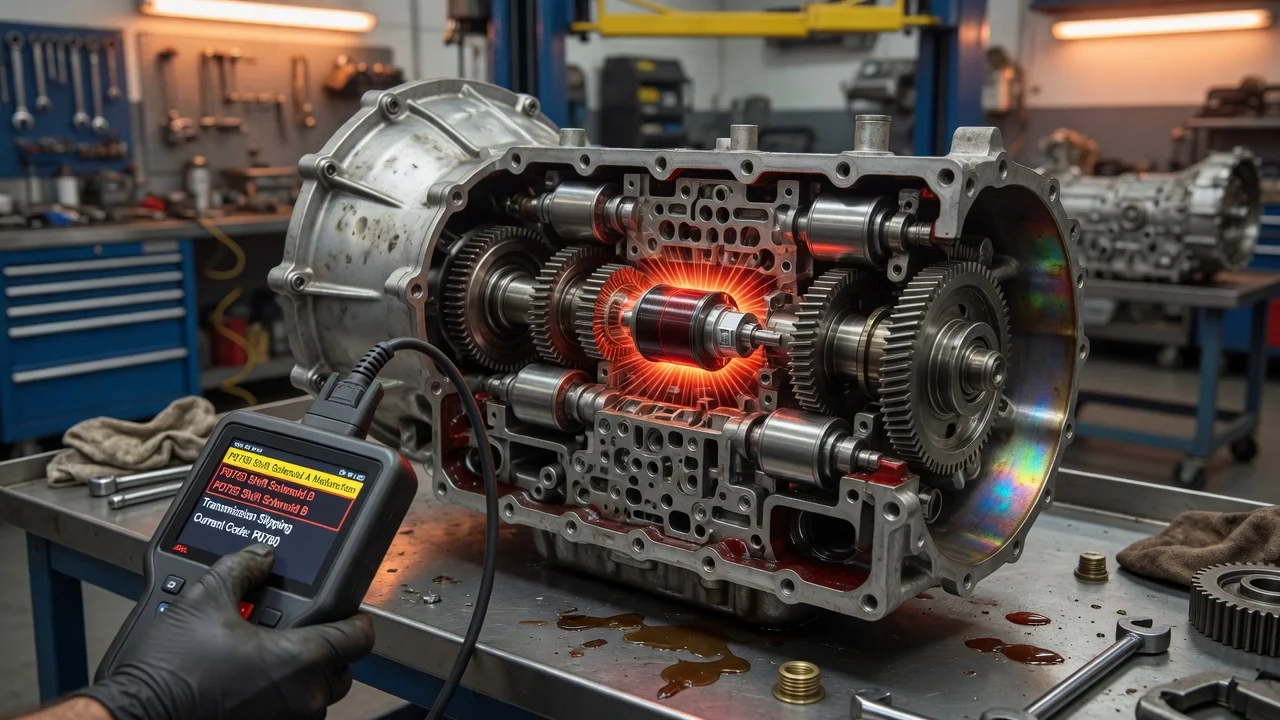
A shift solenoid is an electrically controlled valve that the transmission control module uses to direct fluid pressure and select gears in many automatic transmissions. When one malfunctions, shift behavior can change in noticeable ways, but the same symptoms can also come from fluid, wiring, software or internal wear. This guide explains how to recognize the symptoms of a bad transmission shift solenoid, which other causes compete with it, and how to narrow the problem down before anyone replaces parts.
Establish the symptoms
Start by identifying the transmission type and configuration. A conventional stepped automatic, a dual-clutch unit and a CVT control fluid and gears differently, and some designs place solenoids in a separate pack while others integrate them with the control module. The owner's manual, the VIN and the transmission identification code determine which diagnostic path and fluid specification apply, so record them before anything else.
Common automatic transmission shift solenoid symptoms include delayed upshifts or downshifts, harsh or abrupt engagement, skipping a gear, shifting erratically back and forth, and a transmission that stays in one gear. Many vehicles respond to a detected solenoid fault by entering a protective fail-safe mode, often called limp mode, which holds a fixed gear and makes acceleration sluggish. A check engine light or transmission warning message frequently accompanies the change, and some drivers notice higher engine speed while cruising because the transmission will not upshift.
Write down when the problem appears: on a cold start or after the transmission is fully warm, under light or heavy throttle, during specific gear changes, while climbing or towing, or after hitting a pothole or driving in rain. Note associated signs such as slipping, flaring revs, noises, smells or fluid spots, and any recent changes, including a fluid service, battery replacement, software update or other repair work. This record turns a vague complaint into a pattern a technician can test.
Distinguish plausible causes
A failing solenoid is only one explanation for poor shift behavior. Low, overheated or contaminated fluid can starve the hydraulic circuits, and fluid that does not match the required specification can change friction and pressure characteristics. Problems that begin right after a fluid change or top-up point toward fluid level or type. Problems that worsen as the fluid heats up support a hydraulic or fluid cause, although a solenoid with internal electrical damage can also fail only when hot.
Electrical faults are common competitors. A chafed harness, corroded connector, damaged ground or low system voltage can make a good solenoid act like a bad one. Intermittent faults that change over bumps, in wet weather or after the connector is disturbed point toward wiring. A weak battery or charging problem may set several unrelated codes at once. The control module itself, or outdated software, can also produce erratic commands, and several solenoid codes appearing together can suggest a shared circuit, power feed or module issue rather than multiple failed solenoids.
Mechanical causes include a sticking valve in the valve body, worn clutches or bands, and faulty speed sensors that give the module incorrect information. Slipping with rising revs under load and no circuit codes leans toward internal wear or pressure loss. A single gear that is consistently missing, together with a matching solenoid code, supports a solenoid or circuit problem but does not by itself confirm that the part has failed.
Checks in a useful order
Begin with checks an owner can do safely. Read diagnostic codes with an OBD-II scanner and save them, including freeze frame data if your tool shows it, before clearing anything. Generic shift solenoid codes from P0750 through P0770 cover solenoids A through E, and manufacturers add their own codes, so the exact description for your vehicle matters. Inspect visible wiring and connectors near the transmission for damage, oil intrusion or looseness, and look for leaks under the vehicle.
Check the fluid only if your vehicle has a dipstick and the manual describes an owner procedure. Many transmissions have no dipstick and require a specific fluid temperature, engine state and fill plug procedure, and checking them incorrectly can lead to overfilling or underfilling. Note fluid color and smell, but do not treat color alone as proof of damage. Confirm the required fluid specification against your service history rather than guessing.
Tests that require tools, specifications and usually a qualified technician come next. These include measuring solenoid resistance against the manufacturer's value, checking supply voltage and ground under load, commanding individual solenoids with a bidirectional scan tool, monitoring live data such as commanded gear and slip, performing a line pressure test, and inspecting the pan for debris. Some designs require removing the pan or valve body to reach the solenoids, and some module-integrated units need programming after replacement.
Interpret the findings
A shift solenoid code tells you the control module detected a problem in that solenoid's circuit or in its expected response, not that the solenoid itself has failed. Resistance outside specification measured directly at the solenoid supports a failed coil, while resistance that is correct at the solenoid but wrong at the module connector points to wiring. A code that returns immediately after clearing indicates a hard fault, whereas one that appears only under certain conditions suggests an intermittent connection or a temperature-related failure.
Normal electrical readings do not prove a solenoid works mechanically, because a valve can stick from debris while the coil tests fine. Heavy metallic debris or burnt friction material in the pan suggests internal wear that a new solenoid will not fix. Before replacing parts, confirm the circuit, the fluid level and condition, any available software updates and, ideally, a functional test that reproduces the fault. Replacing a solenoid without this evidence risks paying for a part while the actual cause remains.
Urgency and next action
Stop driving and arrange an inspection if the vehicle will not move in drive or reverse, slips with flaring revs, makes grinding or banging noises, shows a transmission overheating warning, smells burnt or leaks fluid. A transmission that suddenly drops into a fixed gear at highway speed can also create unsafe speed changes. Limp mode protects the transmission but does not mean it can be driven indefinitely, and no symptom pattern predicts how far a vehicle can safely go.
When you contact a shop, bring the VIN, transmission type, mileage, saved codes and freeze frame data, your symptom record and the service history, including the fluid used and the date of the last fluid service. This information helps confirm fitment, since solenoids and solenoid packs vary by model year and transmission version. Repair options range from fixing a connector or harness, updating software, or replacing a single solenoid or solenoid pack, to valve body work or an overhaul when internal damage is found. Ask which test confirmed the diagnosis before approving work.