Transmission Pressure Control Solenoid Symptoms: Causes, Checks and Next Steps
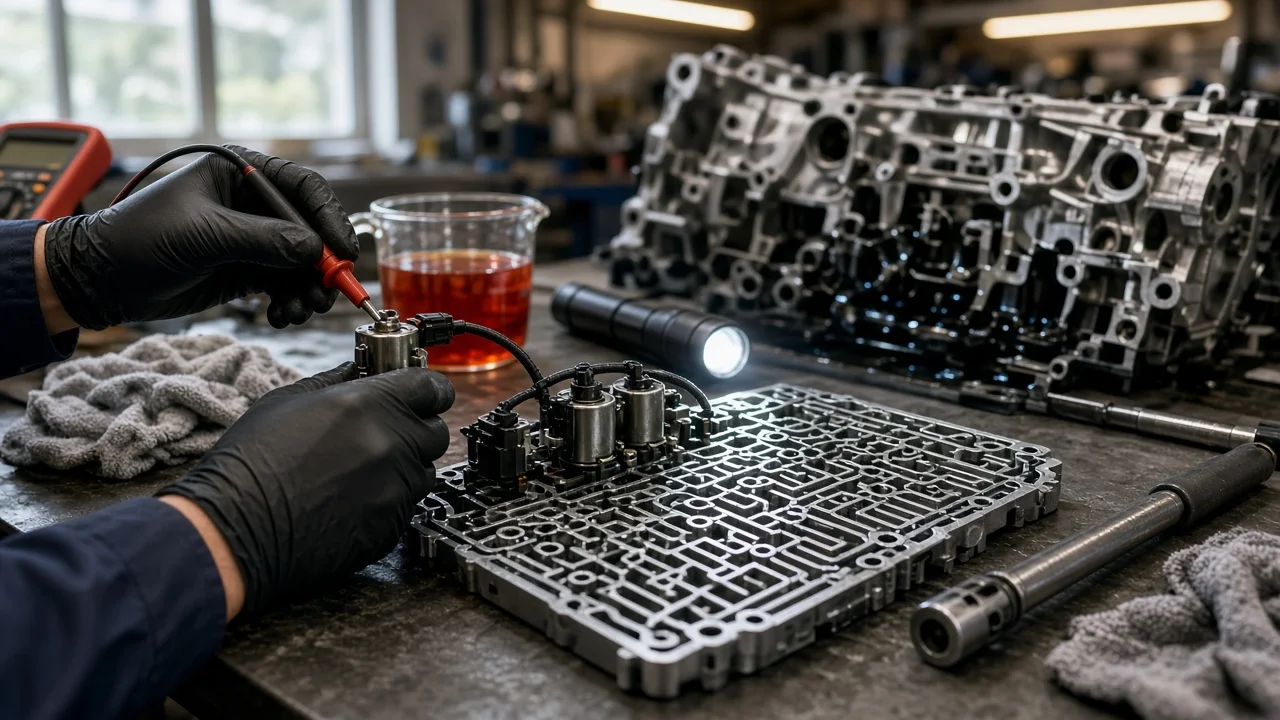
A pressure control solenoid lets the transmission control module regulate hydraulic line pressure, which decides how firmly clutches and bands apply. When that regulation goes wrong, shifts can turn harsh, soft or erratic. Fluid, wiring, software or internal wear can cause the same symptoms. This guide explains how to record what the car is doing, weigh the likely causes and work through checks before anyone replaces a part. Start by identifying your exact transmission type, because procedures and fluids differ widely.
Establish the symptoms
Write down when the problem appears: on a cold start or fully warmed up, under light or heavy throttle, on a specific gear change, when engaging reverse, or only after a long highway run. Note whether shifts feel harsh and banging or soft and slow, and whether the engine speed flares up between gears. A pressure control fault often shows as harsh or delayed engagement into drive or reverse, slipping, firm upshifts under light throttle, or a transmission that suddenly stays in one gear. That last behavior is often a failsafe or limp mode the module selects when it detects a fault, and a warning light usually comes with it.
Associated signs matter just as much. Record any warning lamps, stored diagnostic codes, fluid spots under the car, a burnt smell, unusual noises or a transmission temperature message. Then list recent changes: a fluid service, a battery replacement or jump start, new parts, a software update, road or collision damage, and any work near the transmission harness. Your service history is useful here. A recent fluid change with the wrong product or an incorrect fill level can produce the same shift behavior as a failing solenoid. Also note the mileage and whether the symptom is constant or intermittent.
Distinguish plausible causes
The solenoid itself is only one candidate. An electrical fault in its circuit can interrupt control even when the solenoid is healthy. Examples include a chafed wire, a corroded connector pin, water intrusion or a poor ground. Several observations support a wiring cause: circuit-related codes, symptoms that change when the harness is moved, and problems that appear in wet weather. A solenoid sticking from debris or internal wear tends to set pressure or performance codes while the circuit tests electrically normal. Its symptoms may be worse when cold or after the fluid has degraded.
Fluid level and condition are common competing causes. Low fluid, the wrong fluid specification, an overfilled unit or a clogged filter all change how hydraulic pressure builds, and each can mimic solenoid failure. A recent service, a visible leak, or dark, burnt-smelling fluid moves suspicion toward this area. Internal mechanical wear is another possibility. A worn pump, leaking seals, a worn valve body bore or damaged clutches can leave actual pressure below what the module commands. Slipping that worsens under load and debris in the fluid point that way, and in that case a new solenoid alone will not fix the problem.
Control and input problems complete the list. Several things can distort pressure commands: transmission module software, adaptive values lost after a battery disconnect, low system voltage, and faulty throttle position, vehicle speed or fluid temperature signals. Engine misfires can also feel like rough shifts. These explanations gain weight if there are codes stored in the engine module, a recent battery event, or a known software update for your model.
Checks in a useful order
Start with safe observations. Read stored and pending diagnostic codes with a scan tool and save any freeze-frame data, which shows speed, temperature and load when the fault was set. If there are other electrical complaints, check battery condition and charging. Look underneath for leaks, and inspect the visible harness and connectors for damage without unplugging anything on a hot transmission. If your vehicle has a dipstick and the owner's manual describes a checking procedure, follow it exactly, including the required temperature and gear position. Many modern units are sealed and need a specific temperature-controlled fill procedure. Do not open one without the correct method and fluid.
The next tier needs equipment, specifications or a qualified technician. A capable scan tool can compare commanded and actual pressure or solenoid current in live data, and it may be able to run solenoid output tests. Circuit testing checks voltage, ground and continuity against the manufacturer's wiring information. A solenoid resistance reading only means something when compared with the published specification for that exact unit. A mechanical line pressure test with a gauge confirms whether the hydraulic system produces the pressure it should. A technician should also check for technical service bulletins and software updates. On many transmissions the solenoid sits inside the valve body or an integrated control unit, so reaching it often means draining fluid and removing the pan or more.
Interpret the findings
Each result narrows the field, but none confirms a part on its own. A circuit code with an open, short or out-of-range reading points to the electrical path. That path includes the wiring, connector and module as well as the solenoid, so the actual fault location still has to be found. A resistance reading within specification shows that the coil is intact, not that the valve moves freely or regulates correctly. If the module commands the right pressure and a gauge shows low actual pressure, the fault is likely hydraulic. That could mean the solenoid, valve body, pump, filter or an internal leak.
Fluid findings also need care. Dark fluid with a burnt smell or debris suggests wear that a solenoid swap will not cure. On the other hand, correcting the fluid type or level and resetting adaptive values may fix the shift behavior entirely. If symptoms disappear after a software update or relearn, recheck under the same conditions that triggered them. Before buying a part, confirm fitment by VIN and transmission code. Solenoids differ between versions, and some are sold only as part of a valve body or solenoid pack that may need programming.
Urgency and next action
Stop driving and arrange a tow if any of these happen: the vehicle will not engage drive or reverse, the engine races without matching acceleration, a transmission overheating warning appears, fluid is leaking steadily, or you smell burning. Continued driving in those conditions can turn a wiring or solenoid repair into a full transmission replacement. A car in limp mode may still move, but its performance is limited, and reduced power on busy roads is a safety concern. Nobody can promise how many miles remain, so treat any slipping or unpredictable engagement as a reason to get a prompt diagnosis.
When booking the repair, bring the VIN, the transmission type or code, the mileage, and the full list of diagnostic codes with freeze-frame data. Add a description of when the symptom happens and your service history, including the fluid specification used at the last service. Repair options include connector or wiring repair, a correct fluid service, a software update, solenoid or valve body replacement and, if internal damage is found, an overhaul. Before approving parts, ask the shop which test confirmed the diagnosis.