Transmission Pressure Control Solenoid Replacement Cost
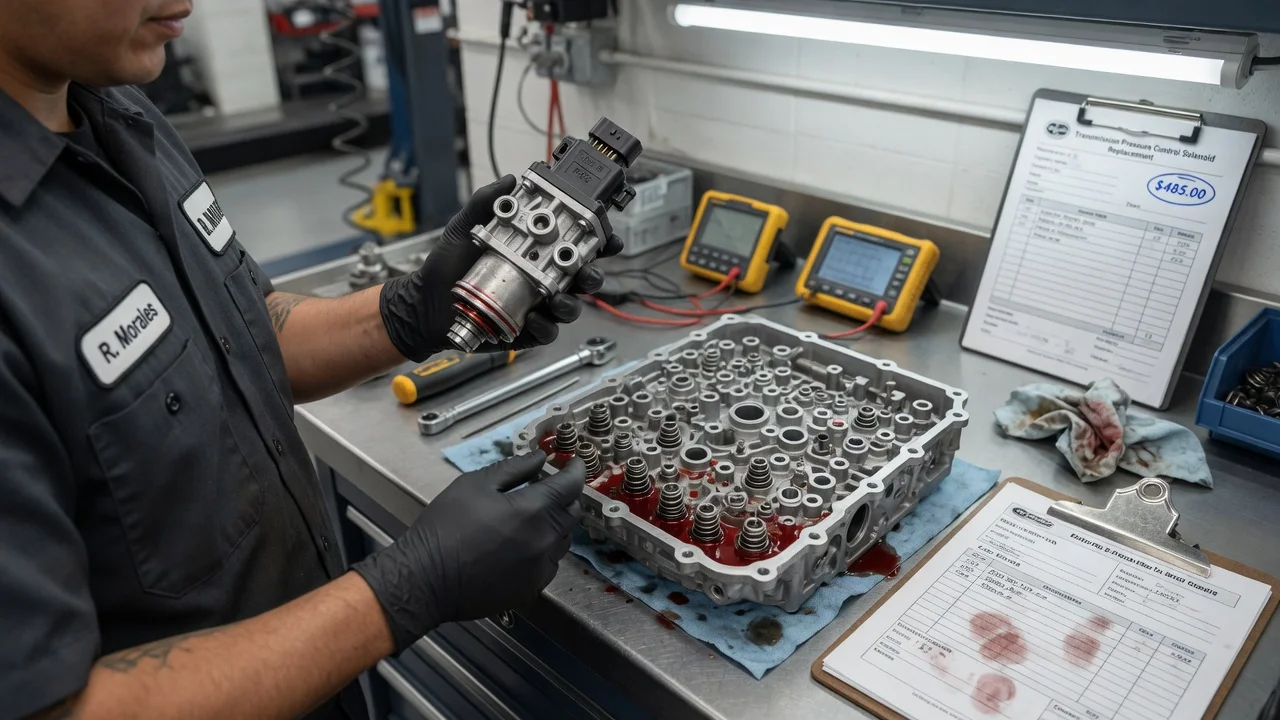
A pressure control solenoid regulates hydraulic line pressure inside an automatic transmission, so a fault can show up as harsh, delayed or slipping shifts. The cost of replacing it depends far more on your transmission type and on how the part is packaged than on the solenoid itself. This guide explains what a fair estimate should include, which factors change the total, and how to compare offers so you pay only for the repair your vehicle actually needs.
What the estimate includes
A complete estimate for this job usually has three parts: diagnosis, the repair itself and the fluid service that goes with it. Diagnosis should confirm the fault rather than assume it. Stored diagnostic codes in the pressure control range, such as circuit, performance, stuck-high or stuck-low faults, point toward the solenoid circuit. However, the same symptoms and some of the same codes can come from damaged wiring, a corroded connector, low or degraded fluid, a sticking valve in the valve body or a control module problem. A good shop checks fluid level and condition and tests circuit resistance and current. It often also compares commanded and actual pressure or shift data before quoting a part.
The repair portion covers removing whatever is needed to reach the solenoid, installing the new part and reassembling. On many designs this means dropping the transmission pan, so the total should also account for a gasket or seal and a filter where one is serviceable. It should also include refilling with fluid that meets the manufacturer's fluid specification. Some vehicles need a software update, an adaptive value reset or a relearn drive afterward. A quote that lists only the part, or only labor, is a partial number. Compare totals that include diagnosis, fluid, any required programming and a road test.
What changes the cost
The biggest variable is how your transmission packages the solenoid. On some units it is a separate part that bolts to the valve body and can be replaced on its own. On others it is sold only as part of a solenoid block or pack, as part of a complete valve body, or inside a mechatronic unit that combines the hydraulics and the transmission control module. A pack or mechatronic assembly costs considerably more than a single solenoid and may need to be coded to the vehicle. Dual-clutch transmissions and CVTs use different control layouts again, so an estimate for a conventional automatic does not apply to them. Confirm fitment by VIN or transmission model code, because the same vehicle can be built with more than one transmission.
Labor depends on access. A solenoid that can be reached after a pan drop takes far less time than one that requires removing the valve body. On some front-wheel-drive and all-wheel-drive layouts, subframe or exhaust components make the pan or side cover hard to reach. Shops typically bill from published labor times multiplied by their hourly rate. That rate varies by region and by whether you choose a dealer, an independent general shop or a transmission specialist.
Parts choice also shifts the total. Original equipment, quality aftermarket and remanufactured assemblies differ in price, in warranty and in how closely they match the factory calibration. Fluid matters as well. Some transmissions take several quarts of a specific synthetic fluid and require a temperature-controlled fill check, which adds time compared with a simple dipstick top-up.
Compare like-for-like options
Before comparing prices, make sure each offer solves the same problem with the same scope. A shop replacing only the pressure control solenoid is not quoting the same job as one replacing the whole solenoid pack or valve body, even if both call it a solenoid repair. Neither offer is automatically wrong. If the valve body is worn, or if the solenoid is not sold separately for your unit, the larger assembly may be the correct repair. Ask each shop why it chose that scope and what testing supports the choice.
Warranty terms should line up too. Note whether the warranty covers parts only or parts and labor, how long and how many miles it lasts, and whether it is honored only at that shop or at other locations. A cheaper solenoid with a short parts-only warranty can end up costing more if a repeat repair means paying for labor and fluid again. Also check whether the price assumes a used part, which may carry little or no coverage.
Inspection may reveal burnt fluid, heavy friction material in the pan or slipping under load. In that case the problem may be internal wear rather than the solenoid alone. The repair options then widen to valve body work, an overhaul or a replacement transmission. Compare those on their own terms rather than as a solenoid job. Doing the replacement yourself is realistic only under three conditions: the part is accessible from outside or behind the pan, you know the correct fluid and fill procedure, and no programming is required.
Read an itemized quote
An itemized quote makes offers comparable and shows what was left out. Look for the diagnostic charge and whether it is credited toward the repair. Check the exact part description, including brand and part number, and whether it is a single solenoid, a pack or a complete assembly. Fluid should be listed by quantity and specification, along with the filter, pan gasket or seals. Labor should show hours and rate. Any programming, adaptive reset or relearn should appear as its own line.
Then check what falls outside the price. Common additions are shop supplies, fluid disposal fees, taxes, wiring or connector repair if the harness is damaged, and a module software update. Ask what happens if the new solenoid does not fix the fault. Some shops apply part of the cost toward the next step, while others treat it as a separate job. Confirm that the quote includes a test drive and a recheck for codes after the repair, and get the warranty terms in writing.
Decide the next step
Start by gathering what a shop needs for an accurate quote. That includes the VIN, the transmission type and model code if you know them, and the stored diagnostic codes with freeze-frame data. Add a clear description of the shift behavior and when it happens. Bring your service history too, especially the last fluid change and any earlier transmission work. With that information, request written estimates from at least two shops that work on your transmission type, and ask each one to price diagnosis separately from the repair.
Avoid shortcuts that can make things worse. Clearing codes, or topping up with a fluid that does not meet the specification, does nothing about the cause. The lowest headline price is not a saving if it leaves out fluid, programming or warranty coverage. Approve the work when three things are true: the diagnosis explains the symptoms, the quoted scope matches how your transmission packages the part, and the total covers everything needed to finish the job.