Transmission Valve Body Replacement Cost: What Drives the Estimate
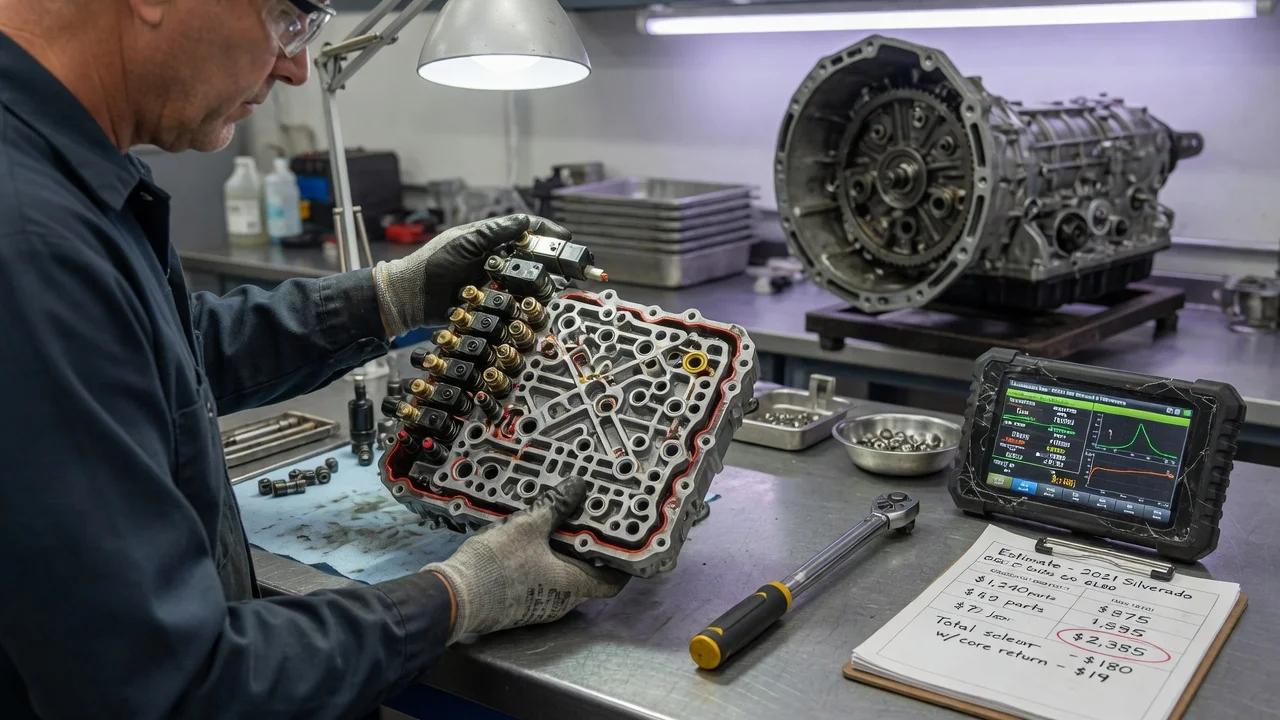
Two shops pricing a valve body replacement on the same vehicle may be describing very different jobs. The valve body is the hydraulic control center of an automatic transmission. It routes pressurized fluid to the clutches and bands, and on many modern units it is combined with the shift solenoids or the control module. This guide explains what a valve body estimate should cover, why totals differ, and how to compare offers on equal terms.
What the estimate includes
A complete estimate for an automatic transmission valve body replacement usually has several parts. These are diagnosis, the valve body itself, and the labor to reach and install it. They also include a new pan gasket and filter where the design uses them, the correct fluid, and any programming or adaptation the transmission needs afterward. Many shops quote only the part and labor, then add fluid, supplies and calibration as separate lines. A low number that leaves these out is a partial quote, not a total. It cannot be compared fairly with a quote that includes them.
Find out which assembly is being priced. On some transmissions the valve body is a purely hydraulic casting, and the solenoids can be replaced one at a time. On others it is sold as a single unit with the solenoids, sensors or an integrated control module, often called a mechatronic unit. That changes both the part price and whether software setup is needed. Confirm the transmission type and the exact assembly before treating any figure as the real cost.
What changes the cost
The biggest cost drivers are the transmission design and how much has to come apart to reach the valve body. On many longitudinal automatics it sits under the oil pan and can be reached from below. Some transverse units place it behind a side cover. Other layouts require removing subframe parts, axles or other components first. Labor time follows that access, so the same repair can vary widely between vehicles that seem similar.
The choice of part matters too. Options include new from the vehicle manufacturer, remanufactured, updated aftermarket or used. Integrated units with electronics typically cost more and may need dealer-level or equivalent software to program the replacement to the vehicle. Fluid is another variable. Many modern transmissions require a specific fluid specification and a precise fill and level-check procedure at a set temperature, and the wrong fluid can cause shift problems of its own. Shop labor rates, regional cost differences and whether diagnosis is billed separately complete the picture.
An uncertain scope also affects the final bill. Harsh, late or erratic shifting and stored diagnostic codes can point toward the valve body. The same symptoms can also come from low or degraded fluid, a wiring fault, a failed solenoid, a control module problem or worn clutches. A shop that has confirmed the fault with scan data, pressure testing or inspection can quote with more confidence than one working from symptoms alone.
Compare like-for-like options
The usual repair options are: • replacing the complete valve body; • rebuilding the existing one with new solenoids, seals or bore repair parts; • installing a remanufactured unit; • using a salvage part; • replacing the whole transmission when internal damage is found; Each option carries a different scope and risk. A used valve body may match on paper but have unknown wear. A remanufactured or updated unit may include fixes for known wear points in that design.
To compare offers fairly, line them up on the same terms. That means the same assembly with confirmed fitment for your transmission and vehicle, and the same associated work, such as fluid, filter and programming. It also means the same warranty length and coverage. Ask whether the warranty covers parts only or parts and labor, and whether other shops will honor it. If one quote replaces the valve body and another recommends a full transmission, the gap reflects different diagnoses. Ask each shop what evidence supports its recommendation.
Read an itemized quote
A useful quote names the part precisely. It should say whether the part is new, remanufactured or used, give the brand or source, and state whether solenoids, sensors or a control module are included. Labor should show the hours billed and the rate. Look for separate lines for the fluid type and quantity, pan gasket, filter, seals, and any bolts the manufacturer specifies as single-use.
Check for charges that often show up later. These include diagnostic fees, software programming or adaptation, a road test, shop supplies, fluid disposal and taxes. There may also be a core charge, refunded only when the old unit is returned in rebuildable condition. Ask how the shop handles what it finds after the pan or cover comes off. Heavy debris or clutch material may signal damage beyond the valve body. A written policy requiring your approval before extra work is added protects you from a surprise increase.
Decide the next step
Before accepting an estimate, gather the vehicle identification number, the transmission code if you know it, the mileage, a description of the current shifting and any stored diagnostic codes. Share your service history, especially recent fluid changes and which fluid was used. This helps the shop judge whether the problem is wear, contamination or a maintenance issue. Ask each shop how it confirmed the fault and what it will check after installation.
Avoid shortcuts that can make the outcome worse. A fluid flush or additive is not a substitute for a confirmed valve body repair. Replacing parts based on symptoms alone can mean paying for a valve body that does not fix the problem. Do not choose a part whose fitment has not been verified for your exact transmission. Do not skip required programming or the correct fill procedure. Once the diagnosis is solid and you have two or three itemized quotes covering the same scope, the comparison becomes straightforward.