Transmission Cooler Line Replacement Cost: What Drives the Price
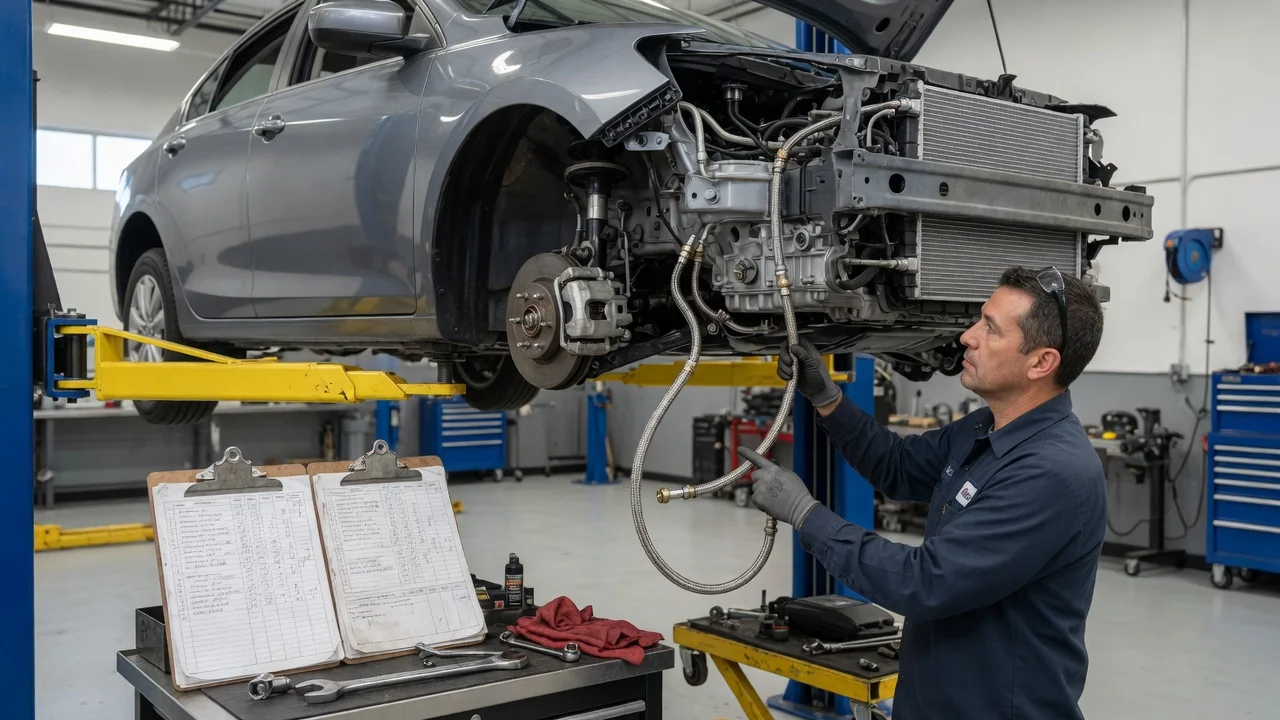
Transmission cooler lines carry fluid between the transmission and its cooler. That cooler is usually a section inside the radiator, an auxiliary cooler, or both. When a line leaks or is damaged, the cost to replace transmission cooler lines depends more on your vehicle's layout and on what the job includes than on the lines themselves. This guide explains how to read an estimate, what raises or lowers it, and how to compare quotes fairly.
What the estimate includes
A complete transmission cooler line replacement cost normally covers several steps. The shop confirms the leak source, removes the damaged line or lines, and installs new ones with the correct fittings, seals or retaining clips. It then refills with the specified fluid and checks the level using the procedure your transmission requires. Some quotes cover only part of that work. A parts-only price from a parts counter leaves out labor and fluid, and a labor quote may assume you are supplying the parts. Ask whether the figure is for one line or both. Many vehicles use separate supply and return lines, and some sell them only as a paired assembly.
Diagnosis deserves its own line on the estimate. Fluid near a cooler line does not by itself prove the line has failed. Fluid can travel along the underbody from a pan gasket, a seal, the radiator cooler fitting or an auxiliary cooler. A good estimate states where the leak was found and how it was verified, for example by cleaning the area and rechecking, or by using dye. If an estimate blames the line without an inspection, treat it as provisional.
What changes the cost
Transmission type and configuration matter first. A conventional automatic, a CVT and a dual-clutch unit can use different line routing, fittings and fluid specifications. Some sealed units have no dipstick. On those, the level check needs a fill plug, a specific fluid temperature and sometimes a scan tool. Vehicles with an auxiliary or towing cooler have extra lines and connections. Engine and drivetrain layout also affect access. On some vehicles the lines can be reached from below in a short session. On others they run behind the engine, along the frame or above the subframe, so shields, exhaust components or other parts must come off first.
Parts choice is the next driver. Factory line assemblies, direct-fit aftermarket assemblies and repair hose sections differ in price, availability and fitment. Many original lines combine rigid metal tubing with crimped rubber sections. Leaks often start at the crimped joint or the quick-connect end, which is why some lines are sold only as a complete assembly. Fluid is a separate cost. The correct fluid for your transmission may be a multi-vehicle product or a manufacturer-specific one. The quantity depends on how much was lost and how much drains out during the repair.
Condition and location complete the picture. Where roads are salted, corroded fittings can seize or snap, turning a line replacement into a radiator or fitting repair. Labor rates vary between dealers, independent shops and mobile mechanics, and between regions. Shops also estimate time differently, so compare hours and hourly rate separately rather than only the total.
Compare like-for-like options
There are three main repair options: a complete factory assembly, a direct-fit aftermarket assembly, or replacing only a damaged hose section. A section repair must use hose and fittings rated for transmission fluid and for the line's operating pressure and temperature. It can be a legitimate repair with proper components, such as correct compression or flare fittings on metal tubing. Improvised fixes are prone to leaks and blow-offs, such as worm clamps over a cut metal line or hose not intended for transmission fluid. A leak that empties the transmission can damage it, so a cheaper repair that fails rarely saves money.
To compare fairly, line up quotes on the same scope. That means the same lines, the same part type, the same fluid specification and level-check procedure, and the same warranty terms on parts and labor. Note which quotes include new O-rings or retaining clips at quick-connect fittings, and which allow for a broken fitting. If one quote is much lower, check whether it covers only a single line, excludes fluid or assumes you will supply the parts.
Consider the vehicle's recent history as well. If the transmission ran low before the repair, tell the shop about any change in shift behavior, slipping, harsh engagement or warning lights. Ask whether they will check for diagnostic codes. These signs do not prove internal damage. They can mean the cooler line repair is only part of the answer, though, and it is better to know that before you approve work.
Read an itemized quote
An itemized estimate should name each part and say whether it is factory or aftermarket. It should include a part number or description that confirms fitment for your vehicle's year, engine and transmission. Labor should appear as hours and an hourly rate, or as a flat price with the scope written out. Fluid should be listed with its specification and quantity, so you can confirm it matches the requirement in your owner's manual. Seals, clips, shop supplies, disposal and any diagnostic or inspection fee should be listed separately rather than buried in a single figure.
Then read the quote for exclusions. Common ones include broken or seized fittings at the radiator or transmission and damage found once shields are removed. Others are a separate charge for a temperature-based level check and fluid beyond the stated amount. Ask how the shop will handle these, including whether it will stop and call you and how extra time is billed. Also confirm the warranty period for parts and labor and whether it changes if you supply your own parts.
Decide the next step
Start by identifying your transmission type and any auxiliary cooler. Gather your service history, including the date of the last fluid service. Have the leak source confirmed before approving parts, and get at least two itemized quotes on the same scope. Make sure each quote names the fluid specification and explains how the level will be checked after the repair. If you are considering doing the job yourself, find out whether your transmission needs a scan tool or special procedure to set the level. Also check whether the fittings require a dedicated release tool.
Until the repair is done, monitor the fluid level if your vehicle allows it. Avoid driving with a steady, active leak, because running low can harm the transmission. Skip shortcuts such as unrated hose, stop-leak products in place of a repair, or reconnecting a line without replacing a damaged seal or clip. The right estimate is the one that covers the full job on your specific vehicle, not simply the lowest number.