Rear Axle Shaft Replacement Cost: What the Estimate Includes
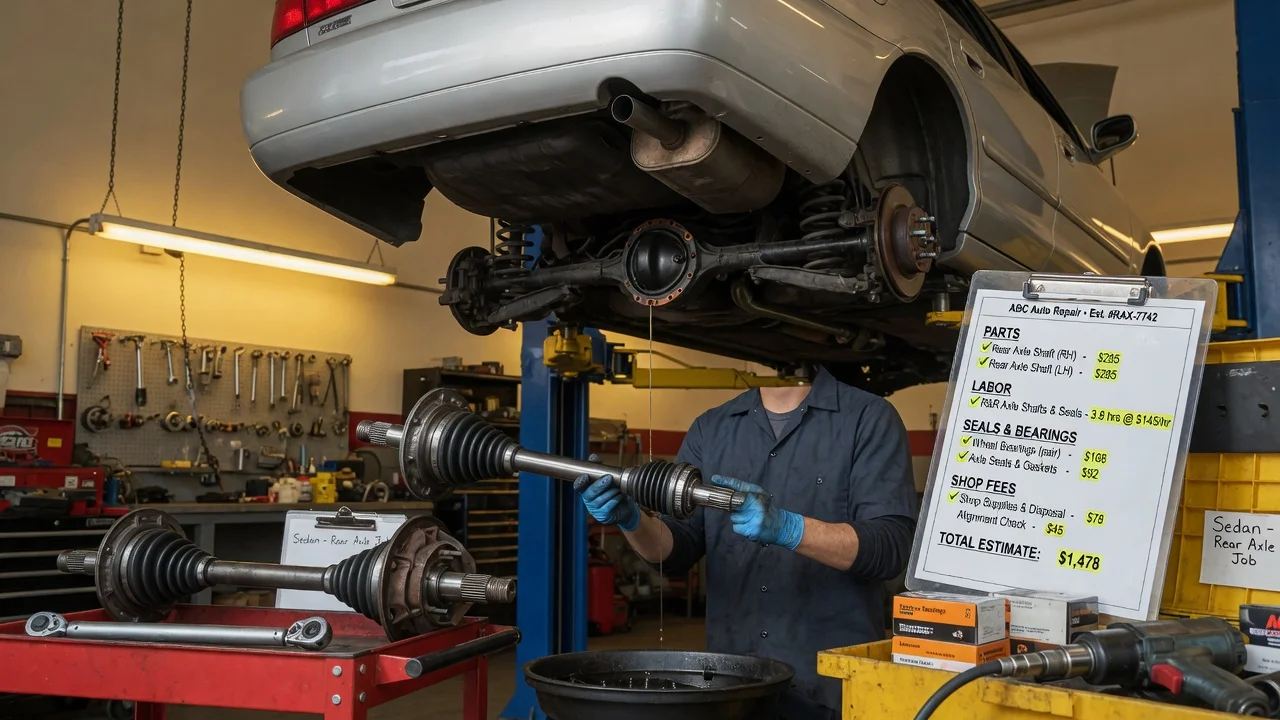
The cost to replace a rear axle shaft can mean very different things depending on who writes the estimate and what they include. One shop may quote only the shaft, while another quotes the shaft plus bearing, seal and gear oil. This guide explains what a complete estimate should cover, which factors change the price, and how to compare quotes fairly before you approve the repair.
What the estimate includes
A complete estimate normally covers four things: inspection or diagnosis, the shaft itself, labor to remove and install it, and the smaller parts that are disturbed during the job. On many rear-wheel-drive trucks and SUVs with a solid rear axle, that means the wheel bearing, the axle seal, and either a retaining clip or a bolt-in retainer. If the differential cover has to come off to reach the clips, the estimate should also include a new cover gasket or sealant and fresh gear oil. Vehicles with independent rear suspension use half shafts with CV joints instead, so the job and its parts list look different.
A partial quote lists only one piece of that picture, such as the price of the part or a labor figure. That is not wrong, but it cannot be compared with a total. Ask whether the number you are given is parts only, labor only, or an out-the-door figure that includes fluids, shop supplies, disposal fees and tax.
What changes the cost
Vehicle configuration matters most. Axle design (semi-floating with C-clips, bolt-in retainer, full-floating on heavier trucks, or independent half shafts), the differential type, the brake setup and whether the axle has a limited-slip or locking differential all affect the parts needed and the labor time. Confirm the exact year, model, drivetrain and any axle code from the vehicle's build information or door label, because different trims of the same model can use different shafts.
Part choice comes next: new original-equipment, new aftermarket, remanufactured or used. Labor depends on local rates and on how the shop calculates time, which is often taken from a published labor guide rather than measured hours. The condition of the vehicle can widen the scope. A seized bearing, a worn bearing surface on the shaft or housing, a leaking seal that has soaked the rear brakes with gear oil, or a broken shaft that damaged nearby parts will all add work. Operating conditions such as frequent towing, off-road use or exposure to road salt make these extras more likely.
Compare like-for-like options
Before comparing prices, line up the scope. A quote for a new shaft with a new bearing and seal is not equivalent to one that reuses the old bearing. Ask each shop to state whether it replaces the bearing and seal, refills the differential with the fluid type and quantity in the manufacturer specifications, and adds friction modifier where a limited-slip unit requires it.
Compare warranty terms as well: how long the coverage lasts, whether it includes labor, and whether it is honored at other locations. A used shaft from a salvage source may cost less but often carries limited warranty and an unknown history. Some shops recommend doing both sides when both bearings are worn; that can be reasonable if the inspection supports it, but it should appear as a separate line so you can decide. If the shaft itself is undamaged and only the bearing or seal has failed, a bearing and seal repair may be the correct job instead of a full shaft replacement.
Read an itemized quote
A useful quote lists each part with its brand or source, part number, quantity, and whether it is new, remanufactured or used. Labor should show the hours and hourly rate, or a flat price with the operations it covers. Fluids should be listed by type and amount rather than as a single unexplained charge.
Look for exclusions and conditional charges. These include diagnostic fees that may or may not be credited toward the repair, shop supplies, environmental or disposal fees, taxes, and open-ended wording that allows additional parts to be added later. Ask the shop to contact you before doing anything beyond the approved scope, and request the old parts back if you want to see the failure. Check whether brake pads or shoes contaminated by gear oil are priced separately, since a leaking axle seal can ruin them and their replacement is a common addition to this repair.
Decide the next step
Start with a confirmed diagnosis. A humming or grinding noise, vibration, wheel play or gear oil on the inside of a rear wheel can come from the shaft, bearing, seal or other components, so an inspection should identify the failed part before anything is priced.
Then work through a short checklist. Give each shop your VIN and exact vehicle configuration. Ask for written, itemized quotes covering the same scope. Confirm part type, warranty and fluid specification. Review your service history for earlier axle or differential work that may affect what is needed. Ask what else could need replacing if hidden damage is found. Avoid shortcuts such as buying a shaft before the part number is confirmed, or continuing to drive on a failing bearing or a broken shaft. On C-clip axle designs, a broken shaft or missing clip can let the axle and wheel slide out of the housing. For differential fluid service, follow the maintenance schedule in your owner's manual rather than a general interval.