Transfer Case Repair Cost: What Affects the Estimate
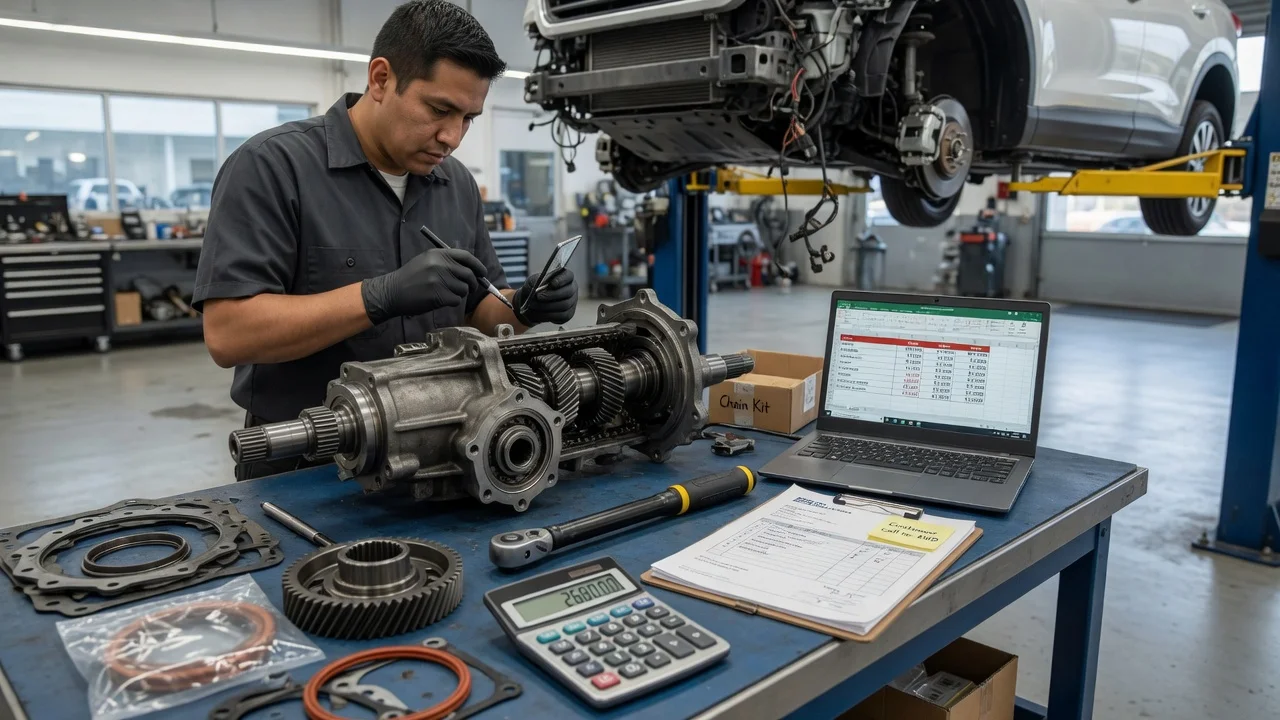
Transfer case repair cost is rarely a single number. The price depends on what has actually failed, how your four-wheel-drive or all-wheel-drive system is built, and how much of the unit a shop proposes to open up. This guide covers what an estimate should include, which factors move it up or down, and how to compare quotes fairly. That way you can judge whether the price matches the work your vehicle actually needs.
What the estimate includes
The transfer case splits engine power between the front and rear axles. Problems can range from a leaking output seal or a faulty electronic shift motor to a stretched drive chain, worn bearings, a damaged shift fork or a failed clutch pack in an all-wheel-drive unit. A repair can therefore mean anything from replacing one seal with the case still in the vehicle to a full rebuild or replacing the whole unit. A complete estimate should name the failed component and state the planned scope. It should also cover diagnosis, parts, labor, fluid and any associated work needed to return the drivetrain to proper operation.
Be careful with partial figures. A price for a rebuild kit, a used unit or labor alone is not the total. Removal and installation, replacement fluid, gaskets and seals, a diagnostic fee and core charges may all be billed separately. So may any programming or calibration an electronically controlled unit requires. When you ask what it costs to fix a transfer case, ask whether the number is the complete out-the-door price or only one part of the job.
What changes the cost
Vehicle configuration is the starting point. Part-time, full-time and all-wheel-drive systems use different transfer case designs. Some have a manual shift lever and others an electronic shift motor and encoder. Units can be chain-driven or gear-driven, and even one model line may offer several transfer cases depending on engine, trim and drivetrain package. Electronic units may involve a control module or actuator, and some require setup to manufacturer specifications after installation. The identification tag on the case and the vehicle identification number help a shop match the correct parts. Without them, a quote is only a guess.
Parts choice and labor make up most of the difference between quotes. A new original-equipment unit, a remanufactured exchange unit, an aftermarket rebuild kit and a used salvage unit differ in price, condition and warranty. Labor depends on how much must come off to reach the case. Skid plates, exhaust components, driveshafts and crossmembers vary by vehicle. Hourly rates also vary by region and by shop type, such as a dealer, a general repair shop or a drivetrain specialist.
The final scope often depends on what the inspection or teardown finds. A shop may first see an external leak, then find metal debris in the fluid or worn internal parts once the case is opened. Related components such as driveshafts, universal joints, the front differential or axle seals may also need attention. Service history and operating conditions affect how much wear a technician is likely to find. Missed fluid changes, frequent towing, off-road use or mismatched tire sizes on an all-wheel-drive vehicle are common examples.
Compare like-for-like options
Typical options include: • Repairing only the failed part, such as a seal, actuator or sensor; • Rebuilding the existing case with new internal wear parts; • Installing a remanufactured exchange unit; • Fitting a used unit; • Buying a new unit; Each one covers a different amount of work. A seal replacement may be appropriate when the internals are healthy. A rebuild or replacement makes more sense when the chain, bearings or gears are worn. Comparing a seal job with a full rebuild by price alone tells you little about value.
To compare offers fairly, line up the same scope. If two shops both quote a rebuild, check what each one replaces. One may include the chain, bearings, seals and pump, while the other covers only seals and gaskets. Compare warranty terms the same way. Look at length and mileage, whether labor is covered as well as parts, who honors the claim and what conditions apply, such as using the specified fluid. A used unit may cost less but comes with an unknown history and often a shorter warranty. Finally, confirm that each quote includes the same associated work, such as correct fluid, any required programming and checks of connected drivetrain parts. A cheaper quote that leaves these out is not truly cheaper.
Read an itemized quote
A useful written quote separates its charges. Look for: • The diagnosis or inspection fee, and whether it is credited toward the repair; • A part description stating whether it is new, remanufactured, rebuilt or used, with the part number matched to your vehicle; • Labor hours and the hourly rate; • Fluid type and quantity according to manufacturer specifications; • Seals, gaskets and small hardware; • Shop supplies and disposal fees; • Programming or calibration, if needed; • Any core charge, with the conditions for getting it refunded; • Taxes
Pay equal attention to what the quote leaves out. Common exclusions include additional damage found during teardown, seized or broken fasteners, corroded components and related drivetrain parts. Ask the shop to contact you for written approval before doing any work beyond the quoted amount. Also ask how long the quote remains valid and whether parts are in stock. Long waits for a specific unit can change both the timeline and your choice of option.
Decide the next step
Use this checklist to get an estimate that applies to your vehicle: • Describe the symptoms clearly, such as noises, leaks, warning lights or trouble shifting, and get a proper diagnosis first. • Record your vehicle configuration, including the VIN, the transfer case identification tag and the drivetrain type. • Gather your service history, especially transfer case fluid changes compared with the maintenance schedule. • Ask at least two shops for itemized written quotes on the same scope. • Compare warranty terms and associated work side by side before you decide.
Avoid shortcuts that can raise the final bill. Continuing to drive on a failing transfer case can damage other drivetrain components. Topping up fluid without finding the source of a leak only delays the repair. Installing a used or replacement unit without confirming that it matches your vehicle's configuration and gear ratio can cause new problems. Removing a driveshaft to keep the vehicle moving is not a substitute for repair and may not suit your drivetrain. A clear diagnosis and a like-for-like comparison usually lead to the most reliable decision.