Wastegate Actuator Replacement Cost: What Affects the Estimate
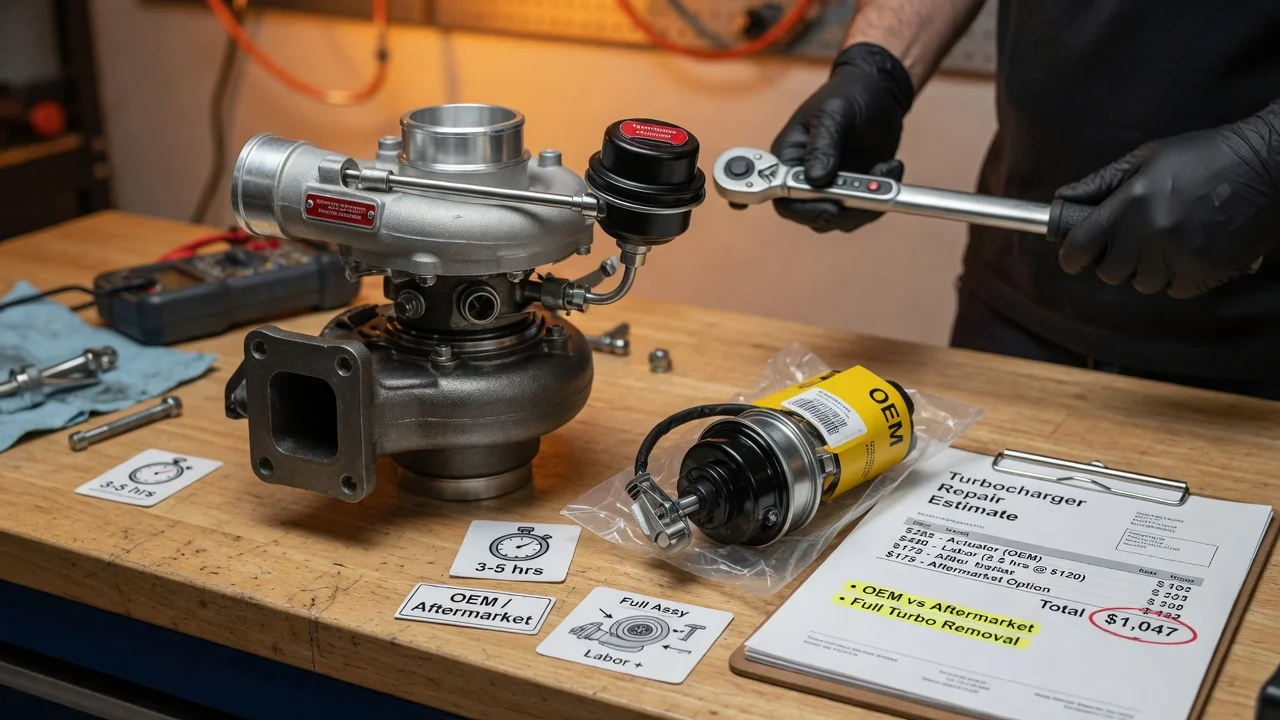
A wastegate actuator controls how much exhaust gas bypasses the turbine, and that limits boost pressure. When it fails, the engine may lose power, set an underboost or overboost code, or drop into a reduced-power mode. Replacement costs vary widely because the part, the access needed and the setup work afterward all depend on your exact vehicle configuration. This guide explains what a quote should cover and how to compare estimates fairly.
What the estimate includes
A complete estimate for replacing a turbo wastegate actuator normally covers diagnosis, the actuator itself, labor to remove and install it, and any gaskets, clips, hoses or fasteners that should not be reused. It also covers the setup steps the manufacturer specifies afterward. On many vehicles that means adjusting the actuator rod to the correct preload, or running a learning or calibration procedure with a scan tool. A figure that lists only the part price, or only labor, is a partial quote. It cannot be compared directly with a total out-the-door price from another shop.
Confirm exactly which part is being replaced. On some engines the actuator is a separate unit bolted to a bracket on the turbocharger and sold on its own. On other designs, especially some with electronic actuators, the manufacturer supplies the actuator only as part of the complete turbocharger assembly. That turns the job into a turbo replacement with a very different total. Before you treat any number as final, ask the shop to check the parts catalog against your VIN and confirm whether the actuator is available separately.
What changes the cost
The first factor is actuator type. Pneumatic actuators, operated by vacuum or boost pressure, are generally simpler units. Electronic actuators contain a motor and a position sensor and often need calibration after installation. The second factor is engine layout. On some vehicles the actuator can be reached from above with a few fasteners. Others require removing heat shields, intake or charge pipes, exhaust components or the turbocharger itself. Shops usually bill labor as a published labor time multiplied by their hourly rate, so the book time for your engine and the going rate in your area both shape the total.
Condition and associated work matter just as much. Heat-cycled exhaust fasteners often corrode, and a broken stud or seized linkage adds time. If the wastegate flap or its pivot inside the turbine housing is stuck, a new actuator will not fix the problem and the repair may grow. A faulty boost control solenoid, cracked vacuum lines or a leaking charge pipe can mimic actuator failure, so diagnostic time spent ruling them out will appear on the bill. Service history also counts. Earlier repairs, non-original parts or engine tuning may change what the technician needs to inspect.
Compare like-for-like options
Common choices include a dealer-supplied original equipment part, the same part sold under the original supplier's own brand, a new aftermarket actuator, a remanufactured unit, or a complete turbocharger assembly where the actuator is not sold separately. Compare these options only on equal scope. Check whether each quote includes calibration or rod adjustment, new gaskets and hardware, and any fluids needed if oil or coolant lines are disturbed. Warranty terms differ as well. Some cover only the part, while others also cover the labor to reinstall a replacement if the new unit fails.
Be cautious with shortcuts that lower the first bill but risk repeat labor. These include a universal adjustable actuator, a used part with unknown history, or simply readjusting the rod to hide a fault. Incorrect boost control can cause overboost or persistent fault codes, and some electronic actuators need matching that a generic part cannot provide. Before paying, check whether any warranty coverage, recall or technical service bulletin applies to your vehicle, because that can change who pays and which repair procedure is used.
Read an itemized quote
A useful quote identifies the vehicle by year, make, model, engine and VIN, and states the diagnostic findings, including fault codes and how the actuator was tested. It should give the part number and brand and say whether the part is new or remanufactured. Labor should appear as hours and hourly rate. Gaskets, seals, hardware, fluids, calibration or programming, shop supplies, disposal fees and taxes should each have their own line, so you can see which items another shop has left out.
Look carefully for exclusions and conditional charges. Common examples are wording that extra time will be billed if fasteners break, a separate charge for inspecting the turbocharger, or a diagnostic fee that may or may not be credited toward the repair. Ask how the shop will handle discovering a seized wastegate flap or a worn turbo during the job, and ask that it contact you for written approval before doing any additional work. A clear process here prevents most billing disputes.
Decide the next step
Start by confirming the diagnosis. You want stored codes, boost readings compared with manufacturer specifications, and a test showing the actuator itself does not move or report position correctly. Next, confirm by VIN whether the actuator is sold separately or only with the turbocharger. Then get at least two itemized quotes that cover the same scope, part type, calibration and warranty. If the engine is in reduced-power mode or shows overboost symptoms, limit driving until a technician has inspected it, because continued operation under those conditions can stress other components.
Wastegate actuators are generally replaced when they fail rather than on a fixed schedule. Check your maintenance schedule and manufacturer specifications for any related inspection items that apply to your engine. Operating conditions such as heat, road salt and frequent short trips can affect hoses, linkages and fasteners, so asking the technician to note their condition during the repair can help you plan future maintenance and avoid a second visit.