Steering Linkage Repair Cost: What a Fair Estimate Includes
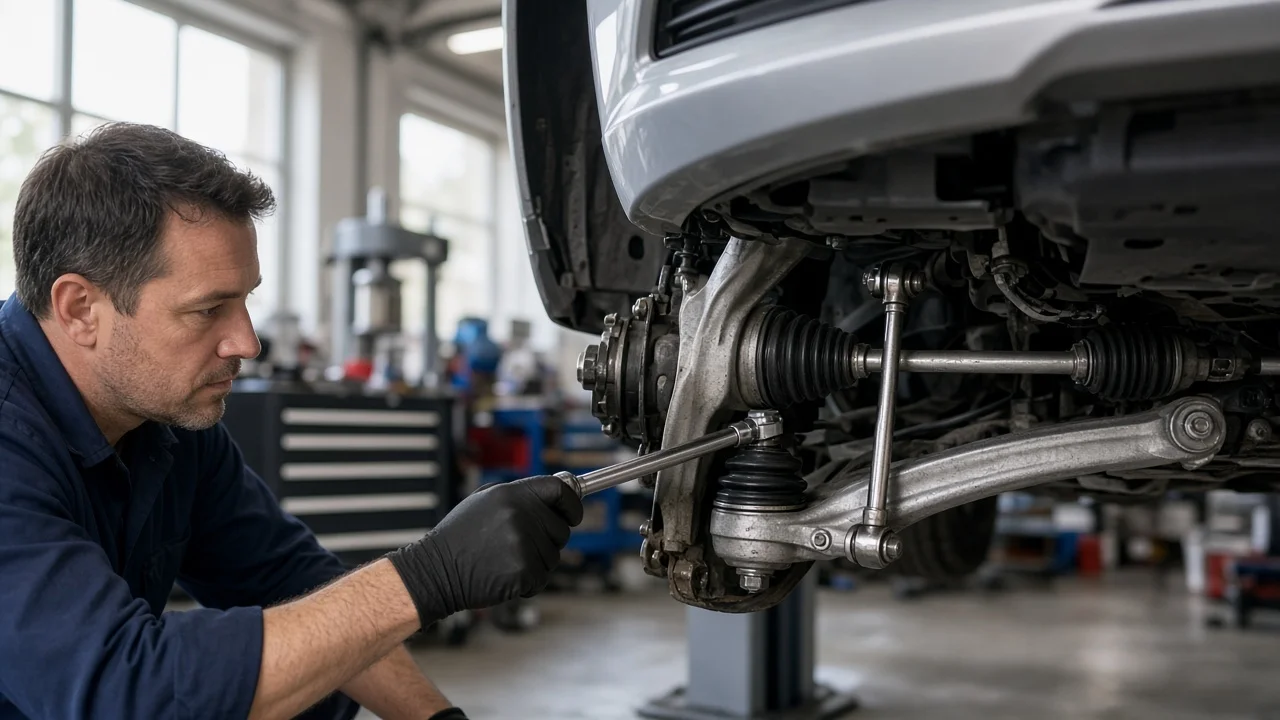
A steering linkage repair estimate can mean very different things depending on what the shop found and what it plans to replace. One quote may cover a single outer tie rod end. Another may include both sides, an idler arm and the wheel alignment that should follow. This guide explains what a complete estimate contains, what pushes the total up or down, and how to compare offers so you pay for the repair your vehicle actually needs.
What the estimate includes
Steering linkage is the set of rods, arms and joints that connect the steering gear to the steering knuckles at each front wheel. On most cars and crossovers with rack-and-pinion steering, that means the inner and outer tie rods. On many trucks and older body-on-frame vehicles with a steering box, the linkage can also include a pitman arm, idler arm, center link, drag link and adjuster sleeves. A complete estimate names each component being replaced, its part cost, the labor time for each operation, and the associated work needed to return the vehicle to a safe, correctly aligned condition.
Partial quotes are common, so separate a starting figure from a total. A price advertised as tie rod end replacement may leave out the alignment, the inspection fee, new locking nuts or cotter pins, shop supplies and tax. A parts price you find while shopping covers only the component itself. When comparing numbers, make sure each one is an out-the-door total for the same list of parts and the same finished result, not a base price that grows once the vehicle is on the lift.
What changes the cost
The biggest factor is how many joints genuinely need replacement. A proper inspection checks joint play at every connection with the vehicle supported the way the manufacturer specifies, because some joints must be checked with the suspension loaded and others with it unloaded. One worn outer tie rod end is a much smaller job than a worn inner tie rod, and a full parallelogram linkage on a heavy-duty truck involves several more parts and more labor. Shops often recommend replacing matching parts on both sides when wear is similar. That can be sensible, but ask which joints showed measurable play and which are being replaced as a precaution.
Vehicle configuration matters as well. Inner tie rods on some designs require removing the rack boot and using a specific tool, and a few vehicles are serviced in ways that make the job longer than it looks. Four-wheel-drive, heavy-duty and modified vehicles often use larger or model-specific parts, and a lift or leveling kit that changes ride height may need components and alignment procedures matched to that setup. Part grade also shifts the price: original equipment, premium aftermarket and economy parts differ in materials, sealing and warranty. Corrosion is another variable. Seized tapered joints, rusted adjuster sleeves or damaged mounting points such as an idler arm bracket or frame mount add labor and sometimes parts. Finally, labor rates vary by region and by shop type, which is why no fixed price applies to every vehicle without its findings and location.
Compare like-for-like options
Typical choices are replacing only the confirmed worn component, replacing matching parts on both sides, or installing a complete linkage kit. Each can be appropriate, but compare them on equal scope. A quote that replaces a tie rod without an alignment is not genuinely cheaper than one that includes it; it simply omits required work. Changing tie rods alters toe, so the vehicle should be aligned to its specifications afterward, and skipping that step can cause pulling, an off-center steering wheel and rapid tire wear.
Look beyond the headline number. Compare parts and labor warranty length, whether parts are new or remanufactured, whether greaseable joints come with fittings, and whether the shop will install parts you supply. Many shops will not warranty labor on customer-supplied parts, which shifts the risk to you if a part fails early. Worn sealed joints are replaced rather than adjusted or packed with grease. If the inspection also finds a leaking steering rack or internal play in the steering gear, ask for that work as a separate line so you can see what the linkage repair alone costs and decide on each item with clear information.
Read an itemized quote
A useful itemized quote lists each part with its brand, part type, side and quantity; the labor hours for each operation and the hourly rate; and the wheel alignment, stating whether it is a front-end or four-wheel service and whether you will receive the before-and-after readings. It should also show any inspection or diagnostic fee and whether that fee is credited toward the repair, required hardware such as new nuts and cotter pins, shop supplies, disposal charges and tax. Ask whether centering the steering wheel is part of the alignment, since that is the result most owners notice first.
Then look for conditional lines and exclusions. Wording such as additional parts if found worn, extra labor for seized or rusted fasteners, or alignment hardware not included can raise the final bill. These conditions are sometimes legitimate, especially on older or rust-belt vehicles, but the quote should state how such work is priced and require the shop to contact you before exceeding the approved amount. It is also reasonable to ask that all fasteners be tightened to the manufacturer's fastener specification and that any single-use nuts be replaced rather than reused.
Decide the next step
Start with a documented inspection: ask which joints have play, where, and how it was checked. Request written quotes from at least two shops covering the same parts list, part grade, alignment and warranty, and compare the out-the-door totals. Confirm the shop has your exact year, model, drivetrain and any suspension modifications, because these determine the correct parts and alignment procedure. Approve conditional work only after the shop calls with findings, and keep the alignment printout with your invoice.
Avoid shortcuts that cost more later. An alignment performed on worn linkage will not hold, and new parts installed without an alignment leave the job unfinished. If you plan to do the work yourself, use the model-specific procedure and torque values from the service information, support the vehicle on rated stands at the proper lift points rather than on a jack alone, and still schedule a professional alignment. If the steering feels loose, clunks over bumps, wanders or has excessive free play at the wheel, have it inspected before continuing to drive rather than guessing how long the parts will last.