Transmission Valve Body Repair Cost: What Shapes Your Estimate
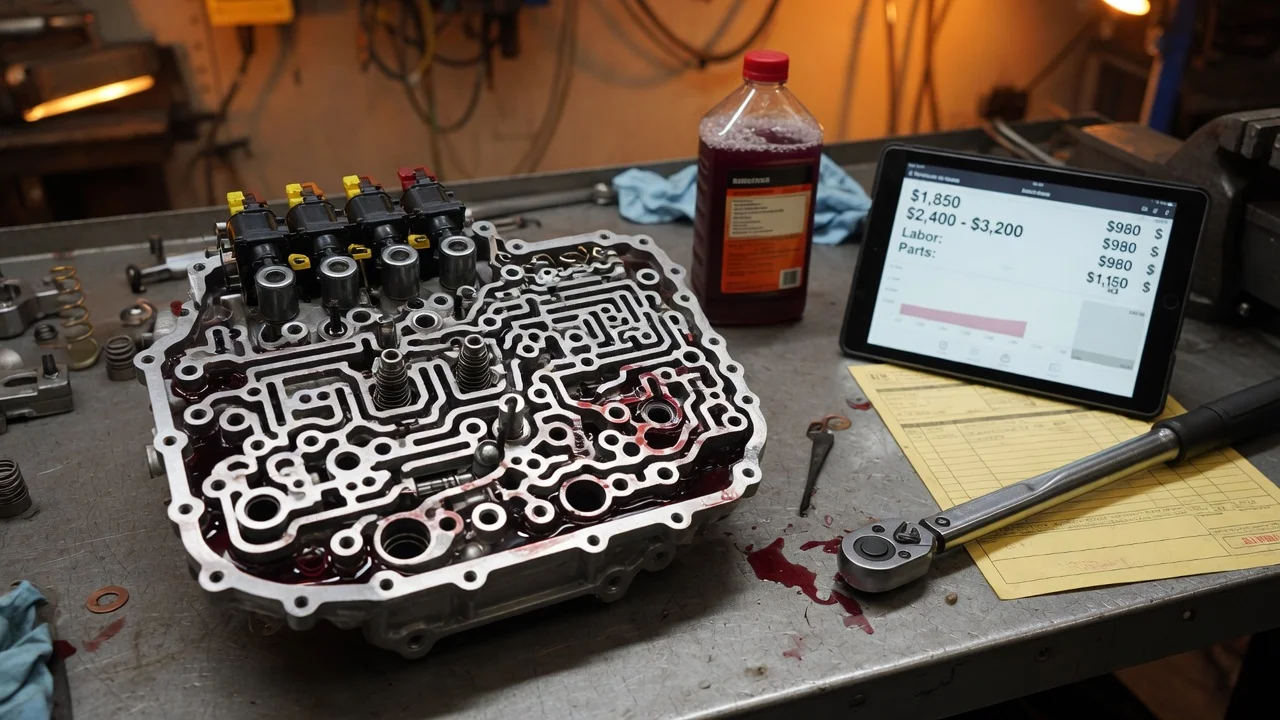
The valve body is the hydraulic control center of an automatic transmission. It routes pressurized fluid through passages, valves and solenoids to apply clutches and bands. When shifts become harsh, delayed or erratic, a shop may suspect it, but the price depends on what is actually being repaired and how the diagnosis was reached. This guide explains what a valve body estimate should cover, what changes the total, and how to compare offers so the repair suits your transmission.
What the estimate includes
A valve body job can mean several different things. It might be replacing one solenoid or a solenoid pack mounted on the valve body. It might be cleaning and resealing the assembly with a new separator plate and gaskets, installing a remanufactured unit, or fitting a new one. On many modern transmissions the valve body is combined with the transmission control module in a single mechatronic unit, so the quote may include electronics and programming as well as hydraulics. Access also varies. Some designs are reached by dropping the pan, while others require removing the transmission or a side cover, and that changes labor considerably.
Separate a total estimate from a partial quote. A complete figure normally covers diagnosis, the part, labor, fluid, filter and pan gasket where applicable, any programming or adaptive relearn, and a road test to confirm shift behavior afterward. A partial quote may list only the part price or only labor hours. Before comparing numbers, ask whether each one is the final amount including taxes, shop supplies and disposal fees, or just one piece of the job.
What changes the cost
Transmission type and configuration matter most. A conventional automatic, a dual-clutch unit and a CVT use different hydraulic control designs, parts and procedures. Some replacement valve bodies or mechatronic units must be coded to the vehicle, and some come with solenoid calibration data that has to be loaded into the control module before the transmission shifts correctly. Fluid specification also affects the bill. Certain transmissions require a specific fluid and a temperature-controlled fill and level check with a scan tool, which adds time compared with a simple drain and refill.
Parts source and fitment are the next drivers. New original-equipment, remanufactured, used and rebuild-kit options all differ in price and risk. Valve bodies can vary by model year, engine, drivetrain and production revision, so the correct part should be confirmed by VIN or transmission identification rather than by model name alone. Labor depends on the time the job takes on your specific vehicle and on local shop rates, which differ between dealers, independent transmission specialists and general repair shops.
The condition of the transmission can change the scope entirely. Diagnostic codes usually point to a circuit fault, pressure problem or gear ratio error, not automatically to a failed valve body. If the fluid is burnt or contains friction material or metal debris, the shifting problem may come from internal wear, and replacing the valve body alone may not fix it. In that case a rebuild or replacement transmission may be the more appropriate repair.
Compare like-for-like options
Common repair options include fixing the existing valve body in place, such as replacing solenoids or worn valves and sleeves; installing a remanufactured unit, which is often bench tested and may include updated components; fitting a new unit; or using a salvaged one. A used valve body usually costs the least up front, but its history is unknown, it may carry the same wear as yours, and it may still need programming. When internal damage is confirmed, the realistic comparison may be between a valve body repair and a full transmission rebuild.
Compare offers only on equal scope. Check that each includes the same fluid service, programming and relearn steps, and the correct fluid for your transmission. Look closely at the warranty: whether it covers parts only or parts and labor, its time and mileage limits, whether it is honored only at the installing shop, and whether it depends on follow-up service. A lower quote that leaves out programming or uses a generic fluid is not equivalent to one that includes them.
Read an itemized quote
A useful quote identifies the vehicle by VIN and names the transmission model. It should list the part number and whether the part is new, remanufactured or used, along with labor hours and rate, fluid type and quantity, filter and gaskets, programming or adaptation, and the diagnostic fee and whether it is credited toward the repair. Ask what testing supports the conclusion, such as scan data, wiring and solenoid circuit checks, or line pressure tests, so you know whether the valve body was confirmed or only suspected.
Look for exclusions and conditional charges. Remanufactured units often carry a core charge that is refunded when the old part is returned. Some shops add costs if teardown reveals other damage, so ask whether they will call for approval before going over the estimate. Clarify what happens if the original symptom continues after the repair, and whether towing, rental or extra fluid service is billed separately.
Decide the next step
Start by identifying the exact transmission and gather your service history, including past fluid changes and any earlier repairs. Request a written diagnosis that lists stored codes and the tests performed, rather than accepting a symptom description as proof of a failed part. Get at least two itemized quotes for the same scope, with matching parts source, programming and warranty terms. Confirm that the chosen part fits by VIN and that the shop has the equipment to program and relearn your transmission.
Avoid shortcuts that may not suit your vehicle. Additives, a fluid change in place of a diagnosed repair, or an unverified used part can delay the real fix. If inspection shows heavy contamination or internal wear, weigh a transmission rebuild against a valve body repair before you approve the work. A clear diagnosis and an equal-scope comparison give you the most reliable basis for deciding.