How to Test a Transmission Pressure Control Solenoid
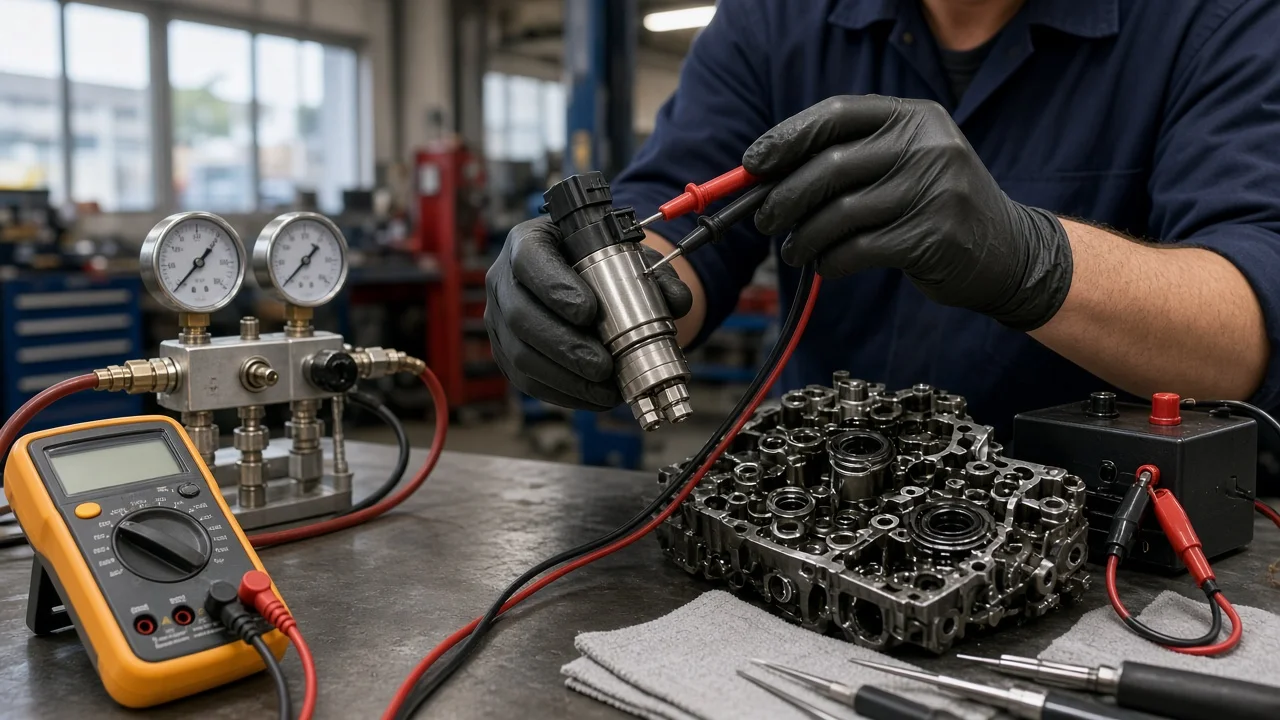
A transmission pressure control solenoid regulates line pressure based on commands from the transmission or powertrain control module, so a fault can show up as harsh, soft or delayed shifts. Testing it properly means checking the electrical circuit, the commanded and actual pressure, and the condition of the fluid before blaming the part. Start by identifying the exact transmission type and configuration. Solenoid location, specifications, fluid requirements and diagnostic procedures differ widely between designs.
Establish the symptoms
Before any test, write down how the problem behaves. Note whether it appears when the transmission is cold or only after the fluid reaches operating temperature. Note whether it happens on upshifts, on downshifts or when you engage drive and reverse, and whether it happens under light throttle or hard acceleration. Several kinds of shift behavior point toward pressure control: harsh or banging engagements, soft or flared shifts where engine speed rises between gears, delayed engagement, and the transmission locking into a fixed gear, often called limp mode. Also record whether a warning light is on and when it first appeared.
Recent changes matter as much as the symptom. Check the service history for a fluid change, filter service, battery replacement, software update, wiring repair or collision damage near the transmission. Fluid of the wrong specification, or an incorrect level after a service, can produce symptoms that look like a solenoid fault. Also note recent modifications, heavy towing or overheating, because heat and load affect both the fluid and the internal parts.
Distinguish plausible causes
A pressure control solenoid can fail electrically, with an open or shorted coil. It can also fail mechanically, with a sticking valve or contamination that restricts its movement. Several other faults produce the same shift complaints. Damaged wiring, a corroded connector or a poor ground can interrupt the signal while the solenoid itself is fine. A control module fault or outdated calibration can command the wrong pressure. Low, burnt or incorrect fluid, a clogged filter or a worn pump can starve the hydraulic circuit. Worn clutches, leaking seals or valve body wear can cause slipping that no pressure adjustment will correct.
Some observations shift the odds. Circuit-related diagnostic codes, symptoms that start suddenly and a fixed limp gear tend to point to an electrical problem in the solenoid or its wiring. An intermittent fault that changes when the harness is moved also points toward wiring. Other signs weaken the case for a single failed solenoid and suggest wear or contamination instead: a gradual onset, dark or burnt-smelling fluid, debris on the pan magnet, or slipping in every gear. The module also uses inputs such as throttle position, engine load and vehicle speed to decide how much pressure to command. A faulty sensor can therefore make a healthy solenoid appear to misbehave.
Checks in a useful order
Begin with checks any owner can do safely. Read stored and pending diagnostic codes with a scan tool, and save the freeze-frame data before clearing anything. Check the fluid level and condition using the method the manufacturer specifies for that transmission. Some have a dipstick. Many sealed units need a fill-plug check at a specific fluid temperature with the engine running, which is better left to a shop if you lack the procedure. Inspect the visible harness and connectors for damage, oil intrusion or corrosion. Confirm the battery and charging system are healthy, since low voltage can upset solenoid control.
Electrical testing comes next and requires a wiring diagram and the specifications for the exact transmission. Switch the ignition off and unplug the connector. Use a digital multimeter to measure the coil resistance, either at the transmission case connector or directly at the solenoid if it is accessible, and compare the reading with the factory range for that temperature. Then check the circuit for continuity back to the module and for shorts to ground or to power. A capable scan tool can show the commanded pressure or current, and on many units the actual feedback. Some scan tools can also command the solenoid in a test mode. These solenoids are usually driven by varying current or duty cycle, so a simple test light reveals little.
The definitive hydraulic test is a line pressure check. A technician installs a gauge at the transmission's pressure port and compares the readings with the published values at idle, in each range, and at specified engine speeds or stall conditions. The test involves hot fluid, a running engine and sometimes a raised vehicle, so it belongs with a qualified technician who has the specification and the correct adapters. Removing the pan or valve body to inspect or bench test the solenoid is also workshop work, because it requires the correct gaskets, torque values and a proper refill.
Interpret the findings
Each result answers a narrower question than it may seem to. A resistance reading outside specification, an open circuit or an internal short strongly suggests an electrical failure in the solenoid. Check the harness and connector first so you can rule out the wiring. A good resistance reading only proves the coil is intact. It does not show that the valve moves freely or regulates pressure correctly. If circuit codes return after clearing and the wiring checks out, that supports replacing the solenoid or the assembly that contains it.
Pressure readings connect the electrical and hydraulic sides. If line pressure follows the commanded value as it changes, the solenoid is probably working, and the cause lies elsewhere, such as worn clutches or a calibration issue. If pressure stays low or fixed regardless of the command, the cause could be the solenoid, valve body, pump, filter or an internal leak, and more checks are needed to tell them apart. Contaminated fluid is a warning that replacing only the solenoid may not fix the problem for long. Before ordering parts, confirm fitment by transmission model and build details, since many solenoids are sold only as part of a pack or valve body assembly. Also check whether the module needs a relearn or reprogramming after replacement.
Urgency and next action
Stop driving and arrange a tow if the transmission will not engage, slips badly, shows an overheating warning, smells burnt or leaks fluid. Do the same if it stays stuck in a fixed gear in traffic where that creates a safety risk. Low line pressure lets clutches slip and generate heat, so continued driving can turn a solenoid or wiring repair into a rebuild. Nobody can reliably say how far a vehicle can safely go with a pressure control fault.
When you contact a shop, provide the vehicle identification number, transmission type, mileage, any diagnostic codes with their freeze-frame data, a description of when the symptoms occur, and the service history, including the fluid used. Ask which repair options apply: solenoid replacement alone, a solenoid pack or valve body, a wiring repair or a software update. Also ask what testing confirmed the recommendation. A diagnosis based on measured results, not on a symptom alone, is the best protection against replacing parts that were never faulty.