Identifying an E4OD Transmission Shift Solenoid
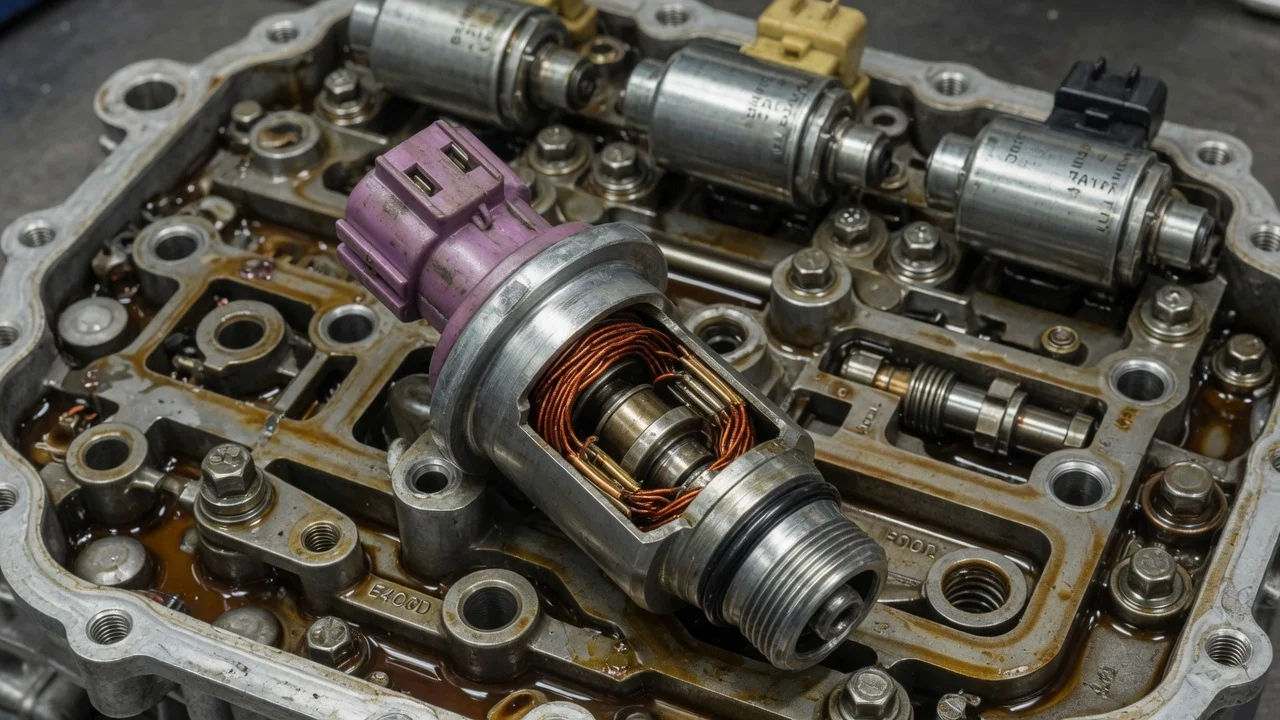
The E4OD is Ford's electronically controlled four-speed overdrive automatic, used in heavy-duty F-Series pickups, Econoline vans and some Broncos from about 1989 into the late 1990s. It is often typed as E40D with a zero. If a shifting problem points toward a shift solenoid, first confirm that the truck actually has an E4OD. Its solenoids sit together in one assembly inside the pan. This guide covers how to identify that part, how it works and how to narrow down a fault.
What the E4OD shift solenoid actually is
The E4OD has no single stand-alone shift solenoid screwed into the outside of the case. Shift solenoid 1 and shift solenoid 2 are part of a solenoid body, usually called the solenoid pack, which bolts to the valve body inside the transmission. The same assembly typically also carries the coast clutch solenoid, the torque converter clutch solenoid, the electronic pressure control solenoid and the transmission fluid temperature sensor. A multi-pin connector passes through the driver side of the case and links the pack to the vehicle harness. So when someone asks for the E4OD shift solenoid, they usually mean the whole solenoid body, sold as an assembly for that transmission and year range. Some suppliers offer individual solenoids, depending on the pack version, but replacing the complete pack is the common approach.
Identifying the part is not the same as proving it has failed. A shifting complaint can also come from fluid level or condition, wiring, the range sensor, the engine computer, valve body wear or internal clutch damage. Treat the solenoid pack as a suspect until testing points to it.
How the solenoids control shifting
The engine computer chooses a gear based on vehicle speed, throttle position, engine load and selector position. It then switches shift solenoids 1 and 2 on or off in set combinations. Each combination routes fluid pressure through the valve body to the shift valves, which apply the clutches and bands for that gear. The solenoids are small electrically operated valves; they do not hold the gear themselves. The other solenoids in the pack have their own jobs. The coast clutch solenoid manages engine braking and is tied to the overdrive cancel switch on the shift lever. The torque converter clutch solenoid controls converter lockup. The electronic pressure control solenoid adjusts line pressure, which affects shift firmness and how well the clutches hold.
The computer only commands the shift, so it relies on electrical feedback to detect problems. It can recognize an open or shorted solenoid circuit. A solenoid that sticks mechanically, or a valve that hangs in its bore, may not set a code at all. When electrical control is lost, the transmission typically falls back to a fixed gear based on selector position. That failsafe lets the vehicle move, but it is not meant for normal driving.
Confirm the transmission type and year first
Ford trucks of this era used several automatics, including the C6, AOD, AODE, 4R70W and the 4R100 that replaced the E4OD. The 4R100 looks similar from the outside and is often mistaken for an E4OD, but its electronics and solenoid assembly are not simply interchangeable. Check the transmission code on the certification label in the driver door area and the identification tag on the transmission case. Compare both with the model year and engine. Heavy-duty diesel and large gas-engine trucks from the early to mid 1990s are typical E4OD applications, but the label and tag are what settle it.
Year also matters within the E4OD production run. Earlier trucks use the older on-board diagnostic system, while 1996 and later models use OBD-II, and the way you read codes changes with it. Solenoid packs were revised during production, so connector and internal differences mean a pack must match the transmission it goes into. Confirm fitment by year, engine and transmission identification, not by appearance. Fluid specification also comes from the original service information. These units were filled with a Mercon-type fluid, so check the correct current replacement for your vehicle before topping up or servicing.
Reading symptoms and diagnostic codes
Several complaints lead owners toward the shift solenoids: • No upshift, or the truck stays in one gear; • Harsh or erratic shifts; • Missing gears or no overdrive; • Starting off in a higher gear than normal; A flashing overdrive-off light on the shift lever can mean the computer has stored a transmission fault. These patterns are useful clues, but low fluid, a faulty range sensor, damaged wiring and internal mechanical wear can produce the same shift behavior.
Stored diagnostic codes are the strongest starting evidence. On OBD-II trucks, codes such as P0750 and P0755 refer to the shift solenoid A and B circuits. Other codes cover the converter clutch, pressure control and fluid temperature circuits. A circuit code means the computer saw an electrical fault somewhere in that path, which could be the connector, the harness or the computer, not necessarily the solenoid. Earlier trucks report faults through the older self-test procedure. Take the meaning of each code number from the service information for that system.
What the owner can check
Start with fluid level and condition, checked the way the service information describes. This is typically done with the truck level, the engine running and the fluid at operating temperature. Note the color and smell, and look for debris on the dipstick. Burnt fluid or heavy debris suggests wear beyond a solenoid problem. Next, read and record any stored codes before clearing anything. Also note when the problem appears: cold or hot, light or heavy throttle, every drive or only occasionally.
Inspect the transmission connector on the driver side of the case and the harness leading to it. Exhaust heat, road debris and old repairs can damage this wiring, and a loose or corroded connector can set the same codes as a failed solenoid. With the connector unplugged, a multimeter can measure each solenoid's resistance through the case connector. That helps separate an open or shorted coil from a harness problem. Pin assignments and resistance values vary by year, so use the data for your exact transmission.
Gather the service history as well: past fluid changes, earlier solenoid or valve body work, overheating and heavy towing. If testing points to the solenoid body, replacing it means draining the fluid, removing the pan and filter, and unbolting the pack from the valve body. Repair options run from a new pack, to valve body service, to a rebuild when the fluid and symptoms indicate internal damage.
Limitations and next step
This guide cannot confirm which part has failed on a specific truck. Electrical tests show whether a coil is open or shorted, but they cannot always reveal a solenoid that sticks intermittently or a worn valve body bore. A pressure test, or a road test with a scan tool, may be needed. Have a transmission specialist evaluate the unit before buying parts if any of these apply: • Codes keep returning after the wiring checks out; • Shifts are harsh or slipping; • The fluid shows burning or debris; Bring the transmission identification, stored codes, a description of the shift behavior and the service history. That shortens diagnosis and helps confirm the correct solenoid pack for your E4OD.