Identifying a 68RFE Transmission Shift Solenoid
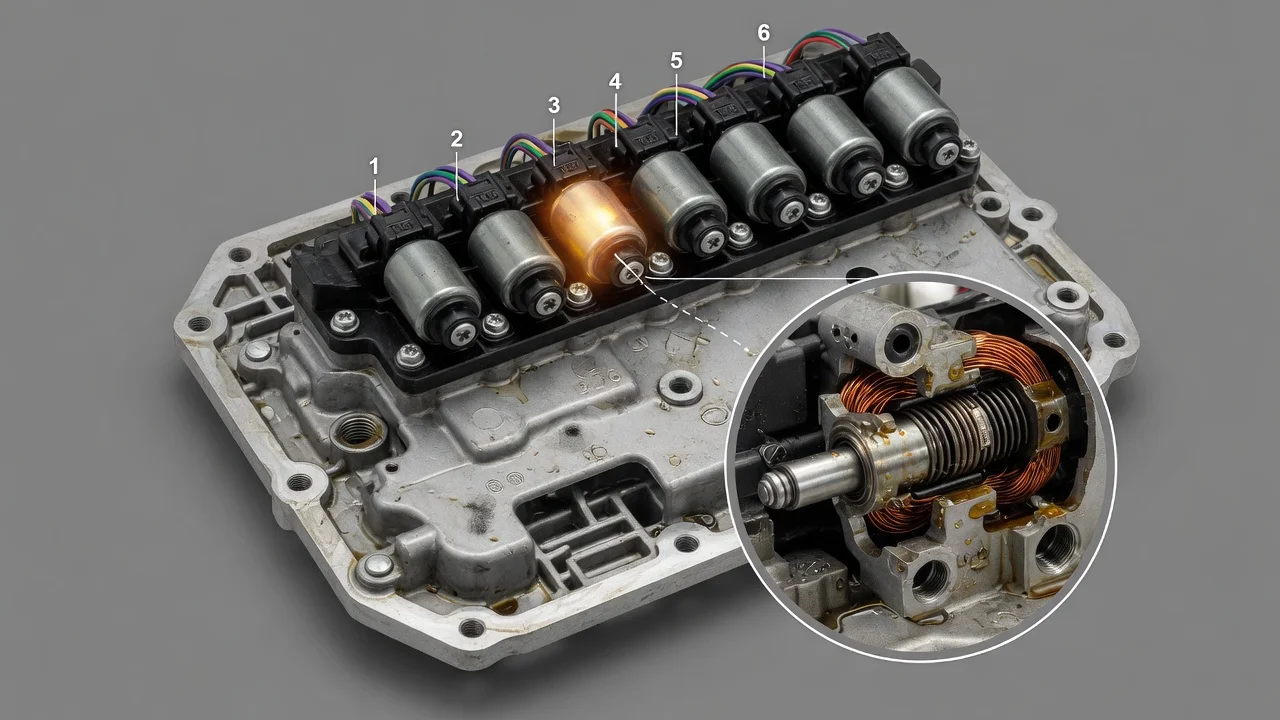
If you are looking for the shift solenoid on a 68RFE, you will not find a single standalone part. This six-speed automatic, used mainly behind the Cummins diesel in heavy-duty Ram pickups and cab-chassis trucks, controls its clutches through a solenoid and pressure switch assembly mounted on the valve body. This guide explains what that assembly is, how it affects shift behavior, and what to verify before you assume it has failed.
Which part is the 68RFE shift solenoid
On the 68RFE, the shift solenoids are grouped into one unit, commonly called the solenoid pack or solenoid and pressure switch assembly. It bolts to the valve body inside the transmission, under the oil pan, and connects to the vehicle harness through a single electrical connector. The individual solenoids are named for the clutches they control, such as underdrive, overdrive, 2nd clutch, 4th clutch and low/reverse, and the assembly also includes pressure switches that report back whether each circuit actually applied.
Because the solenoids and switches are integrated, the assembly is normally serviced as a complete unit rather than one solenoid at a time. When a scan tool names a specific solenoid circuit, that tells you where the problem appeared, not necessarily which component is at fault. The wiring, connector, fluid condition or a hydraulic issue inside the valve body can produce a similar report.
How the solenoid assembly controls shifts
The 68RFE is a fully electronically controlled transmission. The transmission controller reads inputs such as vehicle speed, throttle position, input and output shaft speeds, fluid temperature and gear selector position, then decides which gear the truck should be in. It energizes the appropriate solenoids, which direct pressurized fluid to apply or release specific clutch packs. Each gear is a combination of applied clutches, so a shift is really the controller swapping one clutch for another at a precisely timed rate.
The pressure switches let the controller confirm that the commanded clutch received pressure. If a switch reports a mismatch, or a solenoid circuit shows an electrical fault, the controller can store diagnostic codes and may place the transmission in a protective limp-in mode, where it holds a fixed gear until the fault is addressed. The controller also adapts shift timing over time, which is why an intermittent or worn component can show up as gradually harsher or slower shifts before any code appears.
What changes the diagnosis
First confirm the transmission type. The 68RFE shares its basic design with the 45RFE and 545RFE used in other Ram and Jeep applications, and the components look similar, but parts and procedures are not automatically interchangeable. The transmission identification tag, the build information tied to the VIN and the vehicle documentation are the reliable ways to confirm what you have. Model year matters as well: the solenoid assembly, connector and controller software have changed over the production run, so fitment should be checked against the exact vehicle rather than a generic listing.
Operating conditions also change what a symptom means. Heavy towing, frequent high fluid temperatures, aftermarket engine tuning, a recent battery disconnection or controller reflash, and the service history of the fluid can all influence shift behavior. A truck that shifts poorly only when cold, only when hot, or only under load points toward different causes than one that suddenly drops into limp mode with an electrical code. Low fluid level or degraded fluid can mimic solenoid trouble because the solenoids depend on clean, correctly pressurized fluid to work.
What the owner can check
Start by reading the stored diagnostic codes with a scan tool that can access the transmission controller, not just generic engine codes. Write down every code, including history codes, and note whether they relate to a solenoid circuit, a pressure switch, a speed sensor or a gear ratio error. Record the exact shift behavior: which shifts are affected, whether the truck enters limp mode, and under what temperature and load conditions the problem appears.
Next, check fluid level and condition using the procedure for your model year, with the transmission at the specified operating temperature. The fluid specification for the 68RFE is ATF+4 or an approved equivalent; the wrong fluid can affect shift quality and solenoid operation. Look for dark color, a burnt smell or debris. Inspect the transmission connector and nearby harness for damage, corrosion, oil intrusion or chafing, since connector and wiring faults are a common cause of solenoid circuit codes.
If you or a shop do replace the solenoid assembly, plan for the full job: draining fluid, removing the pan and filter, accessing the valve body, installing the correctly matched part, refilling with the specified fluid and checking the level. After replacement, the RFE family generally requires a quick learn or adaptive relearn procedure with a capable scan tool so the controller can recalibrate clutch apply timing. Skipping it can leave the truck shifting harshly even with a good new part.
Limitations and next steps
A shifting complaint or a solenoid-related code is a starting point, not proof that the solenoid pack has failed. Internal clutch wear, valve body problems, speed sensor faults, wiring damage and controller software issues can all produce similar results, and replacing the assembly will not fix them. Confirming the cause usually requires checking circuit resistance and voltage against factory specifications, reviewing live data such as commanded versus actual gear, and sometimes line pressure testing.
Use the service information for your specific truck and model year for procedures, torque values and fluid capacities, as these vary. If codes return after basic checks, the transmission stays in limp mode, or the fluid shows signs of internal damage, have a transmission specialist with dealer-level scan capability diagnose it. Comparing repair options, from a wiring repair or solenoid assembly replacement to valve body service or a rebuild, makes sense only once the actual cause is identified.