Identifying a 5R110W Transmission Shift Solenoid
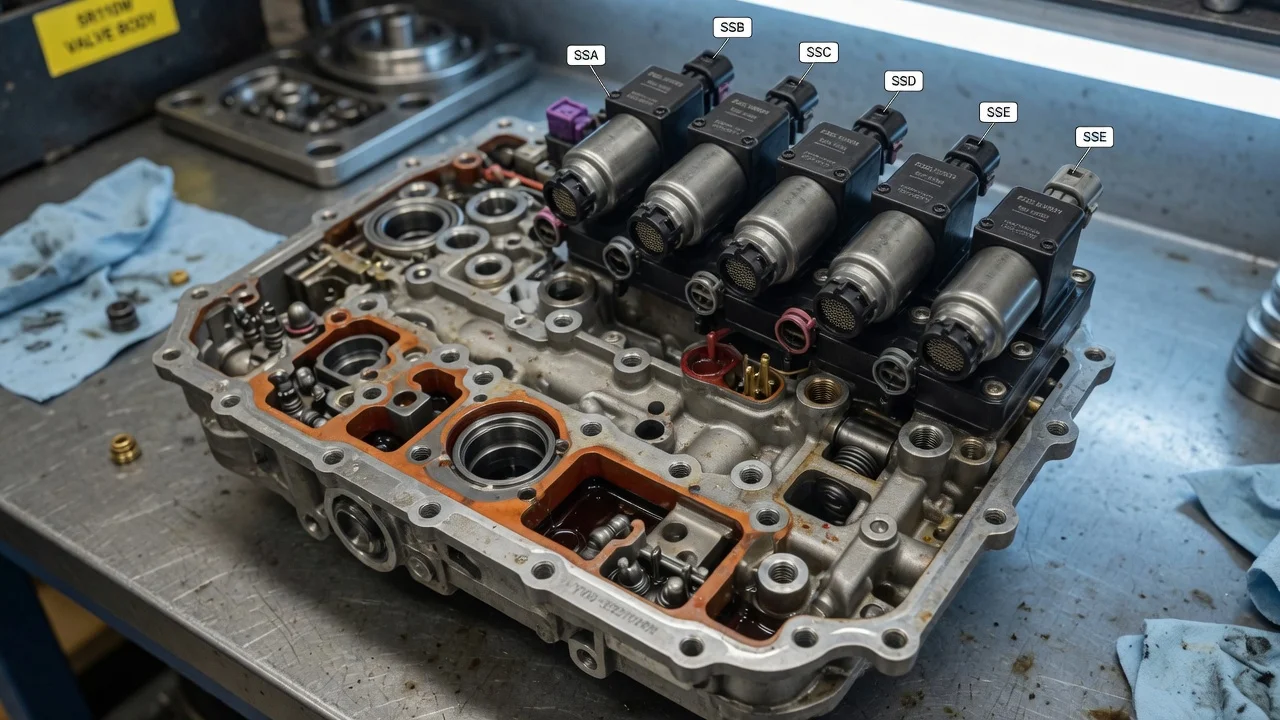
Ford markets the 5R110W as TorqShift. It is a five-speed automatic used in heavy-duty Super Duty trucks, the Excursion and E-Series vans. When a shift problem appears, owners often want to know which shift solenoid is involved and whether it is the real cause. This guide explains how the solenoids are labeled, where they sit and how codes point toward them. It also explains why a code or symptom starts the diagnosis but does not prove that a part has failed.
The Short Answer
A 5R110W shift solenoid is identified by its letter designation, not by its appearance. The transmission uses five shift solenoids, usually called SSA through SSE. A torque converter clutch solenoid and an electronic pressure control solenoid work alongside them. All of these are mounted on the solenoid body, which attaches to the main control valve body inside the transmission under the oil pan. They connect electrically through the transmission case connector. You cannot see or reach them without draining fluid and removing the pan.
In practice, owners usually identify a specific solenoid from diagnostic codes. Generic powertrain codes from P0750 to P0770 refer to shift solenoids A through E in order. For example, P0750 points to solenoid A and P0755 to solenoid B. Ford may also set its own codes for solenoid performance. A code tells you which circuit or function the controller flagged. It does not confirm that the solenoid itself has failed, because wiring, the connector, the internal harness or the control module can set the same code.
How the Solenoids Control Shifting
The powertrain control system decides when to shift based on inputs such as vehicle speed, throttle position, turbine and output shaft speeds, and fluid temperature. It then switches the shift solenoids on and off in specific combinations. Each solenoid controls hydraulic pressure to valves in the valve body. Those valves send fluid to apply or release the friction elements for each gear. Each gear depends on a pattern of several solenoids, so one faulty circuit can affect more than one gear or shift.
The torque converter clutch and pressure control solenoids are separate from the shift solenoids. Line pressure affects how firmly the clutches apply, so a pressure control problem can cause harsh or soft shifts that look like a shift solenoid fault. If the controller detects a serious electrical problem, it may put the transmission in a failsafe mode, often holding a single gear. This protects the unit, but the truck may feel stuck in one gear.
What Changes the Answer
First, confirm that the vehicle actually has a 5R110W. Model year, engine and body style all matter. Super Duty pickups moved to a six-speed automatic around the 2011 model year, so a newer truck with similar symptoms may have a different transmission and solenoid layout. To confirm the transmission type, check the identification tag on the transmission case and the build information on the driver door jamb label. A dealer build lookup based on the VIN also works.
Ford revised the valve body, solenoid body and related parts during the 5R110W's production run. Whether a replacement solenoid or assembly fits can depend on model year and build date. Operating conditions also matter. Fluid temperature, level and condition all affect how the solenoids and valves work. A code that appears only when the transmission is hot or cold calls for a different diagnostic path than a constant fault. Towing, plowing and long idling add heat to the fluid, so note the truck's service history and how hard it works.
What the Owner Can Do
Start by reading codes with a scan tool that can access transmission data, not only generic engine codes. Record every code, whether it is current or stored, and the conditions when it set. If the tool shows live data, note the commanded gear, the speed sensor readings and the fluid temperature when the problem happens.
Check the fluid level using the procedure and temperature range specified for your vehicle. Confirm that the fluid matches the specification in the owner's manual or service information. Note the fluid's color and smell, and look for debris if the pan comes off. Inspect the external transmission connector and nearby wiring for damage, corrosion, fluid intrusion or a loose fit, especially on trucks exposed to road salt or off-road use. Write down the exact shift behavior: which shift is late, harsh, missing or flared, and whether it happens cold, hot, under load or all the time.
With that information, the repair options become clearer. A confirmed open or shorted circuit may call for replacing an individual solenoid, the solenoid body or a section of harness. Shift complaints without electrical codes may instead point to valve body wear or internal clutch problems. Before ordering parts, check fitment against the transmission identification tag. Also ask whether the replacement needs a software or adaptive learning procedure afterward.
Limitations and Next Step
This guide cannot tell you which part has failed on your truck. Codes, symptoms and fluid condition narrow the possibilities. Before replacing a solenoid, a technician needs to test the circuits against the manufacturer's specifications and sometimes inspect the valve body with the pan removed. Resistance values, connector pinouts and torque specifications vary, so use the service information for your exact model year and transmission build.
Get professional help if any of the following happens: the transmission enters failsafe mode, slips under load, shows burnt fluid or metal debris, or sets several solenoid codes at once. These patterns can indicate a wiring, module or internal mechanical problem. A transmission shop familiar with the 5R110W can test the circuits, check for relevant service bulletins and tell you whether a solenoid, solenoid body, valve body or larger repair is justified. Driving or towing with a slipping transmission can cause more internal damage.