E4OD TCC Solenoid Identification and Location
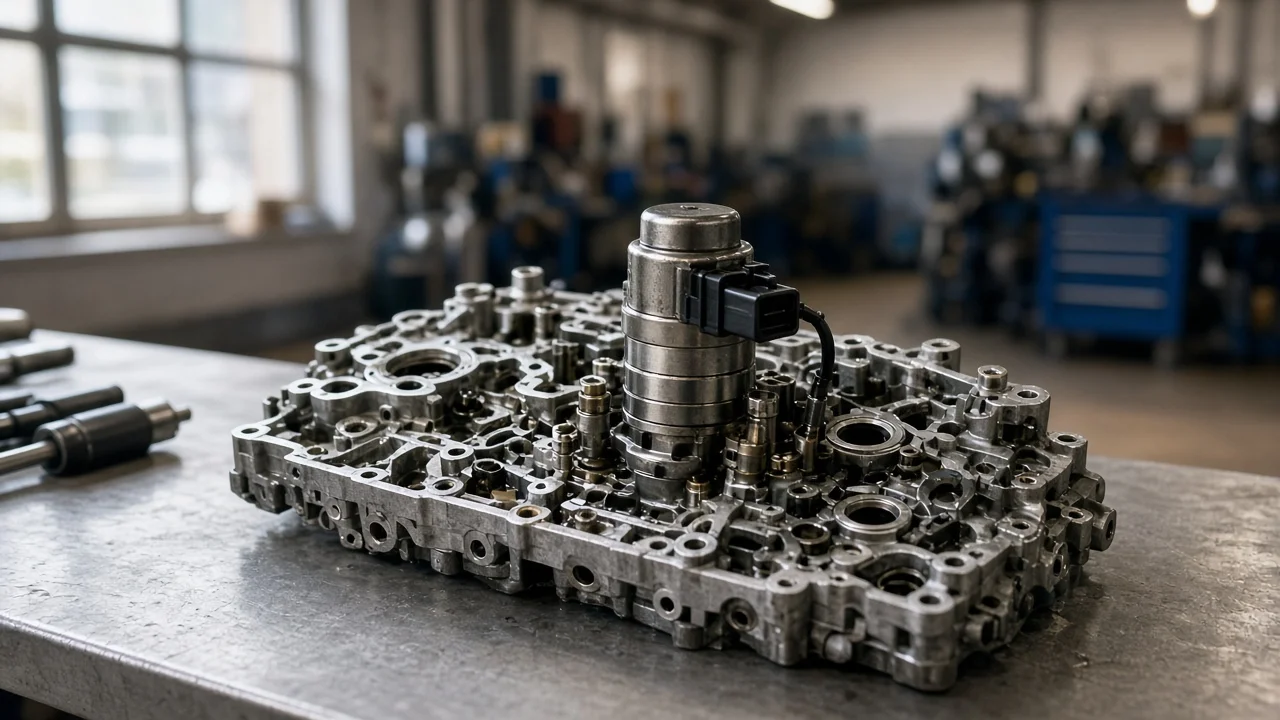
The E4OD is Ford's electronically controlled four-speed overdrive automatic, used in heavy-duty trucks, vans and some SUVs through the 1990s before the 4R100 replaced it. If you suspect a converter lockup problem, it helps to know where the torque converter clutch solenoid lives, how to tell it apart from the other solenoids, and why a lockup complaint does not automatically mean that solenoid has failed.
Where the E4OD TCC solenoid is located
On the E4OD, the TCC solenoid is not a separate part bolted to the outside of the case. It is one of several solenoids grouped on a single solenoid body, often called the solenoid pack, which is bolted to the valve body inside the transmission. To see it, you have to drain the fluid and remove the oil pan. Depending on the vehicle and the parts layout, the filter may also need to come off for clear access.
The solenoid body is wired through one harness that passes through the case to an external connector. That connector is where the vehicle wiring plugs in and is the usual place to begin electrical testing, because you can check the circuit without opening the transmission. Exact connector position, routing and bolt pattern should be confirmed in the service information for your specific model year and chassis.
How the converter clutch is controlled
The powertrain control module decides when the torque converter should lock. It looks at inputs such as vehicle speed, throttle position, engine load, fluid temperature and brake switch status. When conditions are right, usually at steady cruise in higher gears, it energizes the TCC solenoid. The solenoid redirects hydraulic pressure in the valve body so the converter clutch applies, creating a mechanical link between engine and transmission and reducing slip, heat and fuel use.
When you press the brake, open the throttle sharply, or the module sees conditions where lockup is unsuitable, it releases the clutch. That is why lockup problems can show up as several different shift behavior complaints: engine speed that stays high at highway cruise, a shudder as the converter tries to apply, or, if the clutch fails to release, the engine stumbling or stalling as you come to a stop. Each of those symptoms has more than one possible cause.
How to identify the TCC solenoid on the solenoid body
Besides the converter clutch solenoid, the E4OD solenoid body typically carries the two shift solenoids, the coast clutch solenoid, the electronic pressure control solenoid and the transmission fluid temperature sensor. Visually, several of these look similar, so identification should be done by position on the body and by matching the connector terminals to the wiring diagram for your year, not by guessing from shape or color.
Fitment also matters. Ford changed the E4OD during its production run, and the converter clutch control strategy and related hardware were not identical across every year. A solenoid body from one year may plug in and bolt up yet behave incorrectly with a different calibration. When ordering parts, match the transmission identification and the vehicle year, engine and model rather than relying only on the E4OD name. In many cases the solenoid body is serviced as a complete assembly; whether individual solenoids are available depends on the supplier and application.
What changes the diagnosis
The model year determines how the computer reports faults. Earlier E4OD vehicles use Ford's older self-test system with its own code format, while later ones use OBD-II, where codes such as P0743 point to a converter clutch circuit fault and P0741 points to a performance or stuck-off condition. An electrical circuit code suggests a wiring, connector, solenoid coil or module driver problem. A performance code means the computer commanded lockup and did not see the expected result, which can come from the solenoid, the valve body, fluid condition or the torque converter itself.
Inputs outside the transmission can also prevent lockup. A brake switch that reads as applied, an inaccurate speed signal, a throttle position fault or an engine that never reaches normal temperature can all keep the module from commanding the clutch. Diesel and gasoline applications, towing use and modified tire sizes or gearing can affect how and when lockup occurs, so compare behavior against what is normal for your configuration.
Practical steps for the owner
Start with information you can gather without opening anything. Retrieve stored diagnostic codes with a scan tool or the self-test procedure appropriate to your year. Check fluid level and condition using the correct procedure for this transmission, and confirm the fluid specification listed in your owner's manual; Ford specified a Mercon-type fluid for the E4OD, and burnt smell, dark color or debris tell you more than the level alone. Review the service history for recent fluid changes, overheating, or previous valve body or converter work.
Next, note exactly when the symptom occurs: speed, gear, engine temperature and whether braking or light throttle changes it. Inspect the external connector and harness for damage, corrosion, oil intrusion or loose pins, and confirm the brake lights work, since the brake switch circuit can influence lockup. If you have a scan tool that shows commanded lockup and engine speed, watching both at steady cruise helps separate a control problem from a slipping converter clutch.
Only after these checks does it make sense to drop the pan. Look for metal or clutch material, verify the solenoid body is secure, and test solenoid resistance and operation against the values in the factory service information for your year. Repair options then range from correcting wiring or an input fault, to replacing the solenoid body, to valve body or torque converter repair if the solenoid tests good.
Limitations and when to get help
This overview cannot replace year-specific wiring diagrams, specifications and test procedures, and it cannot tell you which part has failed on your vehicle. A lockup symptom or even a converter clutch code narrows the search but does not confirm a bad solenoid, and replacing the solenoid body without testing can leave the real fault in place. If testing shows good electrical values but lockup still slips or shudders, or if the fluid shows heavy debris, have a transmission specialist evaluate the valve body and torque converter. Professional help is also sensible when the vehicle is used for towing or carries heavy loads, because continued converter slip produces heat that can damage the rest of the transmission.