47RE TCC Solenoid Identification and Location
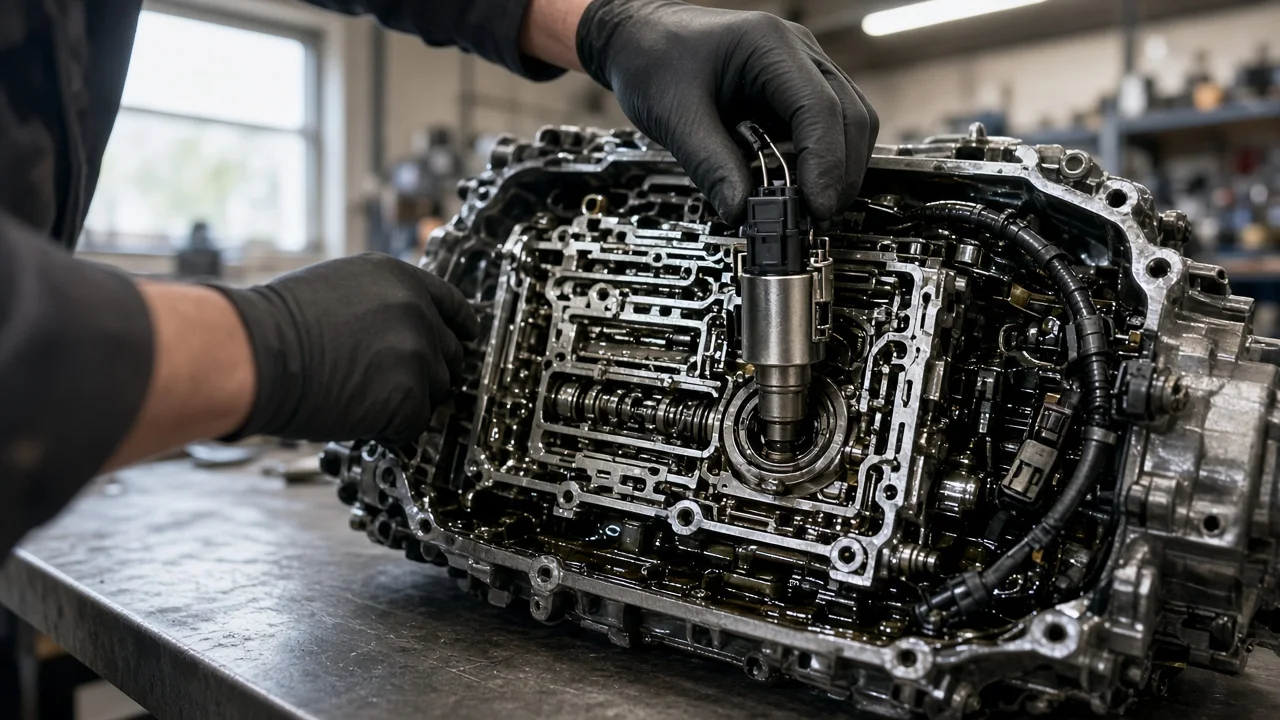
If your heavy-duty Ram with a 47RE automatic will not lock the torque converter, or locks and unlocks unpredictably, the TCC solenoid is often one of the first parts people suspect. Before buying anything, you need to know where it is, what it looks like on your transmission and how it fits into the lockup circuit. This guide covers those points and the checks that separate a solenoid problem from a wiring, input or converter problem.
Where the 47RE TCC Solenoid Is Located
On the 47RE, the torque converter clutch solenoid is not a separate part bolted to the outside of the case. It is part of the transmission solenoid assembly, which also contains the overdrive solenoid. That assembly mounts on the valve body inside the transmission, so you reach it by draining the fluid and removing the oil pan. With the pan off, you will see the valve body and filter. The solenoid assembly is attached to the valve body and connects to the vehicle harness through a sealed connector that passes through the transmission case.
Because the TCC and overdrive solenoids share one assembly, the part is usually sold and replaced as a single solenoid pack rather than as an individual TCC solenoid. When you search for parts, listings may call it an overdrive/lockup solenoid assembly or transmission solenoid pack. Confirm fitment by model year and engine, because connector style and mounting details can differ across the years the 47RE was produced.
How the Lockup Circuit Works
The torque converter clutch locks the converter's turbine to its cover, removing fluid slip so engine speed matches input shaft speed at cruise. This lowers transmission temperature and improves efficiency. On the 47RE, the powertrain control module decides when lockup is allowed based on inputs such as vehicle speed, throttle position, engine and transmission temperature, gear state and brake switch status. When conditions are met, the module energizes the TCC solenoid, which redirects hydraulic pressure in the valve body to apply the converter clutch.
This means the solenoid is only one link in a chain. A healthy solenoid will not apply the clutch if the module never commands it, if the wiring or case connector fails to deliver the signal, if hydraulic pressure is inadequate, or if the converter clutch itself is worn. Normal shift behavior also matters: lockup is typically tied to the upper gears, and the overdrive solenoid in the same assembly controls the shift into fourth, so a fault in the shared assembly or its connector can affect both functions.
What Changes the Answer for Your Truck
The first step is confirming the transmission type. The 47RE is closely related to the 46RE, the earlier 47RH and the later 48RE, and parts and procedures are not always interchangeable. Check the transmission identification tag or stamping on the case along with the vehicle build information, rather than assuming from the engine or model year alone. Heavy-duty trucks were sometimes fitted differently than their light-duty counterparts, and previous owners may have swapped the transmission or valve body.
Modifications also change the picture. Aftermarket valve bodies, performance converters, lockup controllers and engine tuning can alter when and how lockup is commanded. Some aftermarket lockup controls bypass or supplement the factory signal, which makes factory diagnostic steps less reliable. Service history matters too: a recent fluid change with the wrong fluid, a pan reinstalled with a damaged connector, or an overheated transmission can all produce lockup complaints. The fluid specification listed in your owner's manual or service information should be followed; many trucks of this era call for ATF+4, but confirm it for your vehicle.
What the Owner Can Check Before Replacing Parts
Start by scanning for diagnostic codes. Torque converter clutch circuit or performance codes point you toward the system, but a circuit code describes an electrical condition, not proof that the solenoid itself has failed. Note any overdrive-related codes as well, since they share the assembly and connector. Record the codes before clearing anything so you can see whether they return.
Next, observe the symptom carefully. At steady highway cruise with light throttle and a warm transmission, lockup usually shows as a small, noticeable drop in engine speed. Watch whether that drop never happens, happens and then cycles, or comes with shudder. Tapping the brake pedal should release lockup; if lockup never engages at all, a faulty brake switch input is worth checking because it can prevent the command. Check the fluid level and condition according to the procedure for your truck, and look for burnt smell or debris.
Inspect the harness and case connector for damage, corrosion or fluid intrusion. Measure solenoid resistance at the connector if you have the correct specifications for your model year. Use a scan tool that can command or display TCC status, if available. Look at the removed pan and filter for clutch material or metal before deciding on repair options. If you replace the solenoid assembly, work carefully around the valve body. Torque the mounting fasteners to specification, keep the connector seal intact, use a new pan gasket or sealant as specified and refill with the correct fluid to the correct level. Recheck codes and lockup behavior after a full warm-up drive.
Limitations and When to Get Help
A failed lockup is a symptom, and several different faults can cause it. A new solenoid pack will not fix a worn converter clutch, low line pressure, a sticking valve in the valve body, a module calibration issue or a broken wire elsewhere in the harness. Shudder during lockup in particular often points toward converter or fluid condition rather than the solenoid. Resistance values, connector pinouts and torque figures vary, so use the service information that matches your exact truck instead of general numbers.
If codes return after replacement, if you find heavy debris in the pan, or if the truck also has slipping, harsh shifts or overheating, have a transmission specialist perform pressure testing and a full electrical diagnosis. They can confirm whether the problem is the solenoid, the control side or internal hardware, which keeps you from paying for parts that do not address the cause.