48RE TCC Solenoid Identification and Location
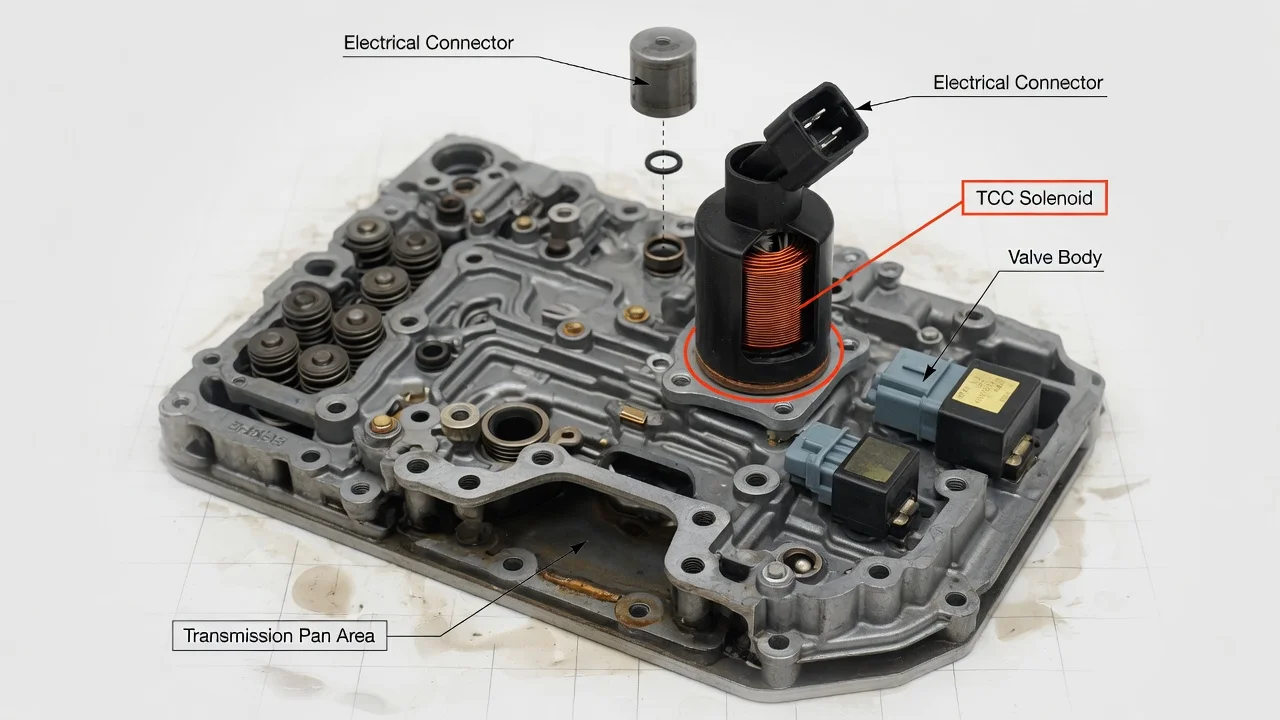
On a 48RE automatic, the torque converter clutch (TCC) solenoid is not a separate part you can see from under the truck. It sits inside the transmission, mounted to the valve body as part of a combined solenoid assembly. Knowing what that assembly looks like, where its wiring enters the case and what else shares it will help you read diagnostic codes, judge shift behavior and plan repair options without guessing which component has failed.
Where the 48RE TCC Solenoid Is Located
The 48RE is the heavy-duty four-speed automatic that Chrysler fitted mainly to Ram 2500 and 3500 trucks with the 5.9-liter Cummins diesel, generally from about the 2003 to 2007 model years. In this transmission, the TCC solenoid is housed together with the overdrive solenoid in one assembly bolted to the valve body. On these later RE-family units, the same assembly also carries the transmission range sensor. For that reason, service literature often calls it the transmission solenoid/TRS assembly rather than a standalone TCC solenoid.
To reach the assembly, you remove the oil pan from the bottom of the case, then the filter. The valve body sits directly above. The solenoid assembly is mounted on the valve body, and a short harness runs from it to an electrical connector that passes through the left (driver's) side of the transmission case near the shift lever. From outside the vehicle, that case connector is the only part of the TCC circuit you can see. The governor pressure solenoid and governor pressure sensor are separate components. Don't confuse them with the TCC solenoid when you look at the valve body.
How the Converter Clutch Is Controlled
The TCC solenoid is an electrically operated valve. When the control module switches its circuit, the solenoid opens or closes a small fluid passage. That changes the pressure acting on the converter clutch control valves in the valve body. Those valves then redirect transmission fluid so the clutch inside the torque converter applies against the converter cover. With the clutch applied, the engine and the transmission input turn together instead of slipping through the fluid coupling. This lowers engine speed at cruise and reduces the heat generated in the converter.
The module decides when to command lockup using inputs such as vehicle speed, throttle position, engine data, current gear and brake switch status. Lockup is typically requested at steady cruise in the upper gears and released when you brake or press hard on the throttle. The solenoid only switches the hydraulic signal. A lockup problem can therefore come from the electrical command, the solenoid itself, the valves it feeds, fluid condition or the clutch inside the converter.
What Changes the Answer
First confirm that you actually have a 48RE. The 46RE, 47RE and 48RE share a family layout and can look nearly identical from outside, and model-year changes within each one affect parts. The identification tag on the case and the vehicle's build information are more reliable than a general description of what usually came in a given truck. Ram trucks with the 6.7-liter Cummins, introduced during the 2007 model year, generally used the 68RFE. That is a six-speed with a completely different solenoid and control layout, so information for one does not carry over to the other.
Configuration matters even within the 48RE. Many of these trucks have been rebuilt or upgraded. Aftermarket valve bodies, performance converters and add-on lockup controllers can change how and when lockup is commanded, or bypass the factory logic entirely. A truck with an aftermarket controller may show lockup behavior that does not match stock descriptions. Part fitment also depends on the exact assembly. Buy a solenoid assembly matched to your transmission and year, not a part listed generically for the RE family.
What the Owner Can Do
Start with the basics before anyone drops the pan. Check the fluid level the way the owner's manual describes, with the engine and fluid in the stated condition, and note the fluid's color and smell. The fluid specification commonly listed for this transmission is ATF+4 or an equivalent that meets that standard. Confirm it for your truck, because the wrong fluid or a low level can cause shift behavior that mimics an electrical fault. Then read stored diagnostic codes with a scan tool that can access transmission data, not just generic engine codes.
Watch the tachometer at a steady highway speed on a level road. When lockup engages, engine speed normally drops slightly. Lightly touching the brake pedal should release lockup and let the rpm rise. Note whether lockup never happens, cycles on and off, or comes with a shudder, and whether the problem changes as the transmission warms up. Inspect the case connector on the side of the transmission for oil wicking, corrosion, bent pins or a damaged harness. A circuit fault there can look like a dead solenoid.
Use your service history to choose between repair options. If the fluid and filter have not been serviced in a long time, that service and a pan inspection are reasonable first steps. If codes point to the TCC circuit, have the wiring and connector tested before the solenoid assembly is condemned. When replacement is warranted, it usually means removing the pan and filter and often the valve body. That makes it a sensible time to replace the pan gasket and filter as well.
Limitations and Next Step
A symptom alone does not identify a failed solenoid. No lockup, shudder or erratic engagement can also come from a worn converter clutch, sticking valves, low line pressure, a wiring fault, a faulty input such as the brake switch, or a control module problem. Codes tell you which circuit or condition the module flagged, not which part has failed. Exact code definitions, solenoid resistance specifications, test procedures and torque values depend on the model year. Use the factory service information for your specific truck rather than generic figures.
If testing points inside the transmission, or the truck has an aftermarket converter or controller you cannot identify, the practical next step is a transmission shop familiar with the RE family. Bring the codes, your fluid observations and notes on when the lockup problem occurs. That record shortens diagnosis and helps separate a solenoid fault from a converter or valve body problem.