5R55E TCC Solenoid: Identification and Location
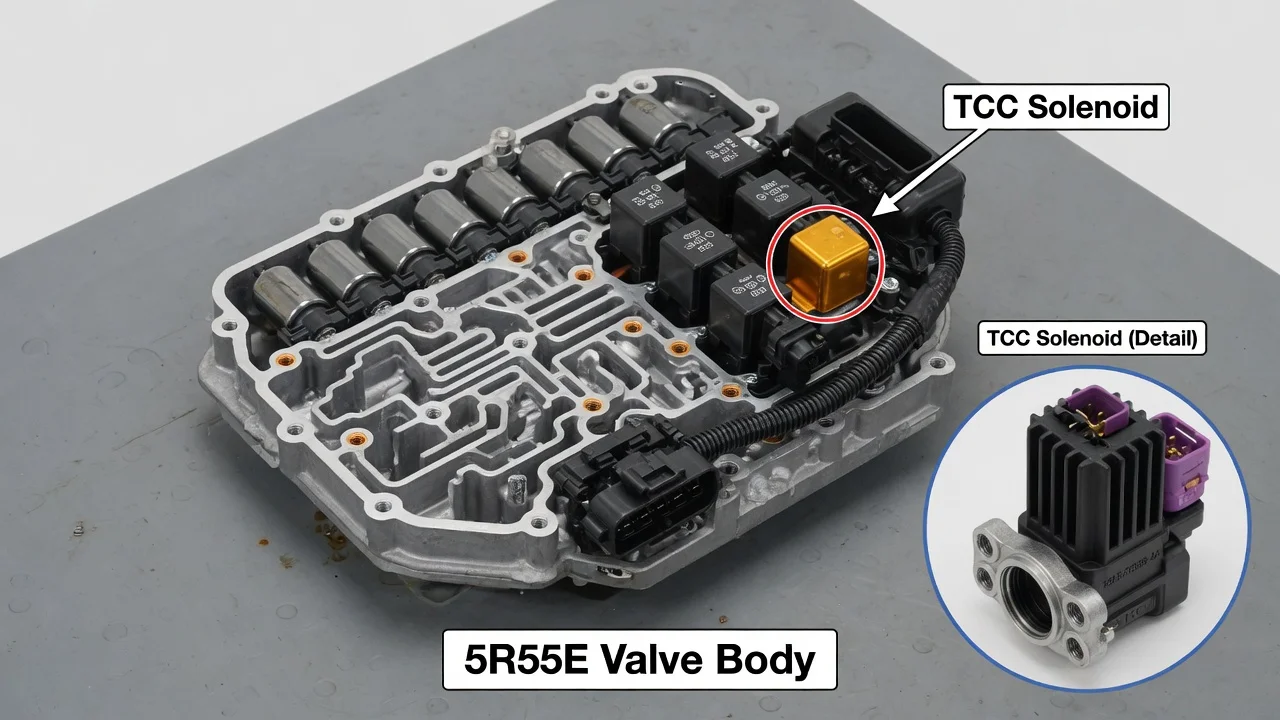
The torque converter clutch (TCC) solenoid on a Ford 5R55E controls converter lockup, which affects highway rpm, fuel economy and how the truck feels at cruising speed. Owners usually start looking for it after a lockup-related trouble code or a shudder complaint. This guide explains where the solenoid sits, how to identify the correct part for your transmission, and why a code or symptom alone does not prove the solenoid has failed.
Where the 5R55E TCC solenoid is located
On the 5R55E, the TCC solenoid is inside the transmission, not on the outside of the case. It is part of the solenoid body, often called the solenoid pack. That assembly is bolted to the valve body and sits under the transmission oil pan. To reach it, you drain the fluid, remove the pan and filter, and unbolt the solenoid body from the valve body. A single electrical connector on the outside of the case links the vehicle harness to the solenoid body through the case wall.
The solenoid body typically groups the three shift solenoids, the electronic pressure control (EPC) solenoid, the TCC solenoid and the transmission fluid temperature sensor on one frame with a shared internal harness. Because of that layout, the TCC solenoid is commonly serviced as part of the complete solenoid body. Some suppliers offer individual solenoids, but availability and quality vary, and replacing one solenoid still requires the same pan-off access.
How the TCC solenoid controls converter lockup
The torque converter normally transfers power through fluid, which allows some slip between the engine and the transmission. Once the vehicle reaches suitable speed, load and temperature conditions, the powertrain control module commands the converter clutch to apply. This locks the engine and transmission input together mechanically, reducing slip and heat.
The TCC solenoid is the electrical part of that process. The module controls it with a pulse-width-modulated signal, which lets it apply the clutch gradually rather than slamming it on. The solenoid regulates hydraulic pressure to the converter clutch circuit through passages in the valve body. That means smooth lockup depends on the solenoid, the wiring and connector, the control module's commands, clean fluid at the correct level, the valve body bores and valves, and the converter clutch itself. A fault in any of these can produce similar shift behavior.
Identifying the correct solenoid for your transmission
Start by confirming the transmission type rather than relying on the model name. The 5R55E was used mainly in Ford Ranger, Explorer, Explorer Sport, Explorer Sport Trac, Mercury Mountaineer and Mazda B-Series trucks from the late 1990s through the 2000s, but different years and engines of the same model used other transmissions. Check the transmission code on the vehicle certification label, the identification tag on the transmission case, or a VIN-based parts lookup.
Once the transmission is confirmed, use the VIN or the part number on the existing solenoid body to verify fitment. Solenoid bodies changed during production, and connector style, internal calibration and the included sensor can differ between versions. When the pan is off, compare the old assembly with the replacement before installing it: mounting points, connector, solenoid count and positions should match. Do not assume that a part listed for a similar truck or a similarly named transmission will fit.
What changes the answer
The most important distinction is between the 5R55E and the later 5R55W and 5R55S used in rear-wheel-drive Explorer, Mountaineer and some other Ford products from about 2002 on. Despite the similar names, these are different designs with different solenoid arrangements, valve bodies and parts. Location, procedure and replacement parts described for one do not automatically apply to the other. The older four-speed 4R55E shares much of the 5R55E's design ancestry, but it is also a separate transmission and should be identified on its own.
Operating conditions also change what you observe. Lockup normally does not occur when the fluid is cold, at low speed, under heavy throttle, or when the brake pedal is pressed, so a converter that seems not to lock in those conditions may be operating as designed. Previous repairs matter too: a rebuilt transmission, a replaced valve body or an aftermarket converter can change how lockup behaves. Review the service history before drawing conclusions.
What the owner can check before buying parts
Read and record the stored diagnostic codes with a scan tool, including any pending codes and freeze frame data. Lockup-related codes such as P0740, P0741, P0743 or the Ford-specific P1744 point to the converter clutch circuit or its performance, but they do not identify which part failed. An electrical code suggests checking the circuit and connector first, while a performance code can involve fluid, the valve body, the converter or the solenoid. Note whether other transmission codes are present, since several solenoid faults together can point to the shared harness, connector or power supply.
Check the fluid level and condition using the procedure for your vehicle and the fluid specification marked on the dipstick or listed in the owner's manual. Dark, burnt-smelling fluid or debris in the pan suggests wear beyond a single solenoid. Inspect the external case connector for oil intrusion, corrosion, bent pins or damaged wiring. With a scan tool that shows live data, compare commanded lockup with actual engine and turbine or output speed behavior during a steady cruise.
If you test solenoid resistance through the case connector, compare the reading with the specification and pin assignments in the factory service information for your exact transmission. A reading within range does not prove the solenoid works hydraulically, and an out-of-range reading can come from the internal harness rather than the solenoid itself.
Repair options and their trade-offs
If diagnosis points to the solenoid body, replacement is a pan-off job that most experienced home mechanics can do with basic tools, a torque wrench and the correct fluid. Install a new pan gasket and filter, torque the solenoid body and pan bolts to specification, and refill and check the level using the correct procedure. Some vehicles benefit from a scan tool relearn or adaptive reset afterward; the service information will indicate whether one applies.
If lockup problems continue after a confirmed good solenoid and circuit, the cause is more likely in the valve body, the converter clutch or internal seals. Those repair options usually require a transmission specialist, and replacing the solenoid repeatedly will not fix them.
Limitations and next step
This guide describes the typical 5R55E layout, but production changes, prior rebuilds and replacement parts can differ from it. Exact resistance values, connector pinouts, torque figures and fluid fill procedures come from the factory service information for your VIN, not from general descriptions. A symptom such as shudder, high cruising rpm or a lockup code is a starting point for diagnosis, not confirmation that the solenoid is bad.
If the transmission is slipping, overheating, showing multiple codes or producing debris in the pan, have a transmission shop evaluate it before you spend money on a solenoid body. A technician with a capable scan tool and the correct service data can separate an electrical fault from a hydraulic or mechanical one, which is the decision that determines the right repair.