Choosing Transmission Cooler Lines for a 68RFE
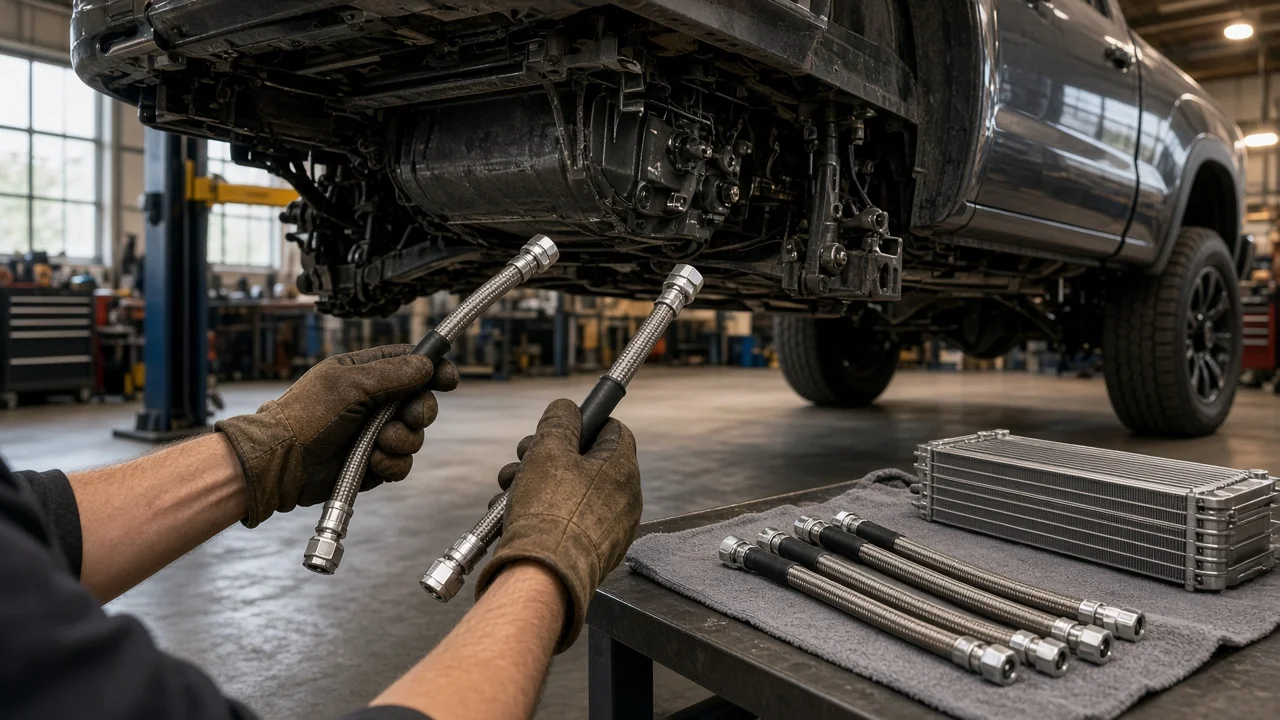
The 68RFE six-speed automatic is best known for its pairing with the 6.7-liter Cummins in Ram heavy-duty pickups. It depends on its cooler circuit to control fluid temperature, especially when the truck tows or hauls. When a line weeps, chafes or rusts through, replacing it looks simple, but routing, fittings and cooler layout vary by model year and configuration. This guide explains how to choose 68RFE transmission cooler lines that fit your truck and suit how you use it.
Define the job the product must do
Confirm that a cooler line is actually the problem before you buy anything. Fluid on a line does not prove the line has failed. Transmission fluid can run along the lines from a leaking pan gasket, a fitting, the cooler itself or a nearby component, and other fluids can look similar once road grime mixes in. Clean the area, run the truck, and trace the wetness to its highest point. Note whether the leak sits at a crimped hose section, at a quick-connect fitting, or in a corroded stretch of hard line. That tells you whether you need one section, a full supply-and-return set, or a different repair altogether.
Next, consider how the truck is used. A pickup that regularly pulls a heavy trailer, plows snow or runs in states that salt their roads puts more heat and corrosion stress on the lines than a lightly loaded daily driver. Also decide whether you are restoring the factory circuit or changing it, for example by adding an auxiliary cooler. Those two goals call for different parts. Budget, access to a lift, and whether you will do the work yourself also narrow the realistic choices.
Check compatibility
Start by confirming the transmission type. Ram heavy-duty trucks have used more than one automatic depending on engine, model year and whether the vehicle is a pickup or a cab-and-chassis. Do not assume a 68RFE from the badge on the fender. The VIN, the original build information or the identification tag on the transmission will settle it. Then record the details that change line routing: model year, engine, two- or four-wheel drive, cab and bed configuration, and any factory towing or cooling package. A line set listed for the wrong combination may reach the right ports but clash with brackets, the frame or the exhaust.
Fitment also depends on the interfaces at each end. Check how the lines connect at the transmission case and at the cooler, whether the factory quick-connect style is retained, and where the clips and support brackets sit. Many factory lines combine steel tubing with crimped rubber hose sections, and a replacement should match that layout or clearly explain how it differs. The most reliable cross-reference is the part number on the original line, or a VIN-based lookup at a dealer parts counter. Universal kits that require cutting and adapting the factory lines are a different repair option and need more skill to install leak-free.
Features that affect the choice
Replacement lines generally fall into three groups: OE-style assemblies that copy the factory steel-and-rubber design, aftermarket direct-fit assemblies that may use different hose or tube materials, and custom setups built from braided hose and separate fittings. Coated or stainless tubing resists corrosion better than bare steel in salted regions. Whatever the build, any flexible section must be rated for automatic transmission fluid and the temperatures a towing truck produces. Crimped ends are compact and consistent when done correctly. Reusable fittings allow future repairs but add more joints that can seep.
Treat labels such as heavy-duty, upgraded or direct fit as claims, not evidence. Useful evidence includes a fitment listing that names year, engine and drivetrain, clear photos of both end fittings, installation instructions, and stated warranty terms. Ask what is physically different from the factory part, such as hose construction or fitting design. A larger line diameter does not by itself improve cooling, and changes to the circuit can affect how the factory cooler and any temperature-controlled bypass behave. If cooling capacity is your real concern, that is a separate question from replacing a leaking line.
Limitations and ownership costs
Installation is often more involved than the part suggests. Access near the radiator and along the frame can be tight, and some components may need to be moved to route a full-length line. Quick-connect fittings need the correct release method. Forcing them can damage the fitting at the transmission or cooler, which turns a line job into a bigger repair. Replace retaining clips and seals where the kit or service information calls for it. Expect fluid loss: the 68RFE uses ATF+4, and the level should be set with the factory check procedure for your model year, which accounts for fluid temperature and engine operation. Guessing the fill level after a line change is a common way to create a new problem.
New lines restore a sealed, properly routed circuit. They cannot correct harsh or delayed shift behavior, slipping, internal wear, a restricted cooler or a faulty sensor. If the truck has stored diagnostic codes, read them before and after the repair rather than assuming the leak explains them. If the fluid ran low for a while, check its level and condition after the job, and review the service history for earlier line repairs, such as hose clamped over a cut line. Ownership costs include the lines, the correct fluid, clips or seals, possible cooler service, and either your time or shop labor.
Build a practical shortlist
Before comparing prices, confirm each item on this checklist. Is the transmission confirmed as a 68RFE, with year, engine, drivetrain and cab configuration recorded? Has the leak been traced to a specific line or fitting rather than inferred from a wet underside? Do you know which lines you need, supply, return or both? Does the listing match your end fittings and bracket positions, ideally by part number or VIN lookup? Are the material and corrosion protection suitable for your climate, and are flexible sections rated for transmission fluid and towing temperatures? Are clips, seals and instructions included? Do you have ATF+4 and the correct fill procedure on hand? Finally, check the return policy in case the routing does not match.
With that checklist complete, the decision usually comes down to three repair options. An OE-style assembly is the safest choice when you want factory routing and fittings. An aftermarket direct-fit line can make sense when it offers better corrosion resistance and documents its fitment clearly. A shop-built or universal setup suits trucks with modified cooling systems, provided the installer is experienced with high-temperature fluid lines. Choose the option that matches your confirmed configuration and how you use the truck, not the one with the strongest marketing language.