Choosing Braided Transmission Cooler Lines
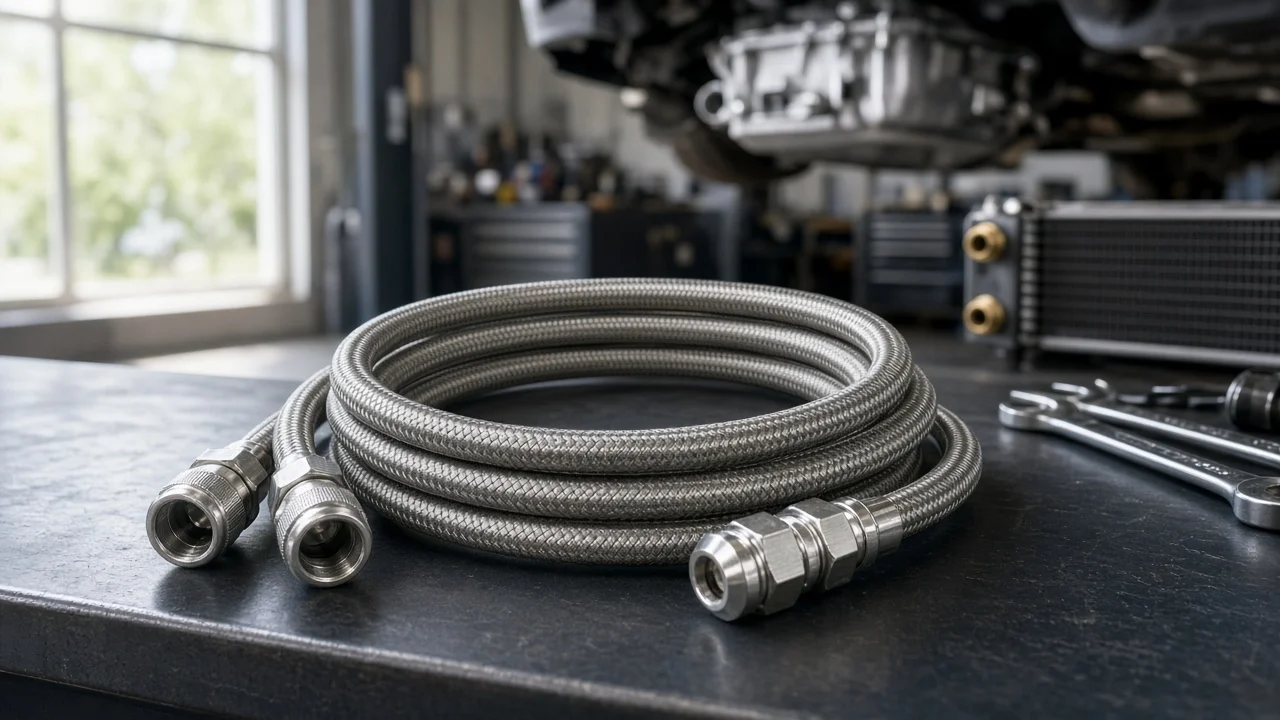
Braided transmission cooler lines replace factory steel tubes or rubber hoses between the transmission and its cooler. Owners usually buy them to fix a leak, to plumb an auxiliary cooler, or to complete a towing or performance build. The braided cover looks tough, but the right choice depends on your transmission type, the fittings at each end, the fluid you run and where the line will be routed. This guide explains how to match a braided line kit or custom hose to your vehicle without paying for features you do not need.
Define the job the product must do
Start with the reason you are shopping. Most owners look at braided lines for one of three jobs. The first is replacing a leaking or damaged factory line. The second is plumbing an auxiliary cooler for towing or hauling. The third is a custom setup after a transmission swap or an engine bay change. Each job sets different priorities. A straight repair favors a line that matches the original routing and fittings. A towing build needs the correct hose size for the added cooler and secure routing over longer runs. A custom build usually needs AN fittings and adapters chosen around components the factory never paired.
Confirm what is actually wrong before buying. Fluid on a cooler line can come from several places: the line itself, a fitting seal, the cooler inside the radiator, the pan gasket, or an engine leak running downhill. Clean the area, run the vehicle and recheck to find where the wetness starts. Diagnostic codes for transmission fluid temperature or a change in shift behavior are clues, not proof that the lines are at fault. Low fluid, a restricted cooler, a sensor problem or internal wear can produce similar signs. Your service history often narrows the cause quickly, including any recent fluid service, cooler replacement or collision repair.
Also consider practical limits. Can you reach both ends of the line? Does the job require raising the vehicle safely? Are you comfortable cutting and assembling hose, or would you rather buy a pre-made assembly?
Check compatibility
Fitment starts with the transmission type and exact configuration. The same vehicle model can use different automatic transmissions, CVTs or cooler arrangements depending on engine, drivetrain, towing package and model year. Identify the transmission model in one of three ways: the vehicle documentation, the identification tag on the case, or a dealer lookup by VIN. Then note where the fluid is cooled: in the radiator tank, in a separate external cooler, or in both in series.
Next, identify every connection point. Many late-model vehicles use quick-connect fittings at the transmission or radiator. Older and heavy-duty applications often use threaded inverted flare fittings, and some use banjo bolts or hose barbs. Braided lines commonly end in AN fittings, which use a 37-degree flare. These are not interchangeable with 45-degree inverted flare fittings, even when the two look similar, so you may need specific adapters at each end. For each port, record the thread size and pitch, the port style and the sealing method: flare, O-ring or crush washer. Match the hose inside diameter to the factory line so the cooler circuit is not restricted. Measure the full routing length, including bends around the engine, frame and steering components.
Finally, confirm the fluid specification your transmission requires. Check that the hose liner is rated for automatic transmission fluid, or for the CVT fluid you use. If you are adding a cooler, keep the transmission's outlet and return ports connected as the service information shows for your configuration, and label each line before you disconnect anything.
Features that affect the choice
The hose inside the braid matters more than the braid itself. Rubber-lined hoses are flexible and easy to route, and they use reusable or crimped fittings designed for rubber hose. PTFE-lined hoses resist heat and fluid permeation well. However, they are stiffer, often need a wider bend radius, and require fittings made specifically for PTFE hose. Mixing a rubber-hose fitting with PTFE hose, or the reverse, is a common cause of leaks. Choose based on your routing, the temperatures near the line and how you plan to assemble it, not on which liner sounds more advanced.
Stainless steel braid resists cuts and abrasion, but it also acts like a file on anything it rubs, including wiring, brake lines, aluminum parts and painted surfaces. Nylon and other textile braids are lighter and gentler on their surroundings, but they offer less protection from road debris. A coated or jacketed braid reduces chafing, and a fire sleeve helps where a line passes near exhaust components. For fittings, pre-crimped assemblies remove the risk of assembly error. Reusable fittings allow custom lengths and later changes, but they must be assembled carefully. Aluminum fittings are light and common in AN systems; steel fittings are heavier and better tolerate repeated tightening.
Separate evidence from labels. Useful evidence includes a published working pressure and temperature range for the specific hose size, the liner material and a fluid compatibility list. Look also for clear thread and seal specifications for the fittings and vehicle-specific fitment notes. Terms such as racing grade, heavy duty or military style tell you little unless they are backed by a named standard or stated ratings. Polished finishes and colored fittings are appearance choices and have no effect on cooling.
Limitations and ownership costs
Braided lines move fluid; they do not meaningfully cool it on their own. They will not fix slipping, harsh or delayed shifts, internal leaks, a failing torque converter or a clogged cooler. If the transmission has already suffered internal damage, debris can remain in the cooler and lines. Follow the manufacturer's guidance on flushing or replacing the cooler before connecting new hose, or the contamination can return to the rebuilt or replacement unit. If the real problem is inside the transmission, get it diagnosed by a transmission shop and compare repair options before spending money on plumbing.
Budget beyond the hose. A complete job may need adapters for each port, extra fittings, cushioned clamps and protective sleeving. You may also need the correct wrenches for soft aluminum fittings and fresh fluid to replace what drains out. Afterward, check the fluid level using the procedure for your transmission. Some units have no dipstick and require a fill plug check at a specified fluid temperature, which may call for a scan tool. Use thread sealant only where the fitting design calls for it, because flare and O-ring seals do not rely on it.
The braid hides the hose underneath, so cracks, swelling or soft spots are harder to see than on a plain hose. Inspect the fittings for seepage and the hose for kinks, flattened sections and rubbing points. Recheck clamp positions after the first few drives and again at each fluid service. If a line shows damage, replace the affected assembly rather than patching it.
Build a practical shortlist
Narrow the field with a short checklist, and compare each option against it rather than against brand reputation. First, fitment: does the product match your transmission model, cooler arrangement and every port, or does it list the exact adapters required? Second, hose construction: is the liner rubber or PTFE, is the braid stainless, textile or coated, and does the inside diameter equal the factory line's? Third, ratings: are the working pressure, temperature range and fluid compatibility published for that hose size?
Fourth, completeness: does the kit include fittings, adapters, mounting hardware and instructions, or will you need to source parts separately? Fifth, routing and protection: is the length right for your path, and do you need sleeving or clamps to keep the line away from exhaust, moving parts and sharp edges? Sixth, support: is there a clear return policy, stated warranty terms and a way to confirm fitment before ordering?
Once you have those answers, the choice usually comes down to three repair options. A factory replacement line suits a stock repair and carries the least fitment risk. A vehicle-specific braided kit gives you braided construction without custom work. A custom-built line fits swaps and auxiliary coolers where no direct-fit part exists. If a transmission shop is already handling the repair, ask which line and fittings they recommend for your configuration.