Choosing Transmission Cooler Lines for a 47RE
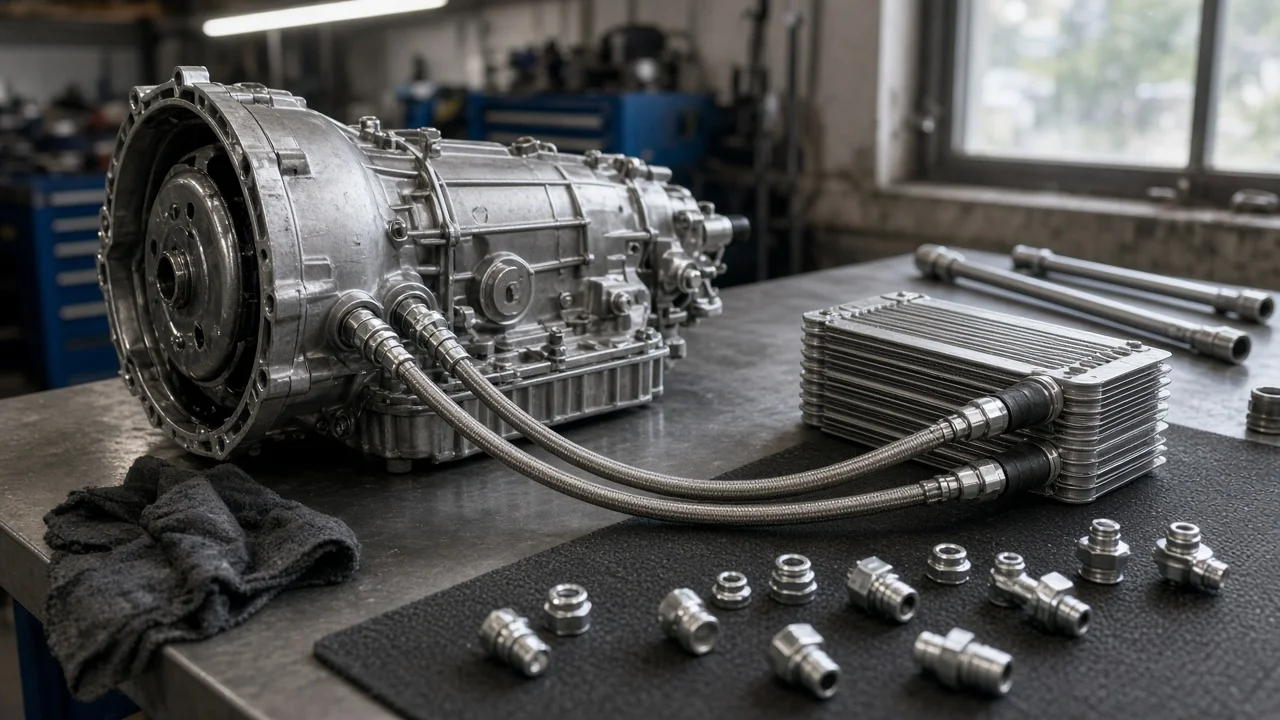
The 47RE is a four-speed automatic used in heavy-duty Dodge Ram pickups from the late 1990s and early 2000s, most often behind the 5.9L Cummins diesel and the 8.0L V10. Its cooler lines carry hot fluid from the transmission to the cooler and back. A leak, kink or restriction can quickly turn into an overheating problem. This guide shows how to confirm what your truck needs, compare line options and budget for the job before you buy.
Define the job the product must do
Start with why you are shopping. The most common reasons are replacing a rusted or leaking factory line, rerouting lines to add an auxiliary cooler for towing, and installing clean lines after a rebuild or replacement transmission. Each goal points to a different purchase. A like-for-like repair usually calls for preformed lines that match the original routing. An auxiliary cooler setup often needs additional hose, fittings and mounting hardware. A rebuild may justify replacing the lines and cooler together, because debris from a failed unit can stay trapped in the old circuit. Many rebuilders expect the cooler and lines to be flushed or replaced before the new unit goes in.
Be careful not to treat a symptom as proof that the lines have failed. Fluid on the frame rail can come from a fitting, the pan gasket, the cooler itself or a nearby leak carried by airflow. High fluid temperature can come from low fluid level, a clogged cooler, heavy towing or internal problems such as torque converter slip. Clean the area, trace the wet spot to its highest point and check the fluid level before buying parts. Your service history also matters: a recent rebuild, cooler replacement or previous line repair changes what you are likely to find.
Check compatibility
First confirm the transmission type. The 47RE belongs to the same family as the 46RE and the later 48RE, and the units look similar from underneath, so a seller's application chart is only useful if you know exactly what is in your truck. Check the identification tag on the transmission case and the vehicle's build information. Then note the model year, engine, two- or four-wheel drive, cab and chassis configuration, and whether the truck has a factory towing package. These details can change line length, routing and how many coolers are in the circuit.
Next, look at the interfaces that decide fitment. Depending on configuration, factory routing may run to a cooler in the radiator tank, a separate air-to-oil cooler, or both. Trace your lines from end to end. Record the fitting style at the transmission case, the connection at each cooler, the line outside diameter, and the locations of any brackets or clamps near the exhaust and steering components. If you plan to add a cooler or inline filter, identify which port sends fluid out and which receives the return. Plumbing components in the wrong direction or order can cause problems that are easy to mistake for a transmission fault.
Features that affect the choice
Material is the biggest trade-off. Preformed steel lines replicate the factory layout and clip into the original brackets, but plain steel can rust again in road-salt regions. Stainless steel tubing resists corrosion better but is harder to bend and flare if you have to adjust it. Rubber hose sections rated for transmission fluid are simple to install but age with heat and need proper clamps and support. Braided hose with threaded fittings looks durable and allows flexible routing. However, it typically requires adapters at the factory ports, and the outer braid can wear through nearby parts if it is not secured.
Treat marketing labels with caution. Words like heavy-duty, high-flow or towing-grade say little on their own. Useful evidence includes the stated material, inside diameter, fitting type, pressure and temperature rating, and compatibility with automatic transmission fluid. A larger line can reduce restriction, but it does not add cooling capacity by itself, and it only helps if the fittings and cooler passages are not the narrower point. Preformed kits trade flexibility for easier fitment, while universal kits trade convenience for routing freedom. Choose based on your skills, tools and whether the truck is still close to its original configuration.
Limitations and ownership costs
Budget for more than the lines themselves. Installation may require line wrenches, a tubing bender or flaring tool, new clamps, adapters and thread sealant suited to the fitting type, plus enough room to work around the frame and exhaust. Disconnecting the lines spills fluid, so plan to top up with the correct fluid specification. Chrysler's ATF+4 supersedes the older ATF+3 for these transmissions, but confirm the requirement in your owner's manual or service information. Check the level using the specified procedure and fluid temperature, not a cold dipstick reading. If the old cooler is contaminated or partly blocked, adding a new cooler or flush service increases the cost.
Cooler lines cannot fix internal problems. Harsh or late shift behavior, slipping, overdrive faults or stored diagnostic codes usually point to adjustment, hydraulic, electrical or mechanical causes that need proper diagnosis. Scan the truck for codes and review fluid condition before assuming the circuit is at fault. After installation, inspect fittings for seepage after the first drives, check that hose and tubing do not touch hot or moving parts, and include the lines in routine undercarriage inspections. Rubber sections and clamps are consumables that will need replacement eventually.
Build a practical shortlist
Before comparing products, write down your confirmed details: transmission identification, model year, engine, drivetrain, factory cooler arrangement and the fitting style at each end. Then filter listings by exact application rather than by family name. Discard anything that does not state material, fitting type and fluid compatibility. For each remaining option, confirm whether it includes all lines or only one section, whether brackets and clamps are included, and whether adapters are needed for your ports.
Finally, compare the realistic repair options side by side. A single-section repair with rated hose and correct fittings can be enough when one spot has rusted through and the rest of the line is sound. A full preformed replacement suits trucks with widespread corrosion or a fresh rebuild. An upgrade kit makes sense when you are also adding an auxiliary cooler for regular towing. Weigh total cost, including fluid, hardware, tools or labor, against how long you plan to keep the truck and how hard you work it. The right choice is the one that matches your truck's verified configuration and the job you defined at the start.