Choosing Transmission Cooler Lines for a TH350
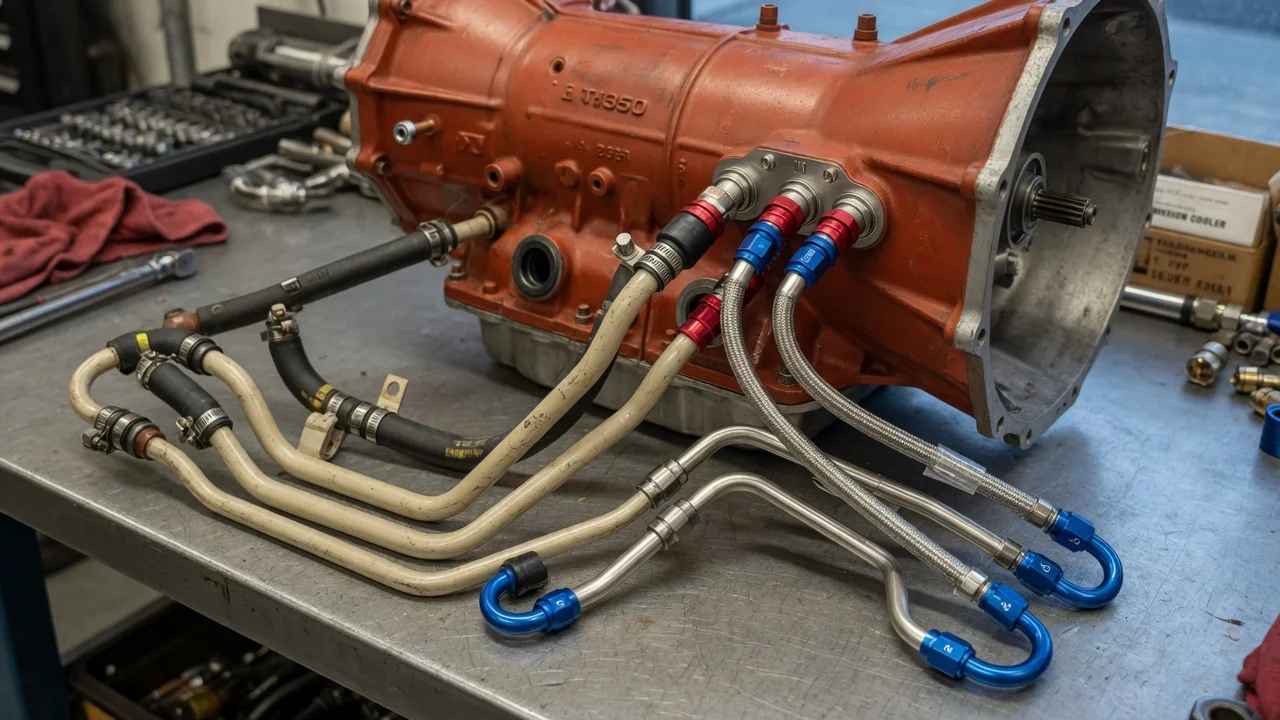
Transmission cooler lines on a TH350 carry hot fluid from the case to a cooler and back. A poor choice shows up as leaks, chafed hoses or fluid that runs too hot. Before buying, confirm that the unit really is a TH350 or the lockup TH350C, and note how the vehicle is used. Then decide whether you need factory-style steel, flexible hose or a mix of both. This guide covers selection and fitment only, not a transmission rebuild.
Define the job the lines must do
Start with what the lines will actually do in your vehicle. A numbers-matching restoration usually calls for factory-style steel lines that follow the original routing and look correct. A street car with a looser torque converter, a tow vehicle or a truck that sees long climbs produces more fluid heat. These setups may need routing to an auxiliary cooler as well as the radiator tank. Engine swaps, aftermarket headers and relocated radiators change the path completely, which often makes flexible hose more practical than bent tubing. Before comparing products, write down where the cooler is, how long the run is and what sits near the transmission.
Then confirm the transmission type. The TH350 is a three-speed GM automatic, typically identified by a 13-bolt pan that is roughly square with one corner cut off. The TH350C version adds a lockup converter. A previous owner may have swapped in a different unit, so check the pan and any tag or stamping rather than relying on the vehicle's original specification. If you are buying lines because of a leak, find the actual source first. Fluid on the crossmember can come from a loose case fitting, a seeping cooler, the pan gasket or another seal rather than from the line itself.
Check compatibility
At the case, the TH350 cooler ports are commonly threaded for 1/4-inch NPT fittings, and factory lines typically attached through inverted flare connectors. Line diameter varied by application, so measure the outside diameter of your existing tube with calipers instead of assuming a size. If you plan to run AN hose, you will need adapters from the case thread to the AN size you choose. Those adapters must clear the case, the shift linkage and the floor pan. Also confirm which port feeds the cooler and which receives the return on your case. Many references list the front port as the outlet, but check it against a service manual or the original line routing before you disconnect anything.
The other end matters just as much. Factory radiators, aftermarket radiators and stand-alone coolers use different connections, ranging from threaded ports in the radiator tank to barbed nipples or AN fittings on an auxiliary core. A kit that matches the transmission but not the radiator leaves you hunting for adapters. If you add an auxiliary cooler, a common arrangement sends fluid through the radiator cooler first and then through the auxiliary unit before it returns to the transmission.
Finally, check chassis fitment. Pre-bent lines are made for a particular body, frame and engine combination. A set made for a small-block car will not necessarily clear a big-block engine or a truck frame. Look at exhaust clearance, the starter, motor mount movement and the attachment clips along the frame or pan rail. Lines that sit close to headers need more distance or heat shielding, and every run must allow for the engine and transmission rocking under torque.
Features that affect the choice
Material is the main decision. Plain steel tube is inexpensive and matches original equipment, but it can rust over time, especially where roads are salted. Stainless steel resists corrosion, but it is harder to bend and flare. It suits buyers who will install pre-bent sets or who own the proper tools. Braided hose with AN fittings routes easily around swapped engines and aftermarket parts. Check whether the inner liner is synthetic rubber or PTFE, because that affects heat tolerance and flexibility. PTFE-lined hose also usually needs hose ends made specifically for it.
Plain rubber hose with clamps is the simplest flexible option and is often used for short connections to an auxiliary cooler. Use hose rated for transmission oil cooler service, such as hose made to SAE J1532, rather than fuel or heater hose, and use clamps sized for the barb. Treat marketing labels with caution. Terms like heavy duty or race spec say little on their own. Useful evidence includes the stated material, pressure and temperature ratings, tube or hose size, and the exact fitting types included. A larger line size does not by itself improve cooling, and better plumbing will not fix a cooler that is too small.
Limitations and ownership costs
Installation needs more than the parts. Bending steel or stainless tube cleanly calls for a tubing bender. Repairing or shortening a line needs a flaring tool matched to the fitting style, plus flare-nut wrenches to avoid rounding the fittings. AN setups add the cost of hose ends and adapters, which can exceed the cost of the hose itself. Expect to lose some fluid during the swap, and plan to top up with fluid that meets the fluid specification for your unit. Many owners use a current Dexron-licensed ATF, but confirm this against your service information. Check the level with the transmission warm, the engine running and the selector in Park.
New lines cannot correct problems elsewhere. If the transmission failed internally, debris can remain in the radiator cooler and any auxiliary core. In that case the cooler usually needs thorough flushing or replacement before new lines go on. Overheating caused by slipping clutches, a dragging band or an undersized cooler will continue with fresh plumbing. Most TH350 units are hydraulically controlled, so there are usually no transmission diagnostic codes to read. Harsh, slipping or delayed shift behavior calls for a separate diagnosis rather than new lines. Over time, inspect flexible hose for cracks and hardening, recheck clamp tension and record the work in your service history.
Build a practical shortlist
Before buying, write a short checklist. Confirm that the unit is a TH350 or TH350C. Measure the existing tube diameter and note the fitting type and thread at both the case and the cooler or radiator. Sketch the route, including exhaust, crossmember and mount clearance. Then choose a material: factory-style steel for originality, stainless for corrosion resistance with pre-bent fitment, or hose for swaps and custom routing. Finally, check whether adapters, clips and heat protection are included or must be bought separately.
Ask the same questions of every listing so you compare like with like. A useful product description states the transmission, vehicle application, tube or hose size, material, fitting ends and the contents of the box. Be wary of broad claims that a set fits every GM vehicle, because fitment depends on chassis and engine. Also weigh repair options against full replacement. A single damaged section can sometimes be repaired with a properly flared union, while lines corroded along the frame are usually better replaced as a set. Keep the receipt and confirm the return policy in case a pre-bent line does not clear your setup.