Choosing AN Transmission Cooler Lines and Checking Line Size
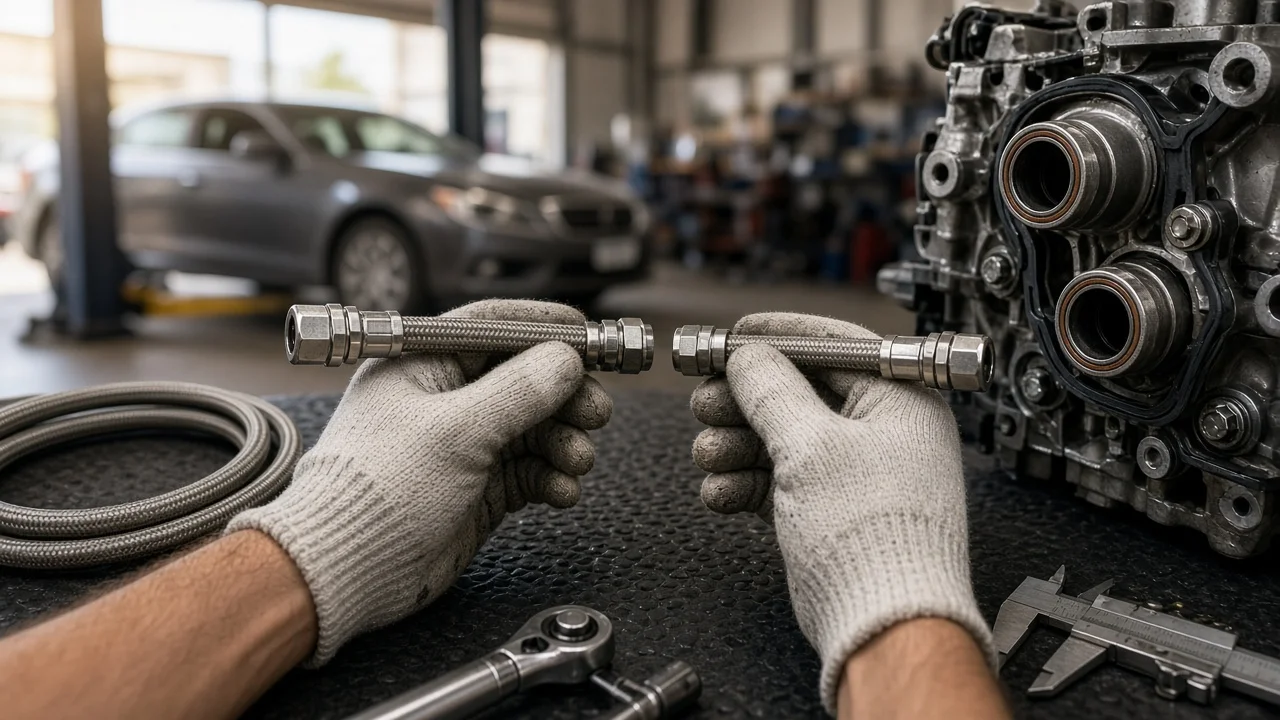
AN transmission cooler lines replace factory steel tubes or rubber hoses with braided hose and flared fittings. Owners usually fit them when adding an auxiliary cooler, relocating a cooler or completing a drivetrain swap. Brand matters less than matching the dash size, port threads, hose construction and routing to your vehicle. This guide explains how to confirm line size and what -6 AN means. It also covers how to compare kits without assuming new lines will fix a transmission problem.
Define the job the product must do
Start with why you are changing the lines. You might be adding an auxiliary cooler for towing, replacing corroded or leaking factory lines, moving a cooler during a swap, or fitting a transmission whose ports do not match the original plumbing. Each reason leads to different lengths, fitting counts and routing. A daily driver that tows occasionally needs durable, easily inspected lines. A swap or track project may need custom lengths and tighter packaging around headers, crossmembers and the radiator support.
Identify the transmission type and configuration before buying anything. Conventional automatics, CVTs and dual-clutch units manage cooling differently. Many modern transmissions send fluid through a thermostat, a bypass valve or a cooler built into the radiator, and some depend on predictable warm-up and fluid temperature readings for normal shift behavior. If you are reacting to a symptom such as an overheating warning, harsh shifts or slipping, get the cause diagnosed first. Diagnostic codes, fluid condition and service history all matter, and new cooler lines will not repair internal wear, a faulty sensor or a control problem.
How AN sizing works and how to check line size
AN dash sizes describe tube outside diameter in sixteenths of an inch. A -4 corresponds to 1/4 inch tube, -6 to 3/8 inch and -8 to 1/2 inch. The male flare thread is standardized too: a -6 AN fitting uses a 9/16-18 thread with a 37-degree flare seat. That is why -6 AN hose is a common choice where a vehicle uses 3/8 inch factory steel cooler tubing. Not every transmission uses that size, though. Some use 5/16 inch tube or metric lines, so measure rather than assume.
To check line size, measure the outside diameter of the existing steel tube with calipers on a straight, undamaged section, then match it to the dash size. At each port, confirm thread pitch with a thread gauge and identify how the joint seals. The dash number does not fix hose inside diameter. Rubber-lined and PTFE-lined hose of the same dash size can have noticeably different bores, so compare the manufacturer's published inside diameter if flow matters to you. Stepping up to -8 mainly makes sense when the ports, cooler and factory circuit already support that size.
Check compatibility
The transmission end is where most fitment mistakes happen. Case ports may use inverted flare, NPT pipe thread, O-ring boss, metric threads or factory quick-connect fittings, and the radiator or cooler end may use something different again. Each needs its own adapter to a -6 AN male. These joints seal in different ways. NPT seals on the thread and needs a suitable sealant, O-ring boss seals with an O-ring, and AN fittings seal on the 37-degree flare, which should never get tape or sealant. Mixing 37-degree AN parts with 45-degree SAE flare parts can produce a joint that threads together but will not seal reliably.
Confirm that the hose and fittings are rated for automatic transmission fluid at the temperatures your transmission reaches, and that the liner suits the fluid specification you run. Rubber-lined braided hose is widely used for ATF. PTFE-lined hose tolerates a broad range of fluids and heat, but it needs hose ends designed specifically for PTFE. Hose ends made for one hose type generally will not seal correctly on another, so buy fittings that match the exact hose you choose.
Determine supply and return direction from service information for your specific transmission rather than guessing from line position. Also check whether a factory thermostat, bypass or in-radiator cooler must stay in the circuit, because removing it can change warm-up and fluid temperature control.
Features that affect the choice
Hose construction is the main trade-off. Stainless braided hose resists external abrasion, but it can wear through nearby wiring, paint or softer lines wherever it rubs. Nylon or other synthetic braid is lighter, easier to route and gentler on surrounding parts. Minimum bend radius differs between hose types and sizes, so check the published figure before planning tight bends near the transmission case or radiator.
Fitting choices also shape the install. Straight, 45-degree and 90-degree swivel ends let you clear obstructions without kinking hose. Reusable hose ends let you cut custom lengths with hand tools, but they require careful assembly. Crimped, pre-made lines are consistent, but you have to order the right length. When comparing products, rely on evidence such as published pressure and temperature ratings, hose inside diameter, liner material and thread specification. Labels like race-grade or premium, and anodized colors, tell you nothing about whether a line suits your transmission.
Limitations and ownership costs
The hose is only part of the cost. Plan for adapters at each port, spare fittings, clamps or brackets, heat sleeve near the exhaust, and fluid to replace what drains out during the swap. Aluminum AN fittings are easily marred by ordinary wrenches, so AN wrenches and soft vise jaws are worthwhile if you assemble your own lines. After installation, check the fluid level using the manufacturer's procedure. Many transmissions must be checked at a specific fluid temperature, and some have no dipstick at all.
Lines need periodic attention. Look for weeping at fittings, chafing against brackets or the body, and heat damage near the exhaust. Avoid overtightening AN joints, which can distort the flare. Remember what the product cannot do: lines move fluid but do not cool it meaningfully on their own, poorly routed lines can pick up heat, and no plumbing change corrects slipping clutches or failing internal parts. If your vehicle is still under any coverage, check whether modifications to the cooling circuit affect it before you start.
Build a practical shortlist
Before comparing kits, write down the transmission model, the measured tube outside diameter and the matching dash size. Add the thread and sealing type at both ends, plus the adapters each port requires. Then confirm the liner material and its rating for ATF and operating temperature, the published hose inside diameter, and hose ends that match that exact hose. Measure total length along the planned route, allowing for bend radius, engine movement and clearance from the exhaust, steering and suspension. Finally, list the tools, sleeves, clamps and fluid you will need, and look up the correct fluid level check procedure.
Then weigh your repair options honestly. If a factory line only leaks at one spot, a replacement factory-style line or an approved repair section may be simpler and cheaper than a full AN conversion. AN lines make the most sense when you need custom routing, an auxiliary or relocated cooler, or a transmission swap with mismatched ports. A complete kit suits owners who want matched parts for a known application. Building your own suits projects where verified fitment details are more important than convenience.