Choosing Transmission Cooler Lines for a 6L80
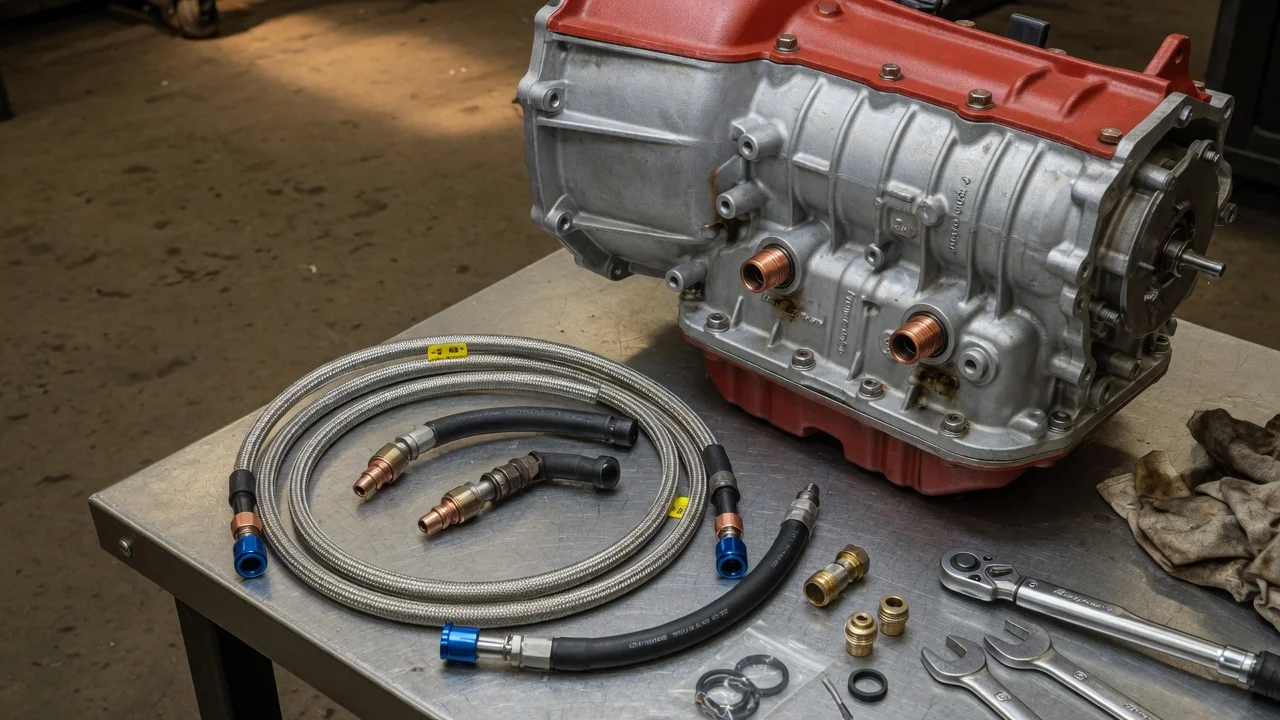
On a 6L80, the transmission cooler lines carry hot fluid from the transmission to the cooler section of the radiator, or to an auxiliary cooler, and back again. A line may need replacing because it seeps, has corroded, or was damaged during another repair. In each case, the right part depends on the exact vehicle, how it is used and how the original lines are routed. This guide covers how to narrow the options without assuming a leak or shift complaint has already been traced to the lines.
Define the job the product must do
Start with why you are shopping, because each reason is a different job: • A visible leak at a crimped hose section; • A corroded steel tube; • A fitting damaged during earlier work; • A plan to add an auxiliary cooler for towing; Replacing a leaking line with an equivalent part is a repair. Rerouting for a larger cooler is a modification that can change line length, the number of fittings and the mounting points.
Confirm the source of the problem before ordering anything. Fluid near the lines can come from several other places: • The pan gasket; • The electrical connector seal; • The output shaft seal; • The radiator; Fluid can also run along the underbody before it drips, so the wet spot may not be where the leak starts. Clean the area and recheck after a drive, or use leak-detection dye, to see whether the line itself is leaking. The same caution applies to symptoms. Slipping, delayed engagement or harsh shift behavior can follow a low fluid level, but those symptoms alone do not prove a cooler line has failed. Check the service history too. A recent radiator replacement or an earlier line repair often explains where a problem began.
Check compatibility
GM used the 6L80 in many rear-wheel-drive and four-wheel-drive vehicles, including full-size pickups, SUVs and several performance cars. Line routing follows the chassis, engine, radiator and cooler layout, not the transmission alone. Knowing the transmission type is therefore only a starting point. Fitment depends on: • Model year; • Drivetrain; • Engine; • Body configuration; • Whether the vehicle was built with an auxiliary or towing cooler; Use the VIN and factory option information where you can get them. Then compare that against what is actually installed, since earlier repairs may have changed things.
Next, look closely at the connections. Many original lines attach at the transmission case and the radiator with quick-connect fittings held by retaining clips. The connector type at each end of a new line must match what your vehicle has. Also check the following on your existing lines: • Whether they form one assembly or separate inlet and outlet lines; • Whether the rubber sections are crimped onto steel tube; • Whether brackets or clips are built into the assembly; Some configurations may include an inline thermal bypass valve or a similar device. If yours has one, the replacement must accommodate it or come with a matching solution. If the radiator has been replaced with an aftermarket unit, confirm that its cooler fittings match the original style.
Features that affect the choice
OE-style replacement assemblies copy the original bends, fittings and brackets. They usually install with the least guesswork. However, if the original design leaked at a crimp, a copy built the same way may share that weakness. Aftermarket assemblies sometimes use different hose material, braided covering or reusable fittings. These changes can help, but labels such as "heavy-duty" or "upgraded" are not evidence on their own. Ask what has actually changed: • The hose specification; • The manufacturer's stated pressure and temperature ratings; • The fitting style; • The corrosion protection on the steel sections
Repair kits that splice a new hose section into the existing steel lines cost less. They can make sense when only one crimped section leaks and the steel is in good condition. These kits require cutting the tube, using correct barb or flare fittings and clamping properly. The finished repair is only as good as the original tubing that remains. Generic hose with universal clamps is not a proper substitute where the system was designed around a specific connection type. If you tow regularly, consider whether your vehicle needs an auxiliary cooler. New lines do not add any cooling capacity on their own.
Limitations and ownership costs
Replacing a line usually means draining some fluid and refilling to the correct level afterward. The 6L80 is commonly specified for Dexron VI fluid, but confirm the fluid specification in the owner's manual or the service information for your vehicle. Checking the level on this transmission depends on fluid temperature. The check is typically done through a check plug, with the engine running and the fluid within a specified temperature range. A scan tool that reads transmission fluid temperature makes this much easier. Both overfilling and underfilling can cause problems, so treat the level check as part of the job.
Beyond the lines themselves, budget for: • Retaining clips, O-rings or seals, if the new assembly does not include them; • Fluid; • Extra labor where access is tight; On some trucks the lines run along the engine and frame, and you may need to remove shields or loosen other components to reach them. Corroded fittings at the radiator can also break during removal, which adds cost. New lines cannot fix an internal transmission fault, a failing or clogged cooler, or contaminated fluid. If you find debris or the fluid smells burnt, the transmission and cooling circuit need assessment beyond a line replacement. After installation, check for leaks once the transmission reaches operating temperature, then recheck the fluid level.
Build a practical shortlist
Before comparing products, gather: • Your VIN, model year, engine and drivetrain; • Your cooler configuration; • Photos of both ends of each existing line; Then narrow the candidates with a short checklist: • Does the listing confirm fitment using vehicle details, not just the transmission type? • Do both ends match your connectors? • Does it replace a single line or the complete set? • Are brackets, clips and seals included? • Does it account for any bypass valve or auxiliary cooler? • What material and protection do the hose and steel sections use? • What warranty or return terms apply if it does not fit?
Weigh the repair options against the vehicle's overall condition and how long you plan to keep it. A complete OE-style set suits a vehicle with corrosion along much of the line run. A targeted hose repair may be enough for a single leak on otherwise sound tubing. If there were diagnostic codes or shift complaints before the repair, check them again after the lines are replaced and the fluid level is corrected. Do not assume the line was the only cause until the symptoms are gone.