Choosing a Transmission Cooler for a 6L80
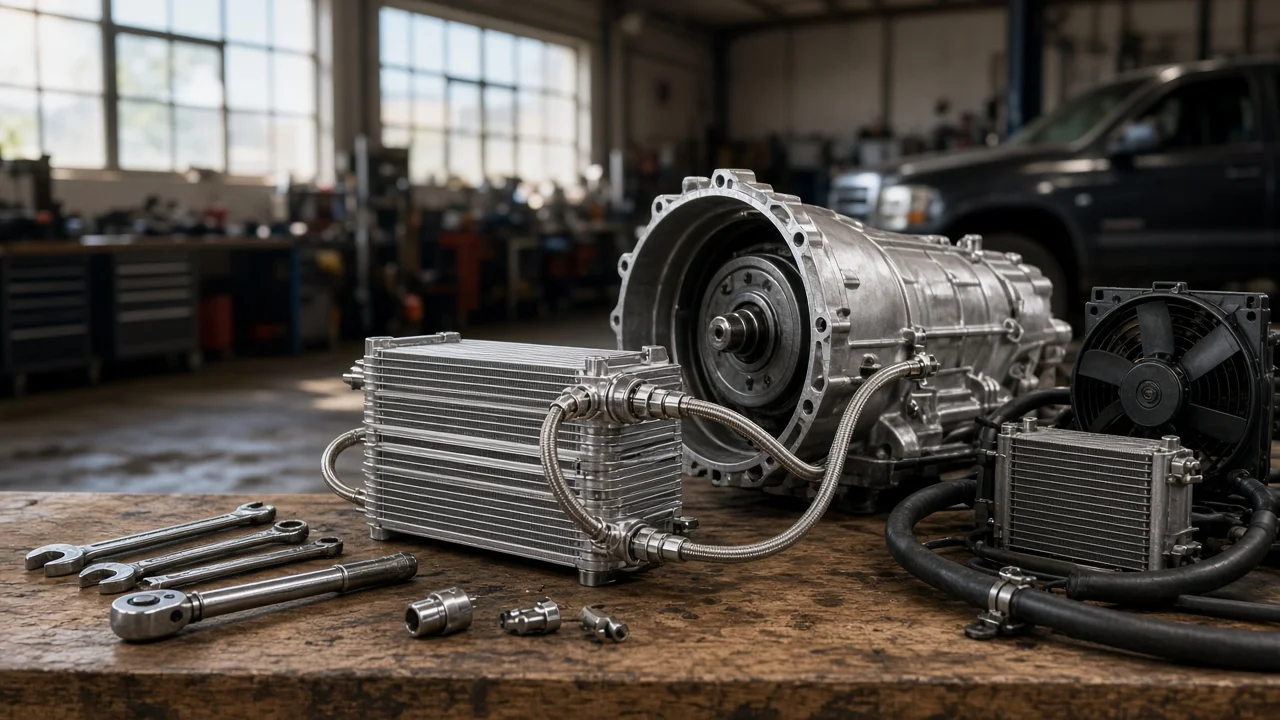
A 6L80E transmission cooler can be a worthwhile addition to a GM truck, SUV or performance car that tows, hauls or works hard in the heat, but only when it matches the vehicle and the way it is driven. This guide covers how to define the job, confirm fitment against the factory cooling circuit, weigh construction and features, and plan for installation and fluid costs. The goal is a shortlist built on evidence rather than packaging claims.
Define the job the cooler must do
The 6L80 is a six-speed automatic that GM has used in rear- and four-wheel-drive trucks, SUVs and some performance cars. Many of these vehicles already route fluid through a heat exchanger in the radiator tank, and some tow-package trucks add a separate air-to-oil cooler. Before buying anything, find out what your vehicle already has and where that system falls short. Heat is the main enemy of automatic transmission fluid. Sustained high temperatures speed oxidation, harden seals and wear friction material, so the goal is to keep fluid temperature stable under your worst realistic load.
Common reasons to add cooling capacity include towing close to the rated limit, carrying heavy payloads, climbing long mountain grades, slow off-road work, plowing and stop-and-go driving in hot climates. Engine upgrades or a looser torque converter can also raise the heat load. The most useful starting point is data. Watch transmission fluid temperature on a gauge or scan tool while doing the work that worries you. If readings stay in the normal range, a larger cooler may add little. Also note your practical constraints, such as budget, space behind the grille, whether you will do the installation yourself, and how cold your winters get.
If a problem is what sent you shopping, diagnose it before spending money on cooling. That includes harsh or delayed shift behavior, flare between gears, shudder or a warning lamp. Read the diagnostic codes, check fluid level and condition, and review the service history. These symptoms can come from low fluid, solenoids, the valve body, the torque converter or wiring, and a cooler will not correct any of them.
Check compatibility with your 6L80
Start by confirming the transmission type. The 6L80 shares its basic layout with the heavier-duty 6L90, and later versions of the same vehicle lines moved to eight- and ten-speed automatics, so a kit listed for one model year may not suit another. Check the service parts label or your vehicle documentation. Then compare the kit's fitment list against your exact year, body style, engine and cooling package. Trucks with and without a factory tow package can have different line routing and radiator configurations.
Next, look at the interfaces. Note how the cooler lines connect at the transmission and the radiator. Many GM applications use quick-connect fittings, and kits handle them differently. Some supply adapters that plug into the factory fittings, while universal kits usually involve cutting into a line or hose and using clamps. Match line and hose diameters, and confirm the hose is rated for transmission fluid and underhood temperatures. Plan a route away from exhaust heat, sharp edges and moving parts. Measure the mounting area in front of the condenser and radiator, including brackets, grille clearance and any air dam or shutter hardware.
Finally, tie the choice to the fluid specification. The cooler itself does not care about fluid type. However, any fluid you add to replace what is lost during installation must meet the specification listed for your transmission, which for the 6L80 is commonly Dexron VI. Topping off with an unapproved fluid can affect shift quality.
Features that affect the choice
Construction matters more than the label. Tube-and-fin coolers are simple and inexpensive but generally shed less heat for their size. Plate-and-fin designs, sometimes called bar-and-plate, are rugged and efficient, though heavier. Stacked-plate coolers pack a large surface area into a compact core and are generally efficient for their size. Within each style, core thickness, fin density and internal passage size decide two things: how much heat moves to the air, and how much the cooler restricts fluid flow.
When comparing any 6L80 transmission cooler, treat marketing ratings with caution. Gross vehicle weight or towing ratings printed on boxes are convenient shorthand, but they rarely state test conditions, so two coolers with the same rating may perform differently. More useful evidence includes stated core dimensions, fitting size, and any published heat rejection or pressure drop figures at a specified flow and temperature. Bigger is not automatically better. An oversized core can block airflow to the condenser and radiator, and it can keep fluid too cool in mild weather.
Two optional features deserve a look. A thermostatic bypass routes fluid around the auxiliary cooler until it warms up, which helps in cold climates and during light driving. Check whether your vehicle already has a factory thermostat in the cooler circuit before adding another. Remote coolers with an electric fan help at low speeds where ram air is limited, but they add wiring, a switch or controller, and electrical load.
Limitations and ownership costs
Budget for more than the cooler. Installation may need extra hose, clamps, fittings and mounting hardware. You will also need transmission fluid to replace what drains out and to fill the new core. Setting the level correctly is critical. Many 6L80 applications have no conventional dipstick. Instead, the level is checked through a check plug with the engine running and the fluid at a specified temperature, so you may need a scan tool and the factory procedure. An incorrect level after the installation can undo the benefit of the added cooling.
Ongoing care is modest but real. Inspect hoses, clamps and fittings for seepage, clear bugs and mud from the fins, and protect the core from road debris. A failed line can empty the transmission quickly. If the transmission has already failed internally, debris can remain in the existing cooler and lines. Flushing or replacing them is normally part of installing a rebuilt or replacement unit, and a new auxiliary cooler should not go into a contaminated circuit.
Keep expectations realistic. A cooler removes heat, but it does not reduce the heat generated by a slipping clutch pack or torque converter. It also does not replace scheduled fluid service, so maintenance intervals and fluid condition still need attention.
Build a practical shortlist
Narrow the field to two or three candidates and compare them on the same points. Confirm the transmission type, model year and factory cooling setup. Record fluid temperatures under the load that concerns you. Check the fitment list for your exact vehicle, the connection method and the mounting space. Compare construction style and documented specifications rather than adjectives. Decide whether you need a thermostatic bypass or a fan, and confirm the hose ratings. Then total the cost, including fluid, hardware and labor.
After installation, check the result with the same measurement you started with: fluid temperature under the same kind of load. Also check for leaks and confirm the fluid level is correct. If temperatures remain high despite adequate cooling capacity, look for other causes rather than adding a second cooler. Possible causes include low fluid, a radiator or fan problem, or converter slip.