Dorman Transmission Cooler Lines: Fitment and Selection
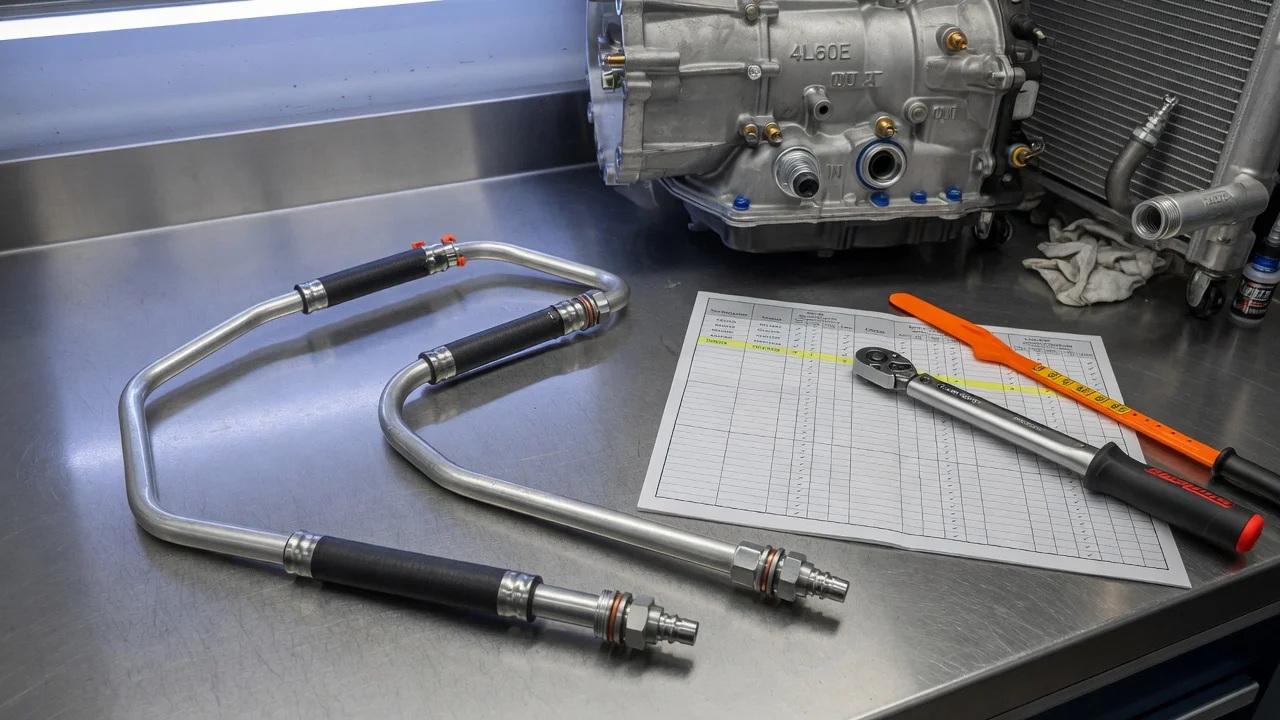
Transmission cooler lines carry automatic transmission fluid from the transmission to a cooler and back. The cooler is usually built into the radiator tank or mounted as a separate auxiliary unit. When a factory line rusts through, cracks or seeps at a crimped joint, a Dorman replacement is a common aftermarket alternative to a dealer part. This guide explains how to match a line to your vehicle, which features actually matter, and what a new line will and will not fix.
Define the job the product must do
Before buying anything, confirm that a cooler line is really the source of the leak. A wet line near the radiator or under the transmission suggests a problem with the line, fitting or O-ring. However, fluid travels along the underbody and drips well away from where it escapes. Clean the area, drive briefly and look again to find the highest wet point. Then check the fluid level using the procedure for your transmission type. Many newer units have no dipstick and are checked at a fill plug at a specified fluid temperature. A symptom is not a confirmed failed part. Slipping, delayed engagement or harsh shift behavior after a leak often comes from low fluid, not the lines. Diagnostic codes for overheating or pressure point to a system to investigate, not a specific line to replace.
Next, define your practical constraints. Note whether the supply line, the return line or both are damaged. Vehicles used for towing, plowing or hauling may have an auxiliary cooler, which adds lines and fittings. In road-salt regions, if one line has rusted through, the other is often close behind. Check access too: some lines run above a crossmember, beside the exhaust or behind the radiator support. Finally, review the service history. A previous repair with cut-in rubber hose, clamps or compression fittings changes which part you need and how much of the old line must come out.
Check compatibility
Fitment depends on more than year, make and model. Within one model year, a vehicle may have been offered with several engines and transmissions. Two-wheel-drive and four-wheel-drive versions can route their lines differently. A factory tow package often adds an auxiliary cooler and changes line length and shape. Use VIN-based catalog lookup where available, and confirm the transmission code from the build data or the identification tag on the case. Read every note in the listing, including inlet or outlet, upper or lower, and the number of pieces in the assembly. A line that fits a similar trim but not your configuration is a return, not a repair.
Then compare the connections at each end. Cooler lines may use threaded flare nuts, quick-connect couplings with retaining clips, banjo bolts or hose barbs. The transmission side and the cooler side can use different styles. Some quick-connects need a specific release tool or a new clip, so plan for that before the vehicle is on stands. When the part arrives, lay it next to the old line and compare bend count, angles and fitting orientation. Replacing a line does not change the fluid specification. You still need the transmission fluid your manufacturer specifies to refill whatever was lost.
Features that affect the choice
Construction is the main trade-off. Some replacement lines are fully preformed steel tubes. Others combine steel sections with rubber hose joined by crimped fittings. A complete assembly replaces the corroded tube and both ends, but it can be harder to install where the line snakes around the engine or frame. A shorter repair section or hose kit costs less and installs faster, but it leaves the remaining old steel in service. Listings often mention corrosion-resistant finishes. Treat that as a label unless the listing names the coating or material, and inspect the finish when the part arrives.
Separate useful evidence from marketing language. Terms such as direct replacement or OE fit matter only if the listing ties the part to your exact configuration. Check the photos for matching bends and fittings, and see whether O-rings, clips or brackets are included. Owner reviews from people with the same vehicle and transmission are more informative than an overall star rating. Be cautious with universal kits built around compression fittings. Many technicians avoid them on pressurized transmission lines and prefer double-flared tube or hose with fittings rated for the application.
Limitations and ownership costs
A new line cannot repair internal transmission damage, a failed cooler or a cracked radiator tank. If the fluid looks milky or pink and foamy, coolant may have entered through a leaking in-radiator cooler, and new lines will not fix that. Plan for consumables beyond the part itself. These include the correct fluid to top up or refill, replacement O-rings or clips, penetrating oil for seized nuts, and sometimes new clamps or brackets. If the transmission has already failed or shed debris, many rebuilders recommend flushing or replacing the cooler and lines so contamination does not return to the new unit.
Labor is often the larger cost. Depending on the vehicle, you may need to remove splash shields, the air box, exhaust components or a skid plate. Corroded fittings can twist or snap, so use a flare-nut wrench and allow extra time. After installation, check the fluid level using the manufacturer's procedure. Some vehicles require a scan tool to read fluid temperature during the check. Look for leaks after a full drive cycle, and pay attention to shift behavior over the next few trips. Over time, check that the line is not rubbing against brackets, that clips remain seated, and that salt buildup is rinsed off.
Build a practical shortlist
Gather the key details before comparing parts: VIN, transmission code, drivetrain, tow package status, which line or lines failed, the fitting type at each end, and photos of the old line in place. Judge each candidate on the same points. Does the application match your exact configuration? Is it one piece or two? Which fitting style does it use, what hardware is included, and does it contain any rubber hose sections? Also check the seller's return terms for fitment errors and compare the total cost with a dealer line. A short checklist like this keeps a low price from hiding a part that will not fit.
Common repair options are a Dorman assembly, an original dealer line, a custom line made by a hydraulic hose shop, or a hose repair section. The right choice depends on how far the corrosion has spread, how hard the line is to reach and your budget. If the leak source is still uncertain, or shifting problems continue after a correct fill, have a shop read the codes and pressure-test the cooler circuit before buying more parts.