THE SPARROW STORY
Maximum Efficiency: How the Sparrow's Design Choices Add Up
The Corbin team described the Sparrow's efficiency as the product of many decisions working together rather than any single feature. This page gathers those factors and the figures the team recorded during their own testing of the modern prototype.
From the Sparrow archive. Product plans, events and availability described here belong to the original historical period.
The contributing factors
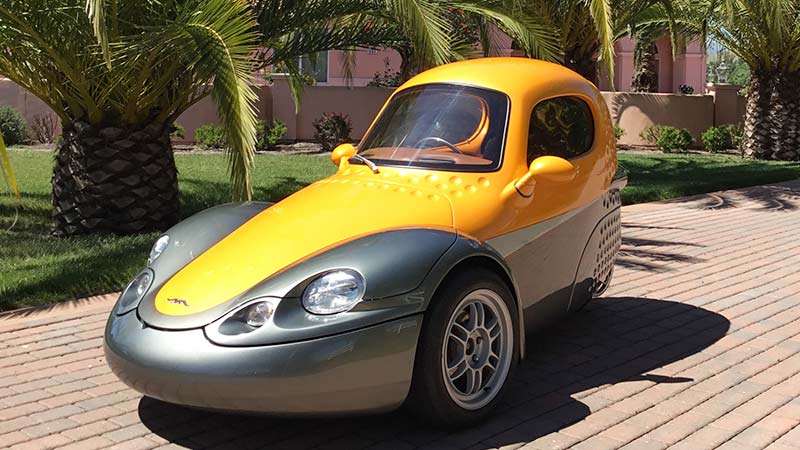
The list starts with mass. A single-occupant cabin allows a smaller, lighter vehicle, and the three-wheel layout removes a rear axle. Low, centered battery placement and a monocoque chassis keep weight down further. The patented aerodynamic body, with a tapered nose and turbulators at the tail, reduces drag. The AC drive with regenerative braking recovers energy during deceleration instead of turning it into heat.
In electric vehicles generally, energy use scales with weight, frontal area and drag, so improvements in each area compound. The Sparrow applies all of them at once.
The numbers the team reported
At around 60 miles per hour the team measured roughly 200 watt-hours of electricity per mile. Charged off-peak at the rate they were paying, that worked out to about two cents per mile. After a 50-mile drive, the pack recharged fully in about two hours on a J1772 station.
The team also offered a rough equivalence for readers used to fuel economy figures, estimating that the Sparrow's energy cost was comparable to a gasoline car returning about 150 miles per gallon. That comparison was their own calculation based on fuel prices at the time. As they put it, the little bird lives on bird seed.