THE SPARROW STORY
Charging the Sparrow: J1772 Stations and Recharge Times
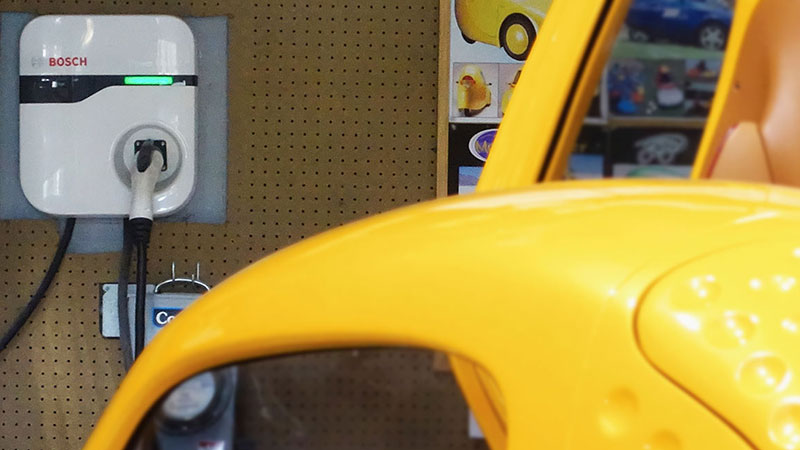
The Corbin team designed the modern Sparrow around the J1772 charging connector, which by then had become the common standard for electric vehicles in North America. Their testing notes describe a roughly two-hour recharge after a typical 50-mile drive.
From the Sparrow archive. Product plans, events and availability described here belong to the original historical period.
What the team measured
According to the team's test records, running the pack down over about 50 miles and recharging it consumed roughly 9 kilowatt-hours and took about two hours. Across their various test drives, energy use per session generally fell between 9 and 12 kilowatt-hours. Using the electricity rate they were paying at the time, they consistently arrived at an operating cost of about two cents per mile.
Those figures were reported by the team for their own driving in Central California and were not presented as guaranteed values. Terrain, speed, wind and driving style all affect how much energy an electric vehicle uses, so the numbers should be read as period test results rather than a fixed specification.
Home and public charging
The J1772 system provides a safer connection for both the vehicle and the person plugging it in, with the cable de-energized until it is properly connected. The team noted that a home station of this type was, at the time, available from a local home improvement store and could be installed in a garage. It could be connected to a 220-volt, 30-amp circuit of the kind used for an electric dryer, or hard-wired by an electrician.
Because the same connector was already in use at public stations around many towns, the team pointed out that a driver could locate compatible chargers using the phone apps that were common at the time.