Why Should a Torque Wrench Be Stored Properly?
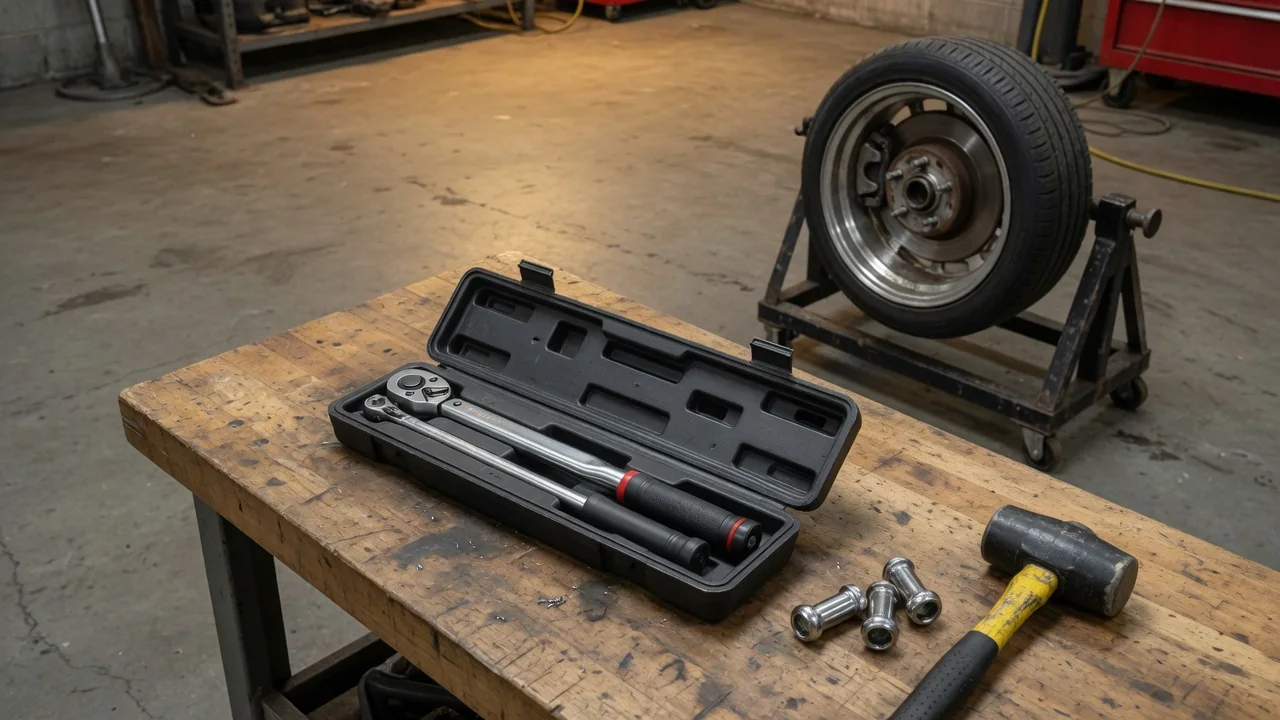
A torque wrench is a measuring instrument as much as a tool, and how it spends its time between jobs directly affects how well it measures. Good torque wrench storage care protects the internal mechanism, keeps dirt and moisture out, and helps you trust the reading when you tighten lug nuts, drain plugs or suspension fasteners. This guide answers why a torque wrench should be stored properly by looking at calibration, cleanliness and rechecking accuracy.
Calibration: How Storage Affects Accuracy
Most home workshops use click-type torque wrenches. Inside the tube, a coil spring presses against a release mechanism, and turning the adjustment handle compresses that spring to set the torque value. If the wrench is put away at a high setting, the spring stays heavily loaded for weeks or months. Over time a spring under constant load can relax slightly, so the wrench may release at a different point than the scale indicates. That is why manufacturers of click-type wrenches commonly instruct owners to back the setting down to the lowest marked value on the scale before storage. Going below the lowest mark is generally not recommended, because unwinding past the scale can loosen parts of the mechanism. The exact instruction varies by design, so the wrench's own manual is the authority.
Physical shock is the second calibration risk. A torque wrench tossed into a drawer with hammers and pry bars, dropped onto concrete or knocked off a bench can shift internal components, dent the tube or damage the ratchet head. Beam-type wrenches have no spring to fatigue, but a bent beam or pointer throws off the reading just as surely. Digital wrenches rely on a sensor and electronics that can be harmed by impacts, and leaving batteries installed during long storage risks leakage, which is why many manuals advise removing them. A fitted case or a dedicated drawer slot keeps the wrench from being struck or crushed.
Temperature and humidity also play a part. Garages and sheds can swing between hot and cold, and those swings encourage condensation on metal surfaces. Moisture inside the tube can lead to corrosion that changes how the mechanism moves. Storing the wrench in a dry, relatively stable location reduces that exposure, even though the precise effect on any given wrench depends on its construction.
Cleanliness: Keeping Dirt and Moisture Out
A car workshop is full of contaminants: engine oil, grease, brake dust, road grit, coolant and battery residue. When a torque wrench goes back on the shelf coated in these, several problems follow. Grime on the handle makes your grip less secure, which matters on a tool that should be pulled smoothly. Grit can work into the ratchet head and the adjustment threads, making the setting stiff or uneven and increasing wear. Dirt over the scale makes it easy to misread the value you are setting, and corrosive fluids left on the surface can attack plating and markings.
Cleaning before storage is simple, but the method matters. Wiping the wrench with a clean, dry or lightly dampened cloth removes most residue. Soaking it in solvent, running it through a parts washer or spraying degreaser into the handle is generally discouraged, because these can wash out internal lubricant and carry dirt deeper into the mechanism. If the manual calls for lubricating the ratchet head or other external points, follow that guidance rather than applying oil wherever it seems helpful. The goal is a clean exterior and an undisturbed interior.
The storage case supports cleanliness as well as protection. It keeps dust off between jobs, separates the wrench from containers of brake fluid or other chemicals, and gives adapters and extensions their own place so they are not rattling against the scale. Storing the case away from wet floors and open chemical containers adds another layer of protection at no real cost.
Recheck: Confirming the Wrench Still Reads True
Careful storage slows the drift in accuracy, but it does not stop it. Every wrench wears with use and age, so periodic recalibration is part of owning one. Torque tool standards such as ISO 6789 tie recalibration to time in service or number of uses, and manufacturers usually publish a recommended interval for their tools. A home mechanic who uses the wrench occasionally faces less wear than a professional shop, but the manufacturer's guidance remains the best reference point for how often to have it checked.
Some situations call for a recheck sooner. These include a drop or hard impact, a long period stored at a high setting, a click that feels soft, doubled or absent, an adjuster that binds or skips, a damaged or unreadable scale, visible corrosion, or inconsistent readings on a digital model. Before using a wrench that has been stored for a while, many manuals recommend cycling it several times at a low setting so internal lubricant redistributes and the mechanism settles. This is not a calibration check, but it can reveal a mechanism that feels wrong.
Some owners make a rough home check by clamping the drive in a vise and hanging a known weight at a measured distance along the handle, since torque equals force multiplied by lever length. This can expose a wrench that is badly off, but measuring the effective length and load point precisely is difficult, so the result is only an approximation. A calibration service using a proper torque tester can report how far the wrench was out and adjust it where the design allows. For fasteners where accuracy really matters, that verified result is worth more than a homemade estimate.
Practical Implications and Limits
Storage preserves accuracy; it cannot restore it. A wrench already out of tolerance stays out of tolerance no matter how carefully it is cased and wiped. Wrench accuracy is also only one part of correct tightening. The torque values themselves come from the vehicle's service information, which may specify clean dry threads, lubricated threads, thread locker, a torque-plus-angle procedure or bolts that must be replaced after removal. These conditions vary between vehicles and fasteners, and a perfectly stored wrench cannot compensate for following the wrong procedure.
Technique also shapes the result. Torque wrenches are typically most accurate away from the extreme ends of their range, so a single wrench may not suit both small engine-bay fasteners and wheel lug nuts. Using a torque wrench to break loose tight or rusted fasteners puts loads on the mechanism it was not designed for, and a regular breaker bar is the better tool for that job. Jerking the handle or pulling past the click can overshoot the target. Adapters such as crowfoot wrenches can change the effective lever length, which may require correcting the setting.
For most home workshops, the takeaway is that a few low-effort habits protect a tool you rely on for safety-related work: reset the setting as the manual directs, wipe the wrench clean, keep it in its case in a dry spot, and recheck it on schedule or after any mishap. Those steps cost little compared with the consequences of loose wheels, leaking drain plugs or stripped threads caused by a wrench that quietly drifted out of accuracy.