What Size Torque Wrench Do You Need for a Car
Choosing a torque wrench for automotive work is less about one universal size and more about matching the tool's measurement range to the fasteners you actually tighten. Wheel studs, lug nuts, oil drain plugs, and suspension hardware all require controlled clamping force, and a wrench that cannot reach the needed value or fits the wrong connection is not useful. The question “what size torque wrench for car” usually means two things: the square drive size for sockets and the torque range the tool can measure. Both must suit the job without leaving the tool operating near its least accurate extremes.
Essential answer
For most passenger vehicles, a 1/2-inch drive torque wrench is the practical first choice because its typical range covers common wheel fasteners. A mid-range tool spanning approximately 30 to 150 pound-feet can handle lug nuts on cars, light trucks, and SUVs when the vehicle specification falls inside that window. The important qualification is that no single wrench covers every fastener on a car. Lower torque items such as valve cover bolts or small engine accessories may sit below the useful range of a large 1/2-inch tool.
A 3/8-inch drive wrench fills the lower portion of automotive work, often covering roughly 10 to 80 pound-feet depending on the model. This is appropriate for many underhood fasteners, caliper bracket bolts, and smaller drain plugs. A 1/4-inch drive tool handles very light hardware measured in inch-pounds and generally has no role in wheel work. Before buying, identify the torque specification for the task you perform most. The right wrench size is the one whose mid-range includes that number, not the tool with the largest maximum reading.
How it works
A torque wrench works by signaling when a set turning force has been reached. Mechanical click-type designs use a spring-loaded pivot inside the handle. As pulling force increases, resistance builds until an internal mechanism breaks over and produces a click, telling the user to stop. This prevents relying on feel alone, which often leads to uneven clamping or overstretched fasteners. Digital and beam-style versions display the applied torque continuously, but the core principle remains controlled rotation rather than accidental overtightening.
Accuracy depends on applying force smoothly through the handle and keeping the socket connection straight. The wrench measures torque as force multiplied by distance from the pivot, so hand placement matters. Many click-type tools are calibrated to be used by pulling on the designated grip area. A long handle multiplies leverage and makes high wheel torque easier to reach, while a shorter handle suits confined spaces. Units also matter: a specification listed in Newton-meters must match the scale you are reading, or the value must be converted before tightening.
Strengths, limitations and suitability
A 1/2-inch torque wrench is best suited to wheel changes, brake work, suspension mounting bolts, and other chassis fasteners that call for substantial clamping load. Its strength is repeatability across multiple lug nuts, which helps keep rotor faces and wheel seats evenly loaded. The compromise includes size and weight, making it less convenient in tight engine bays. At the bottom of its range, a large drive wrench may also be less precise, so it is not the correct tool for delicate threaded components.
For an owner who mainly rotates tires and performs seasonal wheel swaps, one mid-range 1/2-inch wrench is normally sufficient. A 3/8-inch tool becomes valuable when maintenance includes routine underhood work or brake hardware that falls into its range. The practical balance is to buy the tool sized for the highest-priority job first, then add another drive size if specifications require it. Avoid storing a click wrench with the spring compressed at high setting, and have calibration checked if readings become questionable.
Procedure
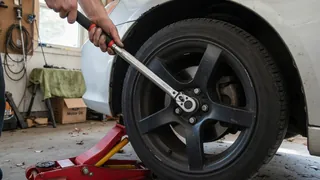
Start by finding the torque specification for the fastener you intend to tighten. Vehicle service information or a reliable repair resource should list the value in pound-feet or Newton-meters. Confirm that the torque wrench range places that value comfortably above its lowest setting and below its maximum. Set an adjustable click-type handle to the required figure, orient the socket squarely on the fastener, and pull with steady force until the tool signals. A brief click or indicator tells you the target has been reached.
For wheel fasteners, follow the tightening sequence recommended for the vehicle. Many passenger vehicles use a crossing pattern that gradually seats the wheel against the hub. Always complete the job with the wheels on the ground or with the vehicle safely restrained if the procedure requires final torque after lowering. When using extensions or adapters, keep the connection straight. Never use a torque wrench as a breaker bar for removing fasteners, because impact loading can disturb calibration.
Diagnosing a problem
A lug nut that keeps loosening after torquing may point to a damaged thread, a worn hub register, an inaccurate wrench, or a specification taken from the wrong vehicle variant. Check for dirt between the wheel and mounting surface first, since rust scale or debris can compress later and reduce clamping force. If the wrench was stored at a high setting or dropped, its reading may no longer match the actual applied torque, so cross-check with a known-good tool when possible.
A bolt that snaps quickly at a modest setting often means the fastener was already stretched or the wrong units were used on the wrench scale. Confirm whether the specification is Newton-meters or pound-feet. If a wheel vibrates after proper torque, the issue may be hub runout, a distorted rotor, or incorrect lug seat type rather than the wrench itself. Persistent irregular readings across a wheel suggest having the tool tested rather than continuing to use it.