Why Does Automatic Climate Control Change Fan Speed?
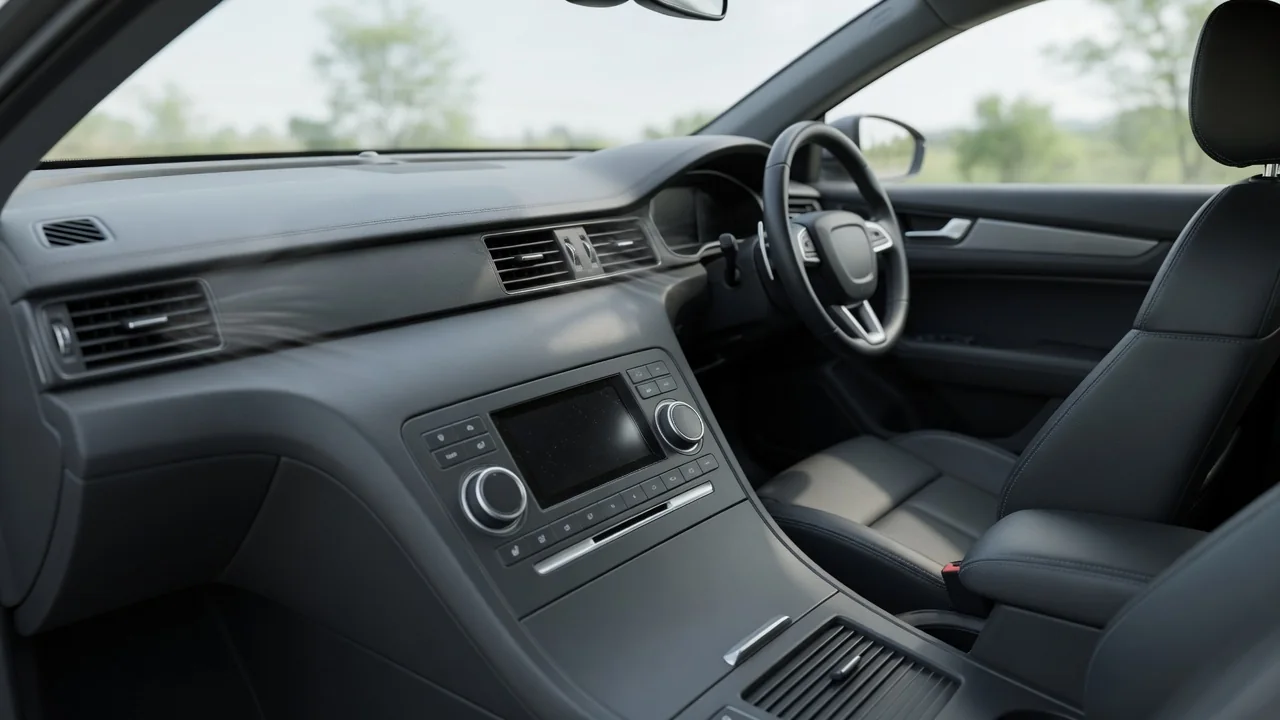
You may notice the blower speeding up, slowing down, or pausing on its own while the climate control is set to AUTO. In most cases the system is doing what it was designed to do. Automatic climate control does not hold a fixed fan setting. It keeps estimating how far the cabin is from your chosen temperature and how much heat is coming in from outside. It then adjusts airflow to close that gap without making the cabin loud or drafty.
Temperature Error: The Gap Between Setpoint and Cabin
The core idea behind car auto climate fan behavior is temperature error, the difference between the temperature you select and the temperature the system measures in the cabin. A cabin temperature sensor, usually mounted in the dashboard or headliner, samples cabin air. Many installations use a small aspirator fan or a venturi to draw air steadily across the sensor so the reading reflects the cabin and not a pocket of still air. The controller compares this reading with your setpoint. A large error calls for a high blower speed and a strongly heated or cooled discharge. As the error shrinks, the controller reduces blower speed step by step. This is why the fan often runs hard after you start a car that has been parked in the heat, then quiets down as the cabin approaches the target.
The controller does not rely on the cabin sensor alone. Typical inputs also include outside air temperature, engine coolant temperature, and evaporator temperature. These inputs explain some behavior that can look odd. In cold weather, many systems hold the blower low or off until the coolant is warm enough to produce useful heat, so they do not blow cold air at the occupants. They may send early airflow toward the windshield. In hot weather, some systems briefly limit the blower until the evaporator has cooled, which avoids an initial blast of hot air. The exact thresholds and timing differ between manufacturers.
Blower speed is only one of several outputs the controller manages. It also positions the blend door that mixes heated and cooled air, selects the mode doors that route air to the face, feet, or windshield, and may switch between fresh air and recirculation. When a small correction can be handled by moving the blend door, the fan may stay steady. When the correction is larger, a change in fan speed is usually the fastest way to move more heat into or out of the cabin.
Sun Load: Why Sunshine Can Speed Up the Fan
Sunlight through the glass heats occupants, seats, and the dashboard directly, so you can feel warm even when the air temperature looks acceptable. A cabin air sensor reacts to this slowly, because it only sees the air after surfaces have warmed it. To compensate, many automatic systems use a sun load sensor, typically a photodiode on top of the dashboard near the windshield, which measures the intensity of incoming sunlight. When the sun is strong, the controller can raise blower speed and lower the discharge temperature before the cabin air has fully warmed. This helps offset the radiant heat that occupants feel.
Changes in sunlight are a common reason the fan speed changes while you drive. Moving from open road into shade, under heavy cloud, or into a parking structure reduces the sun load signal. Turning so the sun enters through a different window can also change it. Controllers usually filter this signal, so a passing shadow from a pole or tree does not cause an immediate jump. A longer change in conditions will still produce a noticeable adjustment even though you never touched the controls. In some dual-zone systems, the sensor can also estimate the sun's direction and bias airflow toward the sunnier side of the cabin. In cold weather, strong sunshine can let the system ease off its heating effort.
Comfort: Why the System Avoids Constant Full Blast
Automatic climate control aims at perceived comfort, not only a thermometer reading. Air moving across skin feels cooler than still air at the same temperature. A strong draft on the face can feel unpleasant in winter even when the air is warm. The blower is also one of the main noise sources in the cabin. For these reasons, systems are usually tuned to settle at a lower, quieter fan speed once the cabin is near the target. They also tend to ramp speed gradually instead of jumping between levels. Gradual changes are less distracting and keep conditions more even for everyone inside.
Air distribution affects fan speed as well. Heating usually favors the floor outlets, because warm air rises. Cooling usually favors the panel vents, because cool air sinks and is felt quickly at the face and chest. A bi-level mode often covers the transition. Each mode routes air through a different path, which changes both resistance and how the airflow feels to occupants, so the blower may be adjusted along with the mode change. Some vehicles also let the driver choose an automatic intensity level, trading faster temperature correction against quieter operation. Systems equipped with humidity or fog-detection sensors may also raise the blower and direct air to the windshield to keep the glass clear, temporarily overriding the preference for quiet operation.
Practical Implications and Limits
Automatic mode works best when you choose a comfortable temperature and leave it there. Repeatedly raising and lowering the setpoint creates new temperature errors, which can make the fan seem to surge. On many vehicles the extreme LO or HI settings request maximum cooling or heating continuously, so the blower may stay high instead of tapering off. Manually adjusting the fan speed often takes the blower out of automatic control while other functions remain automatic. The owner's manual describes how a specific vehicle handles this and how to return to full AUTO.
The system can only respond to what its sensors report. A phone mount, papers, or a dash cover placed over the sun load sensor can hide sunlight from the controller. A blocked cabin temperature sensor intake can give a misleading cabin reading. Either one can produce fan behavior that does not match how the cabin feels. A clogged cabin air filter reduces airflow at any given blower speed, so the system may run longer or harder to reach the target. Keeping sensor openings clear and following the recommended filter service interval helps the automatic logic work as intended.
Normal automatic behavior is gradual and follows conditions you can recognize, such as startup, sun, shade, or a changed setpoint. Behavior that does not follow conditions deserves attention. Examples include a blower stuck at one speed regardless of conditions, rapid repeated surging in steady conditions, a fan that cuts out intermittently, or no response to setpoint changes at all. These symptoms can point to a faulty blower control module, a failed sensor, or a wiring problem, which usually call for diagnosis with appropriate tools. Control strategies vary by manufacturer and model year, so the vehicle's own documentation is the authority on what counts as normal.