How Does Dual-Zone Climate Control Split Airflow?
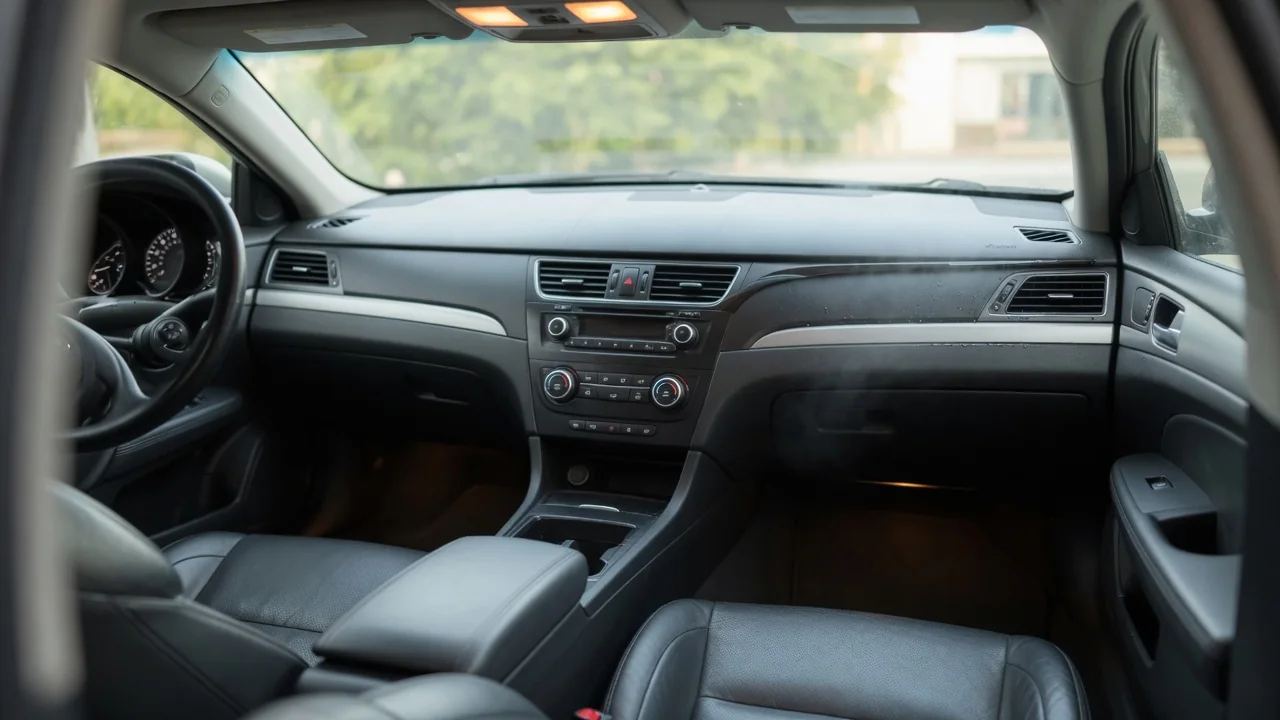
Dual-zone climate control lets the driver and front passenger choose different temperatures, but most systems do not contain two independent air conditioners. Instead, one HVAC module conditions all incoming air and then divides it into two temperature-controlled paths. Understanding how a dual zone car HVAC airflow layout works explains why the two sides can feel different, why fan speed is usually shared, and why the temperature gap between the front seats has practical limits.
Separate blend doors
In a typical automotive HVAC module, air pushed by the blower first passes through the evaporator, the cold heat exchanger of the air conditioning system. When the A/C is running, this step cools and dehumidifies all of the air entering the module. Downstream sits the heater core, which carries hot engine coolant in conventional vehicles. Between them, a movable flap called the blend door, or temperature door, decides how much air flows through the heater core and how much bypasses it. In a single-zone system, one blend door sets one mixed temperature for the whole cabin. In a dual-zone system, the module housing is divided by an internal partition, and each half has its own blend door. The driver side and passenger side can therefore mix hot and cold air in different proportions, producing two different discharge temperatures from the same source air.
Each blend door is usually moved by a small electric actuator controlled by the climate control module. Many actuators report their position back to the module so it knows how far the door has traveled. The module compares each side's temperature setting with information from sensors, which can include an in-cabin temperature sensor, an outside air temperature sensor, duct or discharge air sensors, and sometimes a sun load sensor. It then repositions each door independently. The exact sensor set and control strategy differ between vehicles, so the general principle is consistent while the details are manufacturer-specific.
After the blend doors, mode doors route air to the face vents, floor outlets, or windshield defroster. Some designs share mode doors between the two sides, so both zones always use the same vent selection, while others allow more independent distribution. The ducting then carries each side's mixed air to its own outlets, keeping the two temperature streams separate until they leave the dashboard.
Shared blower
While temperature is split, airflow volume usually is not. Most dual-zone systems use a single blower motor located upstream of the evaporator, so there is one fan speed for the entire front HVAC module. You generally cannot run a high fan setting on the driver side and a low one on the passenger side. How much air each side receives is determined by duct geometry, door positions, and outlet restrictions. Closing the vents on one side, for example, increases resistance on that path and tends to push more of the available air out of the remaining open outlets.
Several other components are also shared. The fresh air and recirculation door, the cabin air filter, the evaporator, and the A/C compressor all serve both zones. In automatic mode, the controller has to choose one blower speed that serves two possibly different requests. A common approach is to size the airflow for the side with the greater heating or cooling demand, while the other side's blend door tempers its share of that air toward its own setting. That side may therefore receive more airflow than it would if it were the only occupant, even though its temperature is being managed separately. The specific logic varies by manufacturer and is not something owners can generally adjust.
Vehicles marketed with three or more climate zones may add rear blend doors, rear ducting, or an auxiliary rear HVAC unit with its own blower. Those arrangements go beyond the basic two-zone front system, which normally relies on one blower feeding two temperature-controlled paths.
Limits
Because both sides draw from the same conditioned air, they share the same temperature boundaries. The coldest air either side can receive is the air leaving the evaporator with the blend door fully bypassing the heater core. The warmest is air passing fully through the heater core, which depends on coolant temperature in a conventional engine. If the A/C compressor is off, neither zone can deliver air meaningfully cooler than the incoming air. If the engine is still cold, neither zone can deliver strong heat. Electrified vehicles may use other heat sources, but the same principle applies: each zone only blends what the shared hardware provides.
The cabin itself is the second limit. There is no wall between the front seats, so air from both sides mixes, rises, and recirculates. The temperature an occupant actually feels is therefore closer to the other side than the setpoints suggest, especially in a small cabin or over a long drive. Uneven sun exposure can also make one side feel warmer regardless of settings. Some systems restrict how far apart the two setpoints can be, and most offer a sync or dual function that links both sides to the driver's setting.
Certain modes can override the split entirely. Defrost and maximum cooling or heating functions may command both blend doors to the same position, temporarily ignoring the individual zone settings. How and when this happens is vehicle-specific, so the owner's manual is the reliable reference for a particular model.
Practical implications and limits
For everyday comfort, dual-zone control works best with moderate differences between the two settings and with vents aimed toward each occupant, so the conditioned air reaches the person before it blends with the rest of the cabin. Since the blower is common, raising fan speed to satisfy one passenger also changes the airflow the other person feels. Recirculation choices affect both occupants equally, which matters for fogging and air quality as well as temperature.
The layout is also useful for diagnosis. When only one side blows the wrong temperature while the other behaves normally, the likely suspects are components unique to that side, such as its blend door, its actuator, or a sensor or calibration issue affecting that zone. A repeated clicking or tapping from behind the dashboard is often associated with a failing actuator or a door that cannot reach its commanded position. When both sides are weak, warm, or uncomfortable at the same time, attention shifts to shared parts: refrigerant charge, the compressor, the blower motor, a clogged cabin air filter, or low engine coolant.
Repairs inside the HVAC module vary widely in difficulty. Some actuators are reachable under the dashboard, while others require significant disassembly. After an actuator or module is replaced, many systems need a calibration or relearn so the controller knows each door's travel limits. Depending on the vehicle, this may happen automatically, require a specific button sequence, or need a scan tool. The service manual for the exact vehicle should guide that procedure rather than general assumptions.