How Do Air Mix Doors Set Temperature?
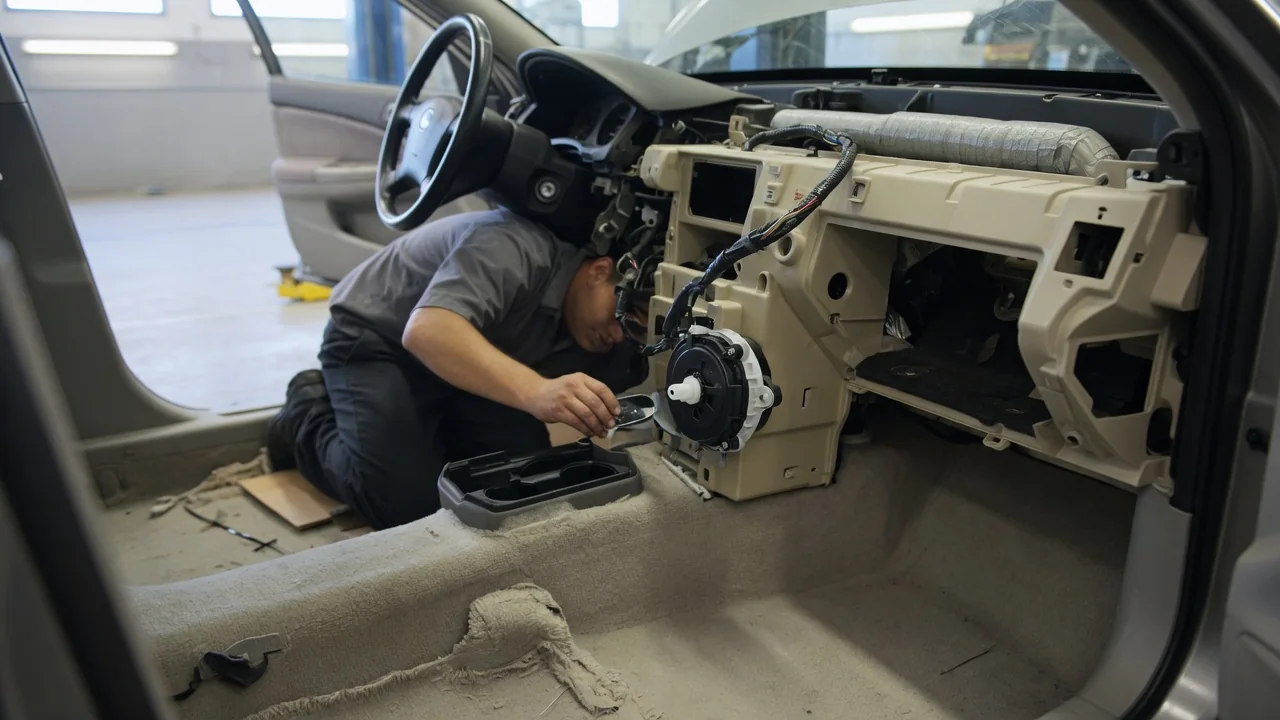
Turn the temperature knob or press the arrow on a climate panel, and the air from the vents changes within seconds, even though the engine and the A/C system keep running the same way. In most modern cars, that change comes from an air mix door, also called a blend door. This movable flap decides how much incoming air passes through the heater core and how much bypasses it, and the resulting mix sets the outlet temperature.
Hot and cold streams: how blending works
In a typical blend-air HVAC module, the blower pushes fresh or recirculated air through the evaporator first. When the A/C compressor is running, the evaporator cools the air and pulls moisture out of it. Downstream sits the heater core, a small radiator that carries hot engine coolant. In many electrified vehicles, the heat comes from an electric heater or a heat pump circuit instead. The air mix door is positioned between these two paths. In one extreme position it routes all the air around the heater core, giving the coldest output. In the opposite extreme it forces all the air through the heater core, giving the hottest output. Every position in between splits the stream.
After the split, the hot and cold streams meet again in a mixing area of the HVAC housing. Mode doors then send the blend to the dash vents, floor ducts or defroster. Because the heater core can stay hot while the evaporator stays cold, the system can deliver warm, dry air. This is why many vehicles run the A/C compressor in defrost mode. Dual-zone and multi-zone systems use the same principle with separate blend doors, or split doors, for each zone. That lets the driver and passenger receive different mixes from the same heater core and evaporator.
Not every design relies on the door alone. Some vehicles also use a coolant control valve that limits flow through the heater core, and some older layouts regulated temperature mainly with such a valve. Which approach a particular car uses is a vehicle-specific detail found in its service information.
Actuator: what moves the blend door
Manual systems with a mechanical temperature knob often move the door through a cable, and some older designs used vacuum actuators. Most current vehicles use a small electric actuator: a DC motor driving a plastic gear train that turns the door shaft. Many of these actuators contain a position sensor, commonly a potentiometer. It reports the door's actual position to the control module so the module can stop the motor at the requested point. Other actuators use stepper motors and track position by counting steps from a known reference, typically an end stop found during a calibration routine.
In an automatic climate control system, the knob or button sets a target cabin temperature rather than a fixed door position. The control module combines that target with sensor inputs such as cabin temperature, outside temperature, sunload and evaporator temperature. It then calculates the door position it needs and keeps adjusting it as conditions change. In a manual electronic system, the control commands a door position more directly. In both cases, the actuator turns an electrical command into mechanical movement. The accuracy of the result depends on the module knowing where the door actually is.
Because of that dependence, some vehicles run a self-calibration after the battery is disconnected or an actuator is replaced, sweeping the door between its stops. Others require a scan tool procedure. The correct method depends on the vehicle and is described in its service manual.
Symptoms of a blend door or actuator problem
A commonly reported sign of a failing electric actuator is a repetitive clicking or knocking from behind the dashboard. It is often heard right after the ignition is switched on or when the temperature setting changes. The usual cause is damaged gear teeth or a binding door: the motor keeps trying to reach a position, the gears skip, and the sound repeats. Sometimes the noise stops once the door settles at one end of its travel, leaving the output stuck there.
Temperature symptoms include air that stays hot or cold regardless of the setting, or a response that covers only part of the range. Temperature may also drift on its own. In dual-zone systems, one side may blow noticeably different air than the other at the same setting. Some climate control modules store diagnostic trouble codes when the reported door position does not match the commanded one, which can help narrow down the fault.
These symptoms overlap with other faults, so they point toward the blend system without proving it. Weak heat can also come from low coolant, a thermostat stuck open, air in the cooling system or a restricted heater core. Weak cooling can come from refrigerant or compressor issues. Two quick distinctions help: whether the outlet temperature responds to control changes at all, and whether the heater hoses feel hot once the engine is warm. Confirming the cause still requires the vehicle-specific diagnostic procedure.
Practical implications and limits
The blend door can only mix the heat and cold that are available. With a cold engine, a fully hot door position still produces cool air until the coolant warms up. In vehicles that depend on engine heat, warm-up time varies with outside temperature and driving conditions. Likewise, maximum cold output depends on the refrigerant system and on airflow. A higher blower speed moves more air, but each portion spends less time in contact with the evaporator or heater core. The number on an automatic climate display is a cabin target, so vent temperature may run well above or below it while the system works toward that goal.
Knowing how car blend door temperature control works helps owners set realistic expectations. A slow change after startup or a brief swing in vent temperature is not necessarily a fault. Constant clicking, a setting that no longer works or a lasting side-to-side difference deserves attention, because a binding door can wear an actuator further. Actuator location and access differ widely. Some actuators are reachable under the dash, while others sit deep in the HVAC housing and need significant disassembly. Forcing a door or gear by hand can break plastic parts, and some replacements need calibration afterward. The vehicle's service manual is the reliable source for location, testing and setup steps.