What Is a Car Cabin Temperature Sensor? How It Reads, Controls, and Fails
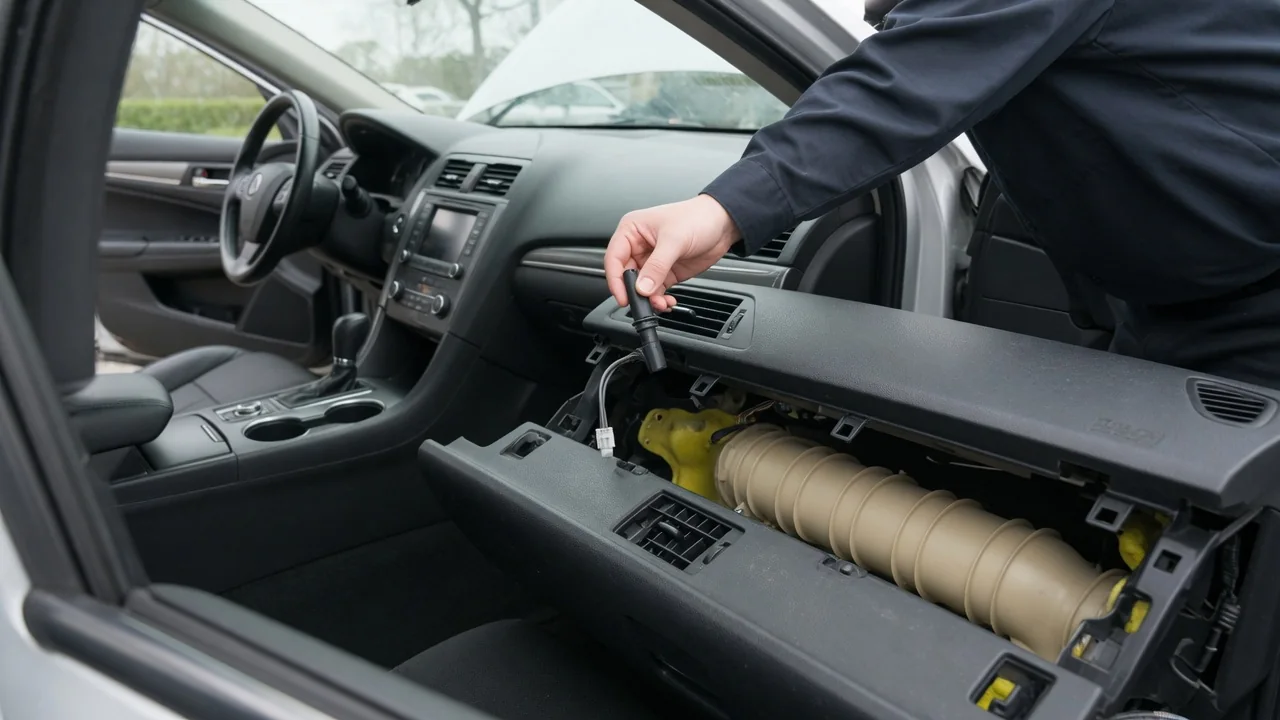
A car cabin temperature sensor is a small component that measures the air temperature inside the passenger compartment so an automatic climate control system can hold the temperature you select. Manual heating and air conditioning systems generally do without one, because the driver adjusts the controls directly. In automatic systems, the cabin temp sensor is one of the most important inputs. It shapes how warm or cool the delivered air should be and how hard the blower should work to deliver it.
Interior Reading: How the Sensor Measures Cabin Air
Most cabin temperature sensors are built around a thermistor, a resistor whose electrical resistance changes predictably with temperature. A common type is the negative temperature coefficient (NTC) thermistor, whose resistance drops as it warms. The climate control module typically supplies a reference voltage to the sensor circuit and measures the resulting voltage. Because that voltage shifts as resistance changes, the module can convert it into a temperature value using a calibration stored in its software. The sensor itself does not make decisions; it simply reports a condition that the module interprets.
The sensor is usually hidden behind a small grille or perforated opening. Common locations include the dashboard near the climate controls, steering column trim, or an overhead console, although placement differs from one vehicle design to another. A sensor sitting in still air behind a panel would respond slowly and could be influenced by heat from nearby electronics. To get a representative sample, many designs use an aspirator. This is either a small electric fan or a hose connected to the HVAC ductwork that uses airflow to create suction, drawing cabin air steadily across the sensing element.
The interior reading is rarely used alone. Automatic climate control systems commonly combine it with other inputs, such as an outside ambient temperature sensor, a sun load sensor that detects solar heating through the glass, engine coolant temperature, and evaporator temperature. Together, these signals let the module estimate not only how warm the cabin is now, but also how quickly it is likely to gain or lose heat.
Fan Control: Turning the Reading into Airflow
When the system is set to automatic, the control module continuously compares the cabin reading with the temperature selected by the occupant. A large gap signals a large demand. On a hot day, if the cabin is well above the setpoint, the module will generally command a high blower speed and position the blend door for maximum cooling. As the measured temperature approaches the target, the module reduces blower speed and moves the blend door toward a more moderate mix of heated and cooled air. Once the cabin stabilizes, the fan often settles at a low, quiet speed that only maintains the condition.
The blower motor itself is usually driven through a blower control module, power transistor, or resistor arrangement, depending on the system. The climate module calculates a desired speed and sends a command to that device, which regulates current to the motor. The cabin sensor therefore does not control the fan directly; it influences the calculation that determines the fan command.
Other logic can shape fan behavior alongside the cabin reading. In cold weather, many systems limit or delay blower speed until the engine coolant is warm enough to produce useful heat, which avoids blasting cold air at occupants. Some systems may also choose air distribution modes or recirculation based on the overall heating or cooling demand. The exact strategies, thresholds and timing are set by each manufacturer, so automatic fan behavior can feel quite different from one vehicle to the next even when the underlying principle is the same.
Faults: What Goes Wrong and How It Shows Up
Cabin temperature sensor problems generally fall into two groups. Electrical faults include an open or shorted thermistor, damaged wiring, or a corroded or loose connector. These often produce a reading outside the plausible range, which the climate module may recognize as a fault. In that case, many systems store a diagnostic trouble code and substitute a default value so the system can keep operating in a limited way. Airflow faults are subtler: a failed aspirator motor, a disconnected aspirator hose, or a grille clogged with dust can leave the sensor reading stagnant air. The signal stays electrically valid but no longer reflects true cabin conditions, so the module may not flag anything.
Typical symptoms include a blower that stays on high or low in automatic mode, a cabin that overshoots or never reaches the selected temperature, or temperature that drifts noticeably during a drive. A system that behaves reasonably when set manually but poorly in automatic mode can point toward an input problem such as the cabin sensor. A failing aspirator fan may also make a whine, buzz or ticking sound from behind the dashboard trim.
A logical diagnostic approach starts with checking for stored codes using a scan tool that can communicate with the HVAC or body control module. Where live data is available, the cabin temperature value reported by the module can be compared with a thermometer placed near the sensor grille. Inspecting the grille for blockages, confirming that the aspirator is moving air, and checking the connector are sensible next steps. Resistance and voltage specifications, sensor location and removal procedures vary by vehicle, so the relevant service manual is the right reference for detailed testing.
Practical Implications and Limits
The sensor measures air at one specific point, not at every seat. Direct sunlight on one side of the car, rear passengers, or warm air pooling near the floor can make parts of the cabin feel different from what the system is targeting. The number on the display is a control target rather than a guarantee of uniform temperature throughout the interior. Everyday habits matter as well: phone mounts, stickers, clip-on air fresheners or items stored on the dashboard can block or heat the sensor opening and skew the reading the system relies on.
Symptoms of a cabin sensor fault overlap with several other problems, including blend door actuator failures, low refrigerant charge, a faulty blower control module, or a misbehaving sun load or ambient sensor. Replacing the cabin sensor based on symptoms alone may not resolve the complaint, which is why confirming the reading against actual conditions is worthwhile. On some vehicles the sensor is a separate, serviceable part; on others it is integrated into the climate control panel or another assembly, which can change the scope of a repair. Most automatic systems still allow manual fan and temperature selection, and that can serve as a practical stopgap until the fault is addressed, although how a system behaves in a fault state depends on the specific vehicle.