Why Does a Tire Wear Faster in the Center?
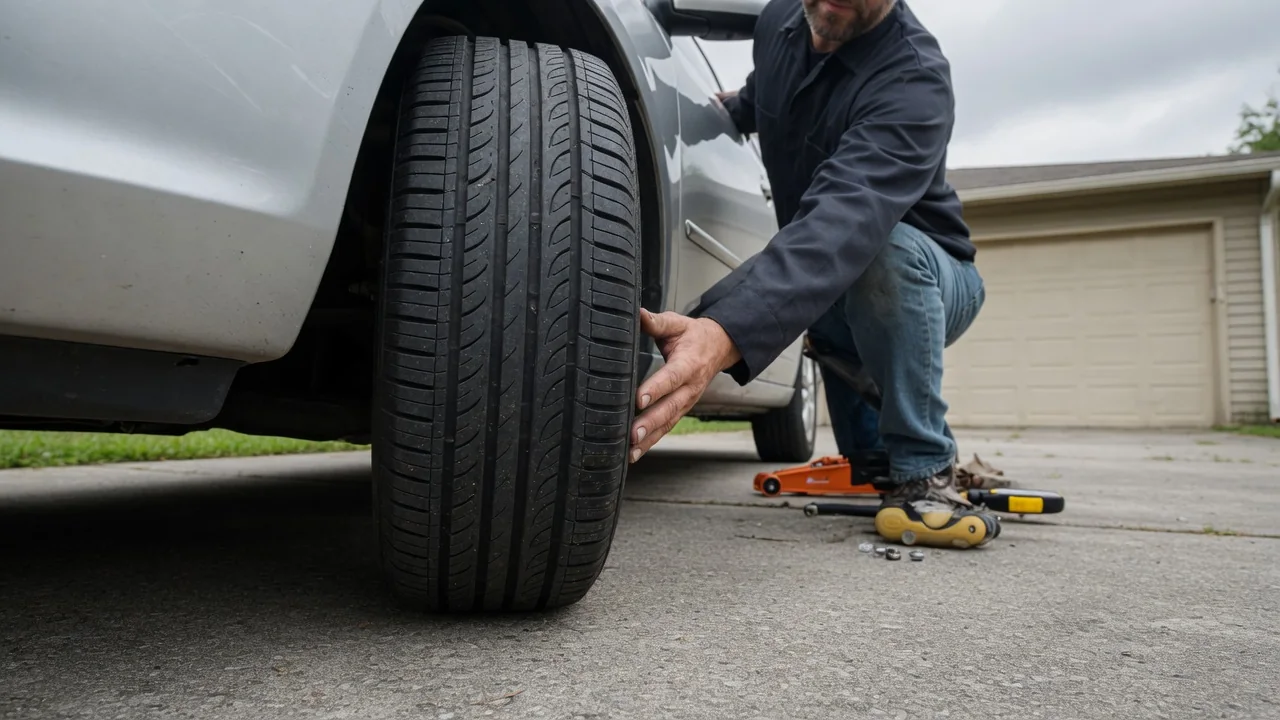
Why does a tire wear faster in the center? The usual answer is too much air, which rounds the tread so the middle ribs carry most of the load. Inflation is not the only factor, though. Tire and wheel sizing, driven-axle torque, load habits, and driving style can all contribute, and sorting them out starts with a careful look at the tread itself.
Inspect pattern
Center wear shows up as a tread that is shallower along the middle ribs than at either shoulder. Look across the full width of the tire with the front wheels turned outward for a clear view, and compare groove depth at the center with the grooves nearest each edge. A tread depth gauge makes the difference measurable, but the built-in wear bars also help: if the bars sit flush with the center ribs while the shoulder grooves still have depth, the pattern is confirmed.
Check all four tires, because the distribution tells a story. Center wear on every tire points toward a pressure habit, while wear confined to one axle suggests something particular to that end of the vehicle, such as drive torque or a different load. Also run a hand across the tread to feel for feathering or cupping, which indicate alignment or suspension issues rather than inflation. Tread designs vary, and some performance tires have a solid center rib that can make judging by eye less reliable than measuring.
Compare pressure
An overinflated tire bulges slightly at the crown, shrinking the contact patch and concentrating the vehicle's weight on the center of the tread. That narrow strip then does most of the gripping, braking, and scrubbing, so it loses rubber faster than the shoulders. The reference point is the vehicle manufacturer's recommended cold pressure, normally printed on a placard in the driver's door jamb or listed in the owner's manual. The maximum pressure molded into the sidewall is a tire limit, not a target for daily driving.
Measure with a reliable gauge when the tires are cold, meaning before driving or after the vehicle has sat for several hours. Readings taken after highway driving or in hot sun run higher and can mislead in either direction, especially if air is bled off a warm tire. Compare each reading with the placard, noting that front and rear values may differ and that some vehicles list a separate figure for heavy loads. A consistent surplus across all four tires, paired with center wear, makes overinflation the leading explanation.
Service check
When pressure checks out and the center still wears quickly, a shop inspection can look at fitment. A tire mounted on a wheel narrower than the tire maker's approved range can be pinched into a more rounded profile, which loads the center much as extra air would. Non-original tire sizes or a different load rating may also need a pressure other than the placard figure, something a tire professional can work out from load and inflation tables rather than guesswork.
A technician can also verify the tools behind the numbers. Gauges drift, and an inaccurate one can leave a driver consistently adding air they do not need. Tire pressure monitoring systems are designed mainly to warn of low pressure, so on many vehicles they stay silent when tires are overfilled; how much detail the display gives depends on the vehicle. It is worth asking what pressure was set at the last service, since shops sometimes inflate to a generic figure instead of the placard value.
Everyday Use and Observations
Driving habits shape the pattern too. On powerful rear-wheel-drive cars and trucks, hard acceleration can wear the center of the drive tires faster, because the tread crown takes much of the tractive effort. Pickup owners sometimes see it when tires are inflated for towing or hauling and then left at that pressure while the bed runs empty for months. Skipped rotations make any of these effects more visible, since the same tires stay on the hardest-working axle.
Other clues appear from behind the wheel. Overinflated tires tend to ride harshly, transmit more impact over expansion joints, and may feel skittish on wet pavement because the smaller footprint has less rubber on the road. Seasonal swings matter as well: pressure rises as temperatures climb, so tires topped off on a cold morning can end up above the recommended figure during a summer heat wave. A monthly cold check catches that drift before it shows in the tread.
Limits and Next Steps
Correcting the cause stops the uneven wear from progressing, but it does not restore rubber already lost. A tire whose center has reached the wear bars is worn out even if the shoulders look healthy, because the shallowest point governs wet-weather grip and legal tread limits, which vary by state. Thin center tread is also more vulnerable to punctures. If exposed cords or fabric appear anywhere, the tire should be replaced before further driving.
For tires with usable tread remaining, set pressures to the placard value, resume rotation at the interval in the owner's manual, and measure the tread again after a few thousand miles to see whether wear has evened out. Resist the temptation to run pressures below the recommendation to compensate, since underinflation builds heat and wears the shoulders instead. If the center keeps wearing despite correct pressure, have a tire shop review wheel width, tire size, and load requirements for that specific vehicle.